Senior Editor: Alan Agbele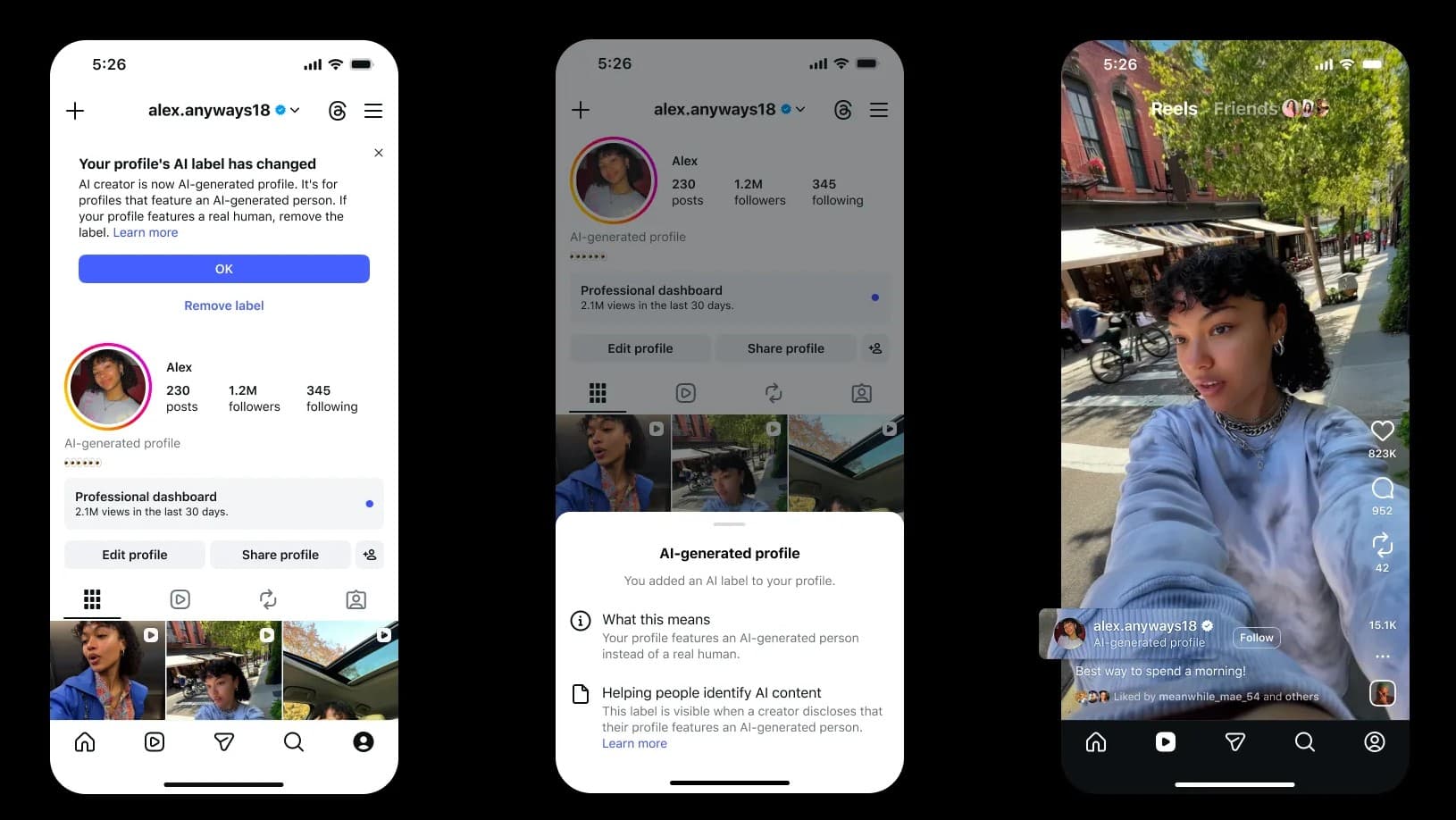
Instagram is rolling out a new requirement for artificial intelligence-generated accounts to be explicitly labeled. The policy forces creators and brands to disclose when an influencer account is entirely synthetic, a shift that aims to curb deception in the social media space.
The Mask Off AI Influencers Initiative
Instagram Says It is launching its Mask Off AI Influencers campaign, which sets a clear standard: any account that is fully or substantially AI-generated must carry a visible label. The label appears on the profile and on individual posts. Pulling the mask off AI influencers is Instagram's stated aim, and enforcement will begin in the coming weeks.
Accounts that fail to comply risk reduced discoverability or removal. Instagram has not yet specified how it will verify compliance but said it will rely on automated detection and user reports.
Key Requirements for Creators
The policy applies to both new and existing AI influencer accounts. Instagram Says It will give existing accounts a grace period to add labels before enforcement begins.
Industry Implications
Instagram's move follows similar actions by other platforms. YouTube now requires AI-generated content labels, and TikTok has tested synthetic media tags. Pulling the mask off AI influencers across these platforms reflects a growing recognition that consumers cannot always distinguish real from fake.
Brands that work with AI influencers face new compliance costs. Marketing teams will need to ensure their synthetic ambassadors carry proper disclosures. The rule may also slow the rise of hyper-realistic virtual models used in fashion and beauty campaigns.
Why This Matters
The labeling requirement directly affects the economics of digital influence. AI influencers can operate around the clock, never age and avoid scandals, making them attractive to brands. But they also threaten trust in social media endorsements. If users cannot tell whether they are interacting with a human or an algorithm, the value of authentic influence erodes.
For consumers, the policy offers a way to make informed choices about who they follow and trust. For creators, it levels the playing field by distinguishing human effort from synthetic output. The long-term effect could be a rebalancing of the influencer economy, where transparency becomes a competitive advantage rather than a compliance burden.