Senior Editor: Alan Agbele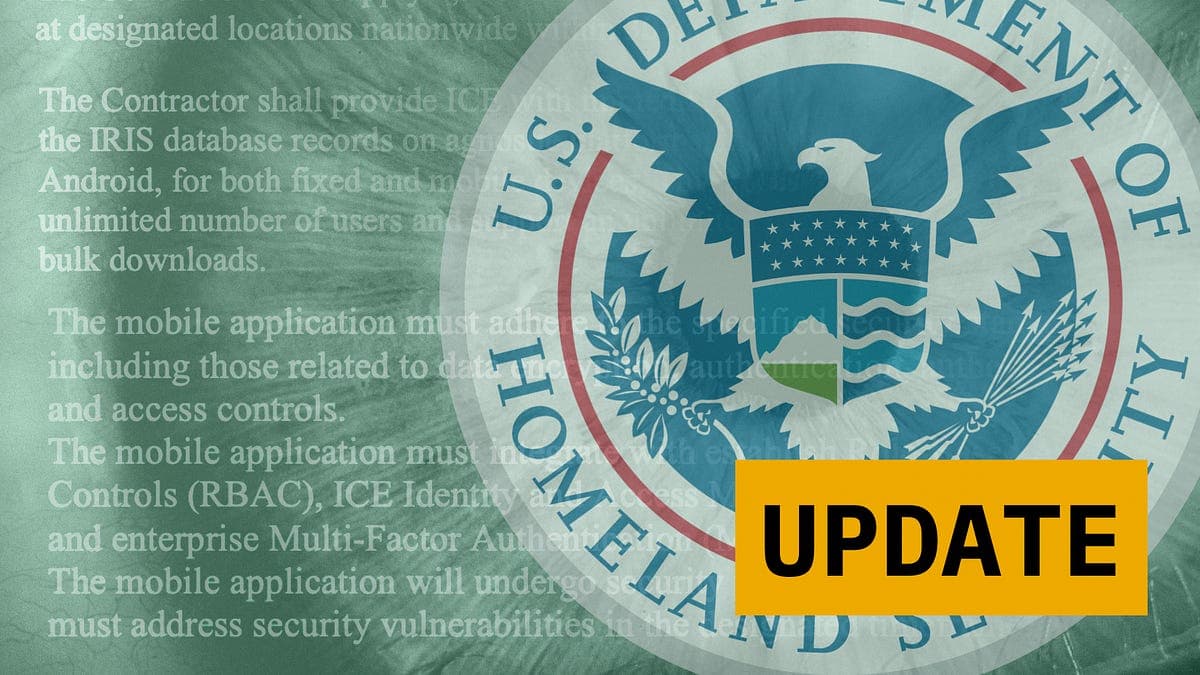
U.S. Immigration and Customs Enforcement has awarded a $25 million contract to Bi2 Technologies for iris scanning systems. The deal expands the agency's use of biometric surveillance in federal law enforcement operations.
Contract Details
The contract covers iris scanning hardware and software. Bi2 Technologies, a biometrics firm based in Maryland, will provide the systems. ICE plans to use the technology for identity verification in detention centers and at border checkpoints. The contract runs for five years.
Iris scanning captures unique patterns in the colored part of the eye. The technology is considered highly accurate. It can identify individuals quickly without physical contact. ICE has used biometrics for years but this contract marks a significant investment in iris recognition specifically.
Privacy Implications
Civil liberties groups have raised alarms. They argue the system could lead to pervasive monitoring of immigrants and travelers. Critics say iris scanning can be performed covertly from a distance. That raises Fourth Amendment questions about unreasonable searches.
Some organizations have called for public hearings before the technology is deployed. They want transparency about how data will be stored and shared. ICE has not released details on privacy safeguards or data retention policies.
Bi2 Technologies has previously worked with law enforcement agencies. The company says its systems are secure and comply with federal standards. But independent audits have not been made public.
Why This Matters
This contract affects anyone who interacts with ICE. Immigrants in detention face mandatory biometric collection. Travelers entering the U.S. could encounter iris scans at ports of entry. The technology shifts the balance between security and privacy.
The $25 million investment signals a federal push toward frictionless identity checks. Similar systems are already used by the Department of Homeland Security at some airports. Privacy advocates worry that iris scanning will become routine in public spaces.
Lawmakers may face pressure to examine the contract. Some members of Congress have introduced bills to limit biometric surveillance. The outcome could shape future policies on government data collection.