Senior Editor: Alan Agbele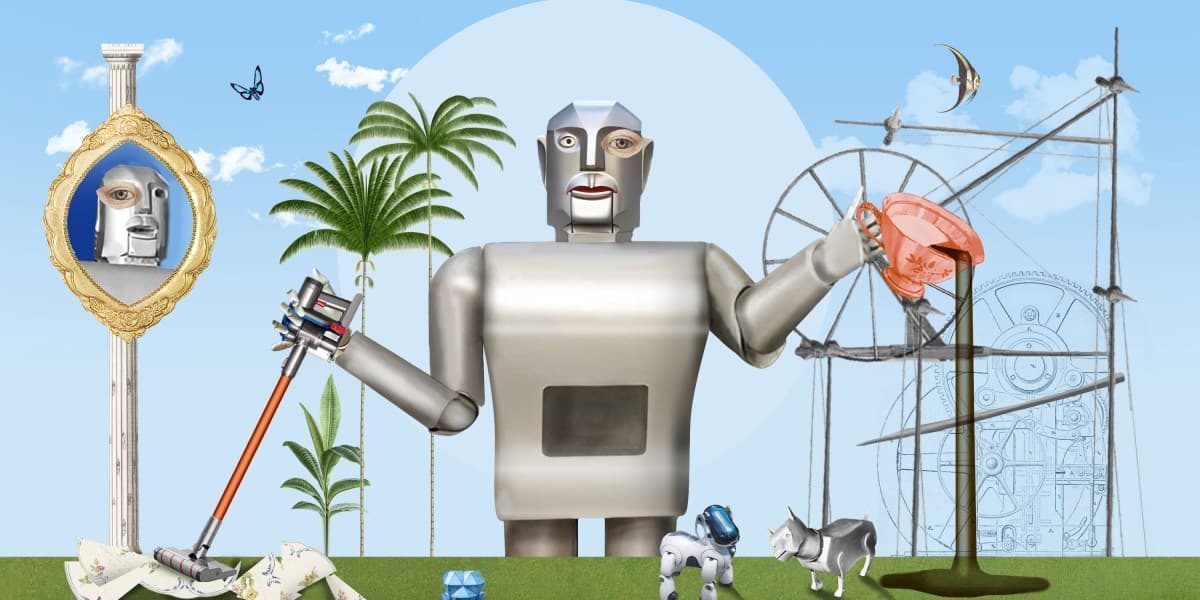
Tesla's Optimus humanoid robot has become a viral sensation, appearing in videos where it dances, hands out popcorn and even attempts to iron a shirt. The machine, which Elon Musk has called potentially "the biggest product ever," represents the boldest bet yet that artificial intelligence can conquer the physical world. The reality, however, is more complicated.
The Gap Between Chatbots and Physical Machines
The same AI advances behind OpenAI's ChatGPT and Anthropic's Claude have convinced many investors that a robotics revolution is imminent. The logic seems straightforward: if AI can imitate human language, it should be able to imitate human movement. Many robotics researchers reject that assumption.
Yann LeCun, often called one of the godfathers of AI, delivered a blunt assessment at the January Davos conference. "None of those companies [building humanoid robots]—absolutely none of them—has any idea how to make those robots smart enough to be useful," he said. His critique targets a fundamental mismatch between digital intelligence and physical intuition.
Jonathan Hurst, cofounder and chief robot officer of Agility Robotics and a professor at Oregon State University, draws a sharp distinction between appearance and capability. "It's very easy to make a robot that looks like a person," he explains. "It is dramatically more difficult to make a machine that moves or behaves dynamically or physically like a person."
Why This Matters
The timeline gap between Musk's public predictions and the actual state of robotics has direct consequences for investors, workers and consumers. If humanoid robots remain years away from practical deployment, companies betting on near-term automation could face stranded investments and missed expectations.
Workers in manufacturing and logistics, meanwhile, face a different kind of uncertainty. The promise of robots that can "automate almost all human labor" for as little as $20,000 each creates pressure on wages and job security long before the technology actually arrives. That gap between perception and reality shapes labor negotiations, corporate strategy and public policy today.
For consumers, the practical impact is simpler: the robot that folds your laundry is not coming to your home in 2027. The machines currently drawing millions of views on social media are performing scripted demonstrations, not operating autonomously in unpredictable environments.
What the Robotics Industry Is Actually Building
Away from the spotlight of Davos and viral videos, robotics labs across the country are making slow but meaningful progress. Researchers are developing new approaches to physical intuition that differ fundamentally from the language models that power chatbots.
The core challenge is variability. A chatbot operates in a closed world of text and images, where the rules are consistent. A robot must navigate a physical world where every doorknob, every piece of clothing and every surface presents a unique problem. The intelligence that masters language does not automatically transfer to that domain.
The tension between hype and reality is not new. A decade ago, a series of breakthroughs led to the generative AI revolution that turned long-imagined possibilities into real products. Roboticists believe a similar revolution is possible in their field, but they disagree sharply on whether the same methods will get them there.
The 2027 Deadline and Its Discontents
Musk's prediction that Optimus robots could be on sale to the public by the end of 2027 has become a reference point for the entire industry. The claim rests on the assumption that AI progress in language and vision will translate directly to physical dexterity. That assumption remains unproven.
The stakes extend beyond Tesla. Nvidia, under Jensen Huang, has positioned itself as a key supplier for the coming robotics wave. Marc Andreessen of Andreessen Horowitz has called robotics potentially the "biggest industry in the history of the planet." These are not fringe voices. They represent the consensus view in Silicon Valley boardrooms.
That consensus, however, may be built on a category error. Conflating humanoid robots with generalist machines that can learn and perform multiple tasks is misleading, researchers argue. The two require different architectures, different training data and different expectations.
For now, the robots that capture public attention are the ones that fall backward while handing out water bottles. That image, more than any projection from Davos, may be the most honest representation of where the technology actually stands.