Editor: Porcia Akua Holmes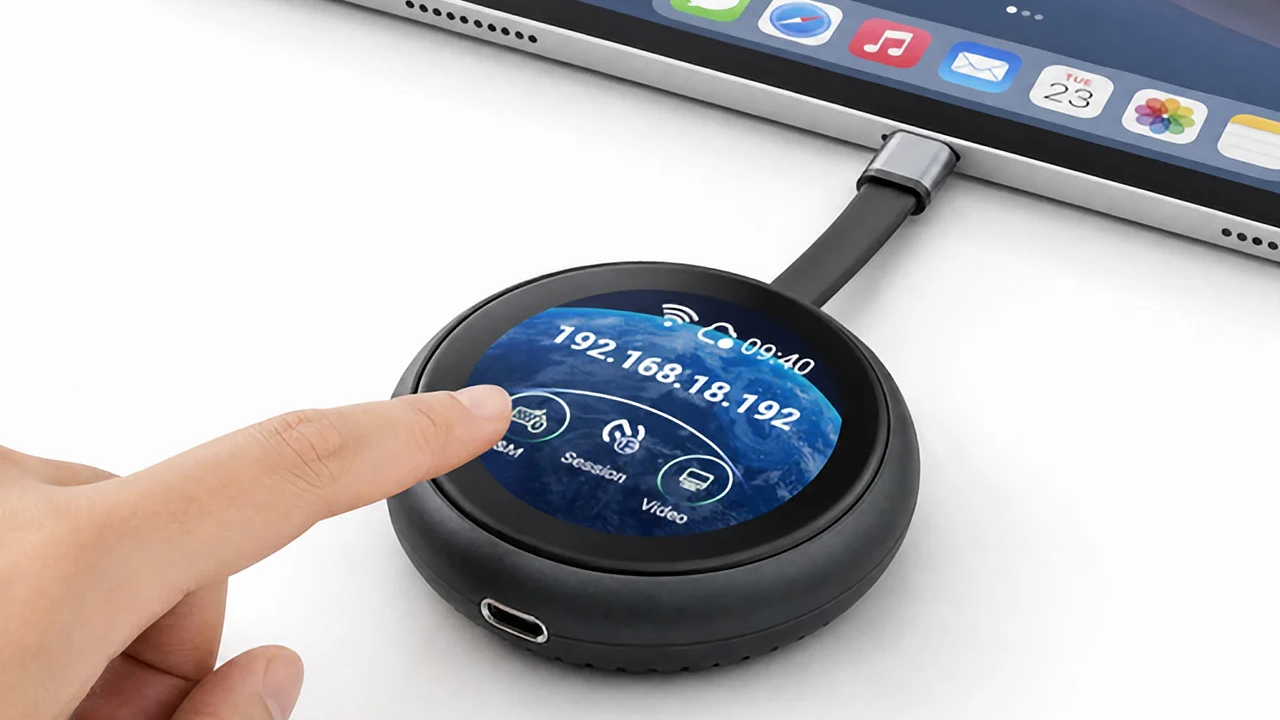
This pocket-sized hardware dongle from Hong Kong networking company GL.iNet is promising to change how professionals remotely access mobile devices. The Comet Q, launched on Kickstarter, uses a single USB-C cable to take over iPhones, Android phones and tablets from any browser running on Windows, macOS or Linux. Unlike traditional remote desktop software, the device operates at the hardware level, meaning it can control a phone even when it is locked or asleep.
Hardware-Level Control Without Software
The Comet Q, also designated GL-RMQ1, connects via a single USB-C cable that carries video, data and power. This design eliminates the multiple cables and adapters typically needed for traditional KVM setups. Video output reaches up to 2K at 60 frames per second with two-way audio, and the passthrough port ensures the controlled device stays charged throughout a session.
Because control happens at the hardware level, the dongle survives screen locks, sleep states and network interruptions. Remote desktop software often breaks under those conditions. The Comet Q also supports iPhones from the iPhone 15 onward, iPads and Android devices with USB-C ports that support DisplayPort Alt Mode. The iPhone 16e and later budget models are excluded.
Cross-Platform Remote Access
Users can control an iPhone from a Windows browser, operate a MacBook from an Android tablet or manage an iPad from a Linux machine. The Comet Q removes OS compatibility barriers that software solutions often impose. No app installation is needed on the controlled device, and the GLKVM app available for Windows, macOS, iOS and Android offers refined touch gestures when controlling from another mobile device.
Wi-Fi credentials can be preset before shipping, so recipients need no technical knowledge to start. This makes the dongle useful for IT teams deploying devices remotely or developers who need to access testing hardware from anywhere. Sessions terminate immediately when the dongle is disconnected, leaving no lingering services or permissions.
Security Considerations
Security measures are embedded in the hardware itself. The Comet Q supports WireGuard, Tailscale and ZeroTier for encrypted tunnels, and optional two-factor authentication adds another layer. Because no software runs on the controlled device, there is no attack surface for malware to exploit. The session ends cleanly when unplugged.
Businesses handling sensitive data may find this approach appealing. However, the hardware-level access means that anyone with physical possession of the dongle and the target device could potentially connect to it. Users should store the Comet Q securely.
Why This Matters
The Comet Q creates a new category: hardware KVMs for mobile devices. For IT administrators, it means supervising phones and tablets from a single interface without being physically present. For developers, it simplifies testing across multiple devices. The convenience of browser-based control, combined with hardware-level reliability, could shift how remote access is handled in enterprise environments. The low barrier to entry at $89 also makes it accessible for individual professionals. If GL.iNet delivers on its promises, the Comet Q may become a standard tool for remote device management.