Senior Editor: Alan Agbele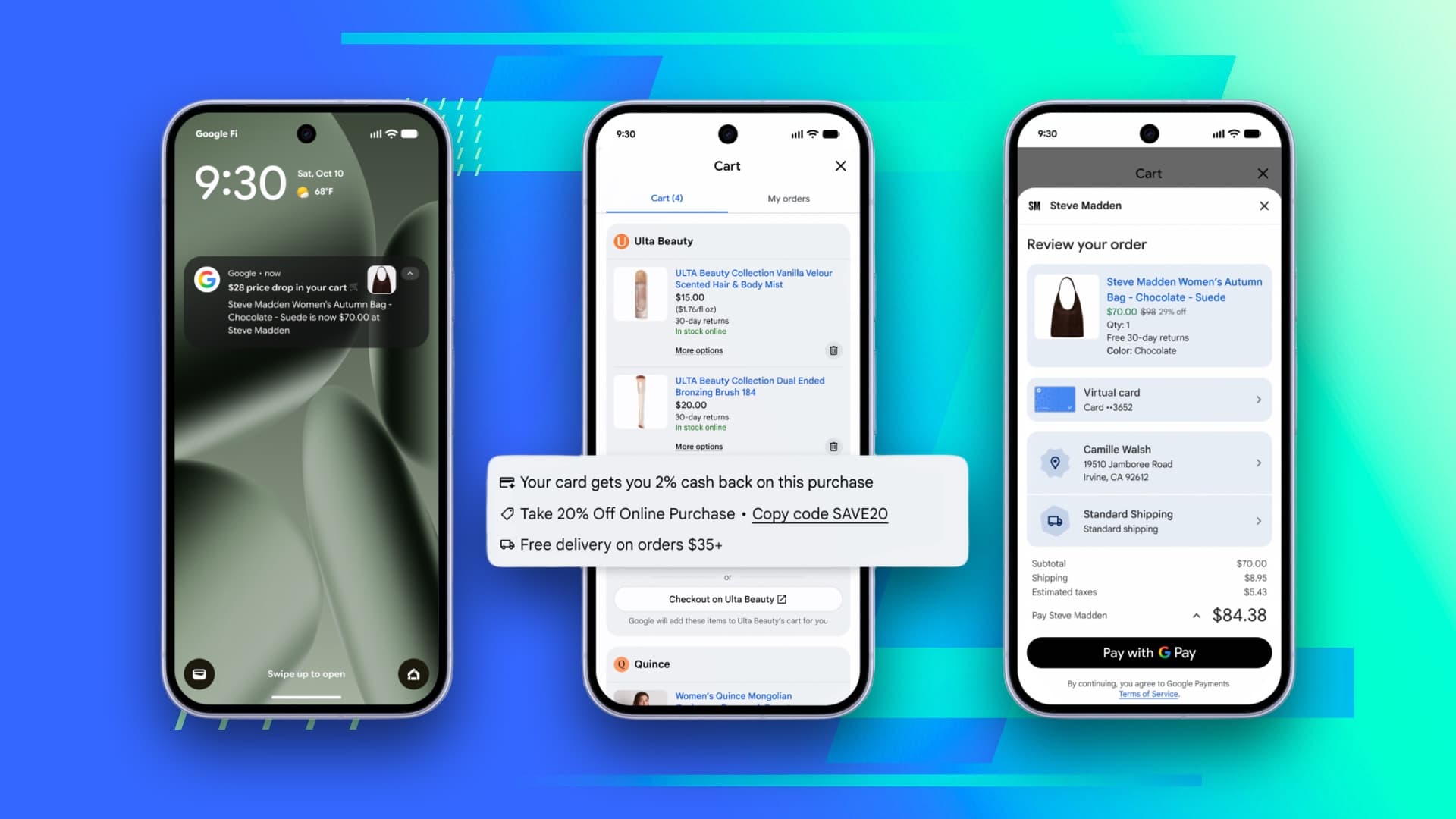
Google is quietly turning its search engine into a shopping assistant that never stops watching prices. The company's new Universal Cart feature lets users save products from any retailer and receive alerts when those items get cheaper, according to reporting on the tool and three related shopping upgrades.
The move places Google directly between shoppers and the retailers they buy from. It also extends a years-long push to keep product discovery inside Google's own ecosystem rather than sending users to Amazon or individual storefronts.
How Universal Cart Changes Price Tracking
Traditional price tracking requires shoppers to install browser extensions, create accounts on deal sites or manually revisit product pages. Universal Cart folds that process into Google's existing search and shopping surfaces, reducing the friction that usually stops people from monitoring prices at all.
The system works by saving items a user expresses interest in, then monitoring those listings for price changes. When a drop occurs, Google pushes a notification. The approach mirrors what CamelCamelCamel has done for Amazon listings and what Honey has done across retail sites, but with the advantage of Google's search index behind it.
Google has not disclosed which retailers participate or how frequently prices refresh. Those details will determine whether Universal Cart becomes a genuine utility or a limited pilot.
Why This Matters
Retailers face a new layer of intermediation. If shoppers rely on Google to tell them when to buy, merchants lose control over the timing and framing of their own promotions. A flash sale designed to create urgency becomes less effective when a third party is already tracking the price.
Amazon, in particular, has built its dominance partly on keeping shoppers inside its app. Universal Cart threatens that closed loop by pulling price comparison into Google's interface. The competitive stakes extend beyond convenience into who owns the customer relationship at the point of purchase.
Consumers gain leverage but also exposure. Price alerts reduce the risk of overpaying, yet every saved item feeds Google's advertising and personalization systems. The trade-off between savings and data is not new, but Universal Cart makes it more routine.
What You Need to Know About the Broader Push
Universal Cart is not an isolated product. It sits alongside three other shopping tricks Google has introduced, all aimed at shortening the path from search to checkout. The pattern suggests Google views commerce as a core search use case, not a side experiment.
This strategy echoes earlier efforts like Google Shopping and Buy on Google, which struggled to gain traction against Amazon's logistics and Prime loyalty program. Universal Cart avoids the hardest part of that fight by not handling fulfillment at all. It only manages discovery and price intelligence.
The unanswered question is monetization. Google could charge retailers for placement, sell promoted alerts or simply use the data to improve ad targeting. Each path carries different implications for how neutral the price tracking actually is.
The Competitive Landscape Shifts
Price tracking has become a crowded space. Honey, now owned by PayPal, built a large user base on automatic coupon application. CamelCamelCamel remains a reference point for Amazon shoppers. Retailers themselves, including Target and Best Buy, run their own price-match and alert programs.
Google's advantage is distribution. Chrome, Android and the default search bar give Universal Cart reach that standalone tools cannot match. That reach, however, also invites regulatory attention. Google already faces antitrust scrutiny over self-preferencing in shopping results.
If Universal Cart favors Google's own shopping listings or paid partners, the feature could become another flashpoint. How Google handles that tension will shape whether the tool is seen as a consumer benefit or an extension of its market power.