Editor: Porcia Akua Holmes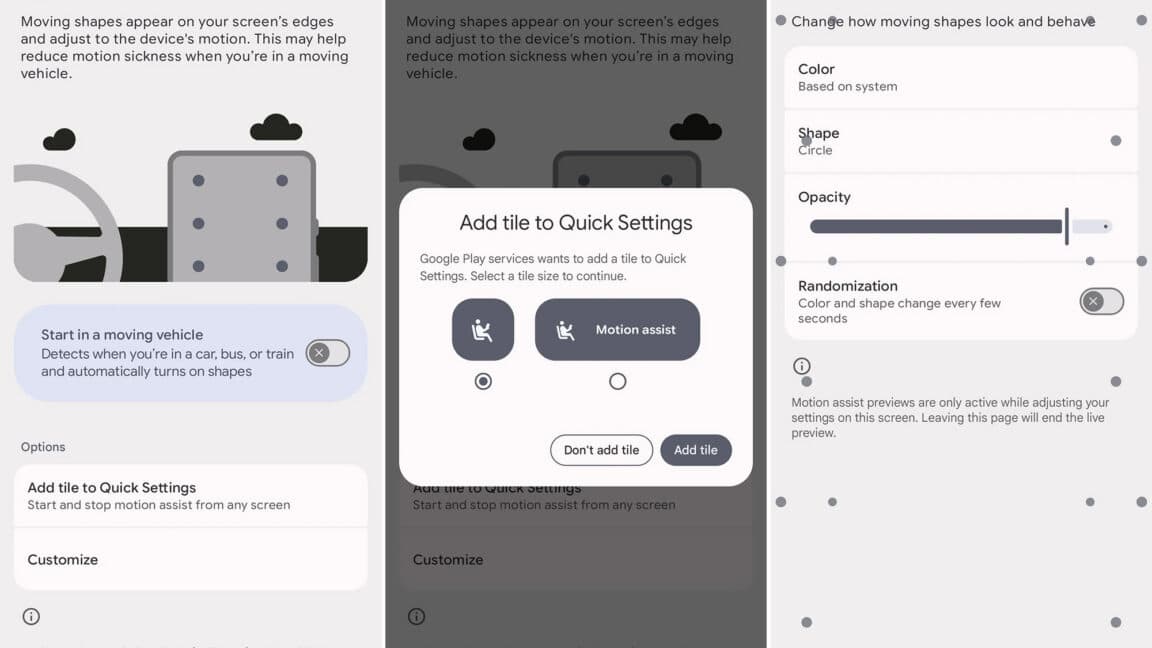
Google has started rolling out Motion Assist, its anti-motion sickness feature, to Pixel phones running Android 17. The feature, delivered through Play Services, places a network of moving dots on the screen to help reduce nausea for passengers using their phones in vehicles.
Why This Matters
Motion sickness affects many people who struggle to use smartphones while traveling. By adding Motion Assist, Google acknowledges a significant digital wellness concern and provides a practical solution. The feature also highlights the growing competition between Google and Apple in accessibility tools. For Pixel users, this update makes phone use in cars, trains and buses more comfortable. Broader Android users may see the feature if Google expands it beyond Pixel devices.
How Motion Assist Works
The feature uses animated dots that move across the screen in a pattern that mimics the motion experienced by the user. This visual cue helps the brain reconcile the conflicting signals from the inner ear and eyes, reducing the sensation of nausea. The dots appear as a subtle overlay and do not interfere with normal app usage.
Key aspects of Motion Assist include:
Android Authority first reported the expansion of Motion Assist beyond internal testing, noting the feature is now appearing on live devices. Google has not made an official announcement about the feature's availability.
The Competitive Landscape
Apple introduced Motion Cues as part of iOS 18 in 2024, and it was widely praised for its effectiveness. Google's delayed rollout suggests the company is taking a cautious approach, testing the feature thoroughly before wider release. The existence of Motion Assist shows that Google is investing in health-oriented features that match or rival Apple's ecosystem. For users, the choice between platforms may increasingly depend on such accessibility and wellness tools.