Senior Editor: Alan Agbele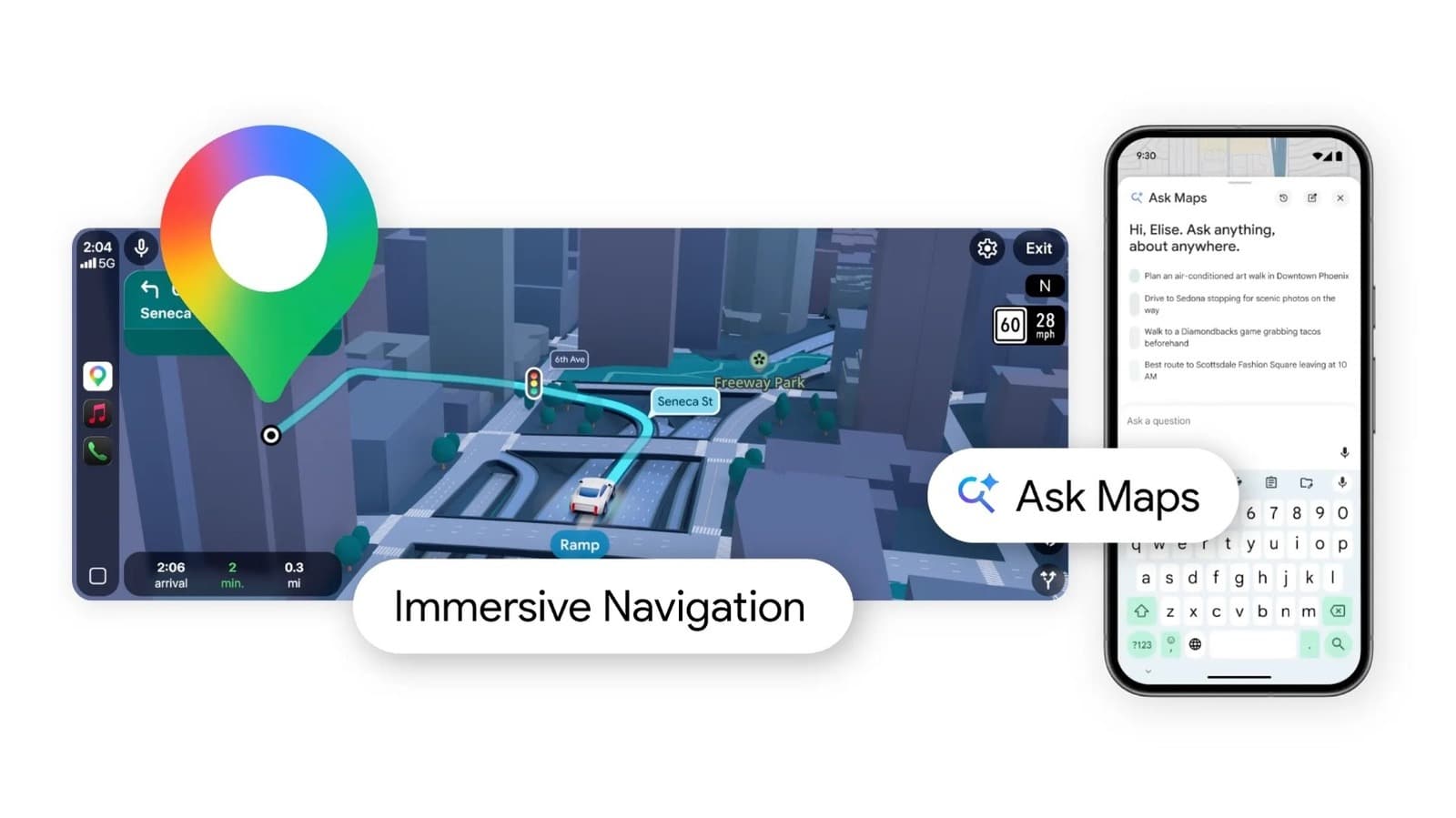
Google Maps has introduced a conversational layer to its navigation service. The Ask Gemini feature now allows users to pose natural language questions directly within the app, shifting the experience from basic keyword queries to AI-driven dialogue.
Moving Beyond Keyword Searches
Traditional map queries rely on short terms such as "coffee shop" or "gas station." Ask Gemini changes this by processing longer conversational requests. A user can say "Find a quiet coffee shop open late with Wi-Fi near Union Square" and receive a tailored list of options. Google Maps then surfaces ratings, hours and photos directly from the query.
How the Feature Changes Navigation
The Ask Gemini tool appears as a button or within the search bar on the mobile app. Tapping it opens a conversation interface where users can refine their request. If the first set of results includes a pub that does not serve food, the user can say "No, only sit-down restaurants" and Gemini adjusts the output. This back-and-forth interaction makes the mapping experience more dynamic than scrolling through static categories.
Google has been embedding Gemini across its ecosystem including Gmail and Docs. Google Maps is a logical next step because location discovery often involves layered criteria. The feature is currently rolling out to English-language users on Android and iOS in the United States.
Why This Matters
Ask Gemini shifts the way people discover local businesses. Instead of filtering by categories, users can describe exactly what they want in plain speech. This puts pressure on competitors like Apple Maps to match the conversational capability. For small businesses, appearing in Gemini-driven results could become as important as ranking for traditional keywords. The technology also opens the door to voice-activated trip planning where users plan entire outings by talking to the map.
Google gains more data about user intent from these long queries. The company can refine its local search algorithms and potentially serve more targeted ads. Privacy advocates will watch how Gemini handles location and preference data though Google states that conversations are not used to train the model without consent.
Looking Ahead
The Ask Gemini rollout is part of a broader trend where AI assistants become the primary interface for digital services. Navigation apps that fail to adopt natural language processing may feel outdated within a few years. For now, Google Maps users who try Gemini will find a more flexible way to explore their surroundings.