Senior Editor: Alan Agbele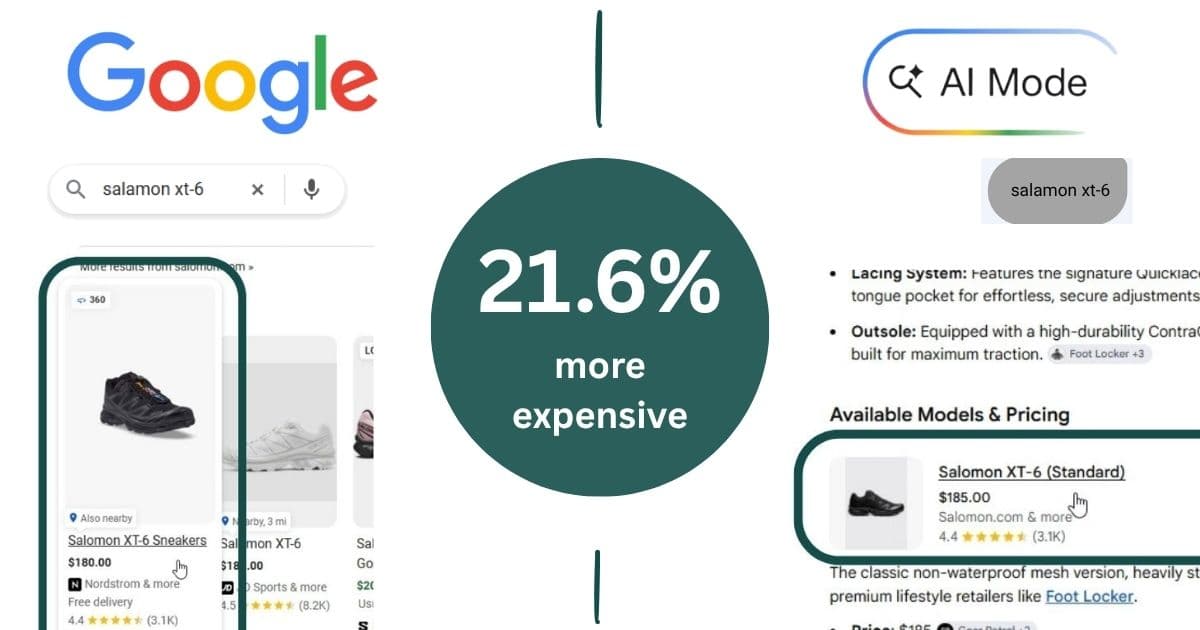
Google AI Mode places product listings in front of shoppers that are on average 21.6% more expensive than items shown by the company's traditional search engine, according to a fresh pricing analysis. The gap emerged after researchers ran identical product queries through both search interfaces and compared the top results.
The Price Gap in AI Search
Researchers tested common product queries across categories like electronics, home goods and apparel. They recorded the prices of the top featured products in each mode. The average price in Google AI Mode exceeded that of standard Google Search by 21.6%. The discrepancy held steady across all tested categories.
Several factors may explain the difference:
Google has not provided a detailed explanation for the pricing discrepancy. The company has positioned AI Mode as a way to deliver more curated and conversational search experiences.
Consumer Implications
The price difference means shoppers using Google AI Mode may unknowingly pay more for the same products. The extra cost could add up significantly for frequent online purchasers. Consumer advocates argue that search tools should be transparent about how they rank and recommend products.
Smaller merchants may also be affected. If AI Mode systematically favors larger retailers that can afford higher advertising spend, smaller businesses could lose visibility and sales.
Why This Matters
The findings arrive as Google pushes AI features deeper into its core search product. If AI-generated results consistently steer users toward higher-priced goods, the company could face accusations of undermining consumer choice. Regulators monitoring Google's dominance in search may take interest. The pricing pattern also raises broader questions about whether AI assistants can act as neutral guides or whether they will serve commercial interests first.
For now, consumers should compare prices across search modes before purchasing. The onus is on Google to explain and ideally correct the discrepancy if it wants AI Mode to become a trusted shopping tool.