Editor: Porcia Akua Holmes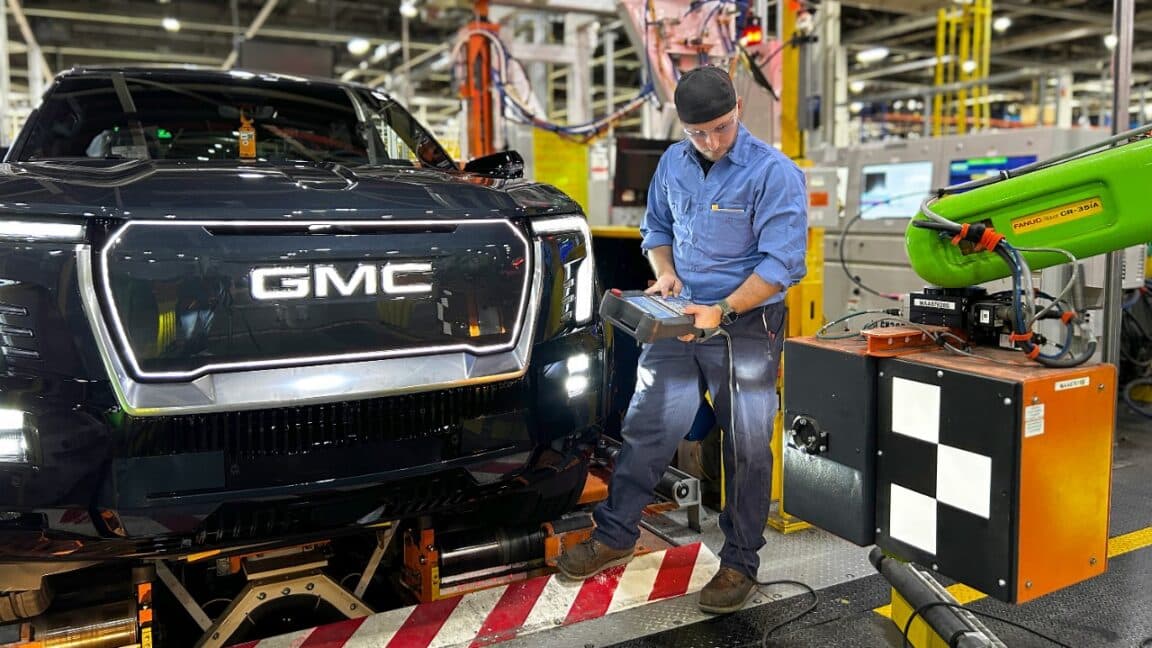
General Motors has installed roughly 50 new robot arms at its flagship electric vehicle plant in Detroit, Michigan, even as more than 1,300 workers remain on indefinite layoff. The move has intensified tensions between the automaker and the United Auto Workers union over the role of automation in an industry racing to cut costs.
Automation Versus Jobs
The robots, built by Japanese manufacturer FANUC, are designed to attach components to vehicles on the assembly line. But union leaders see their arrival as a direct threat to jobs that were supposed to be temporary. James Cotton, president of UAW Local 22, told The Detroit News that over 1,000 union members are still laid off indefinitely. He argued GM could bring those workers back instead of deploying the machines.
The layoffs began in March and were described by GM as temporary. Yet no recall has occurred. The installation of robots at Factory Zero suggests a longer-term shift toward automation rather than rehiring.
A Broader Industry Trend
The conflict at Factory Zero reflects a wider challenge facing automakers worldwide. As companies invest heavily in electric vehicle production, they face intense pressure to lower manufacturing costs and compete with newer entrants like Tesla and Chinese EV makers. Robotics offer a path to efficiency but also raise existential questions about the future of manufacturing employment.
GM is not alone in this approach. Ford and Stellantis have also increased automation in their plants while managing workforce reductions through buyouts and attrition. The difference here is the timing: installing robots while workers wait for callbacks sends a clear signal about priorities.
Why This Matters
The situation directly affects thousands of autoworkers and their families who depend on stable employment at plants like Factory Zero. It also sets a precedent for how automakers balance cost-cutting with labor commitments during the EV transition. If temporary layoffs become permanent replacements by machines, it could reshape collective bargaining agreements across the industry.
For consumers, increased automation may lead to lower vehicle prices or faster production times. But it also raises broader questions about job security in an era where technology increasingly performs tasks once done by humans.