Senior Editor: Alan Agbele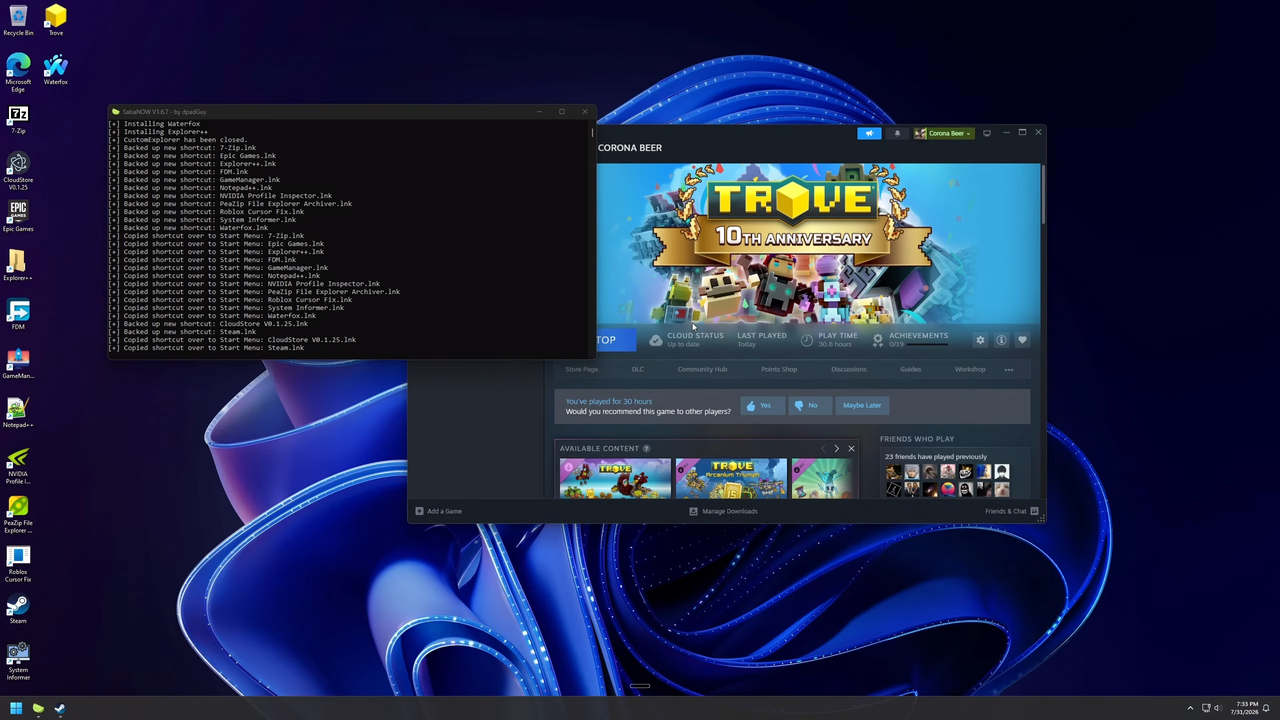
A modder has found a way to turn Nvidia's GeForce NOW cloud gaming service into a general-purpose Windows machine, bypassing restrictions to run local AI models. Using the Ultimate tier, Zortos gained full desktop access through a file swap exploit, unlocking the service's underlying hardware for tasks far beyond gaming.
Exploit Mechanics
The process starts with an Install-to-Play game downloaded from Steam. Zortos used Trove as the entry point. By clicking the publisher's name, he opened a built-in browser and navigated to the C: drive through the address bar. He then hijacked the index by opening the steamapps folder created for Trove and copied the path of its main executable. That file was replaced with a decoy developed by another modder, dpadGuy, which fools Steam into launching a Windows desktop instead of the game when the Play button is pressed.
Implications For AI And Cloud Gaming
The exploit effectively turns GeForce NOW's Ultimate tier into a makeshift cloud computer. Zortos demonstrated running LM Studio with GeForce NOWGemma 4 31B, achieving 41 tokens per second. The Ultimate tier packs a GPU akin to an RTX Pro 6000D with 48GB of VRAM, making it attractive for local AI inference. However, the service imposes session rate limits that hinder sustained workloads, and the violation of Nvidia's terms of service could lead to account bans.
Users have reported mixed results. Some see sessions terminated when File Explorer opens, and others find file downloads blocked. The exploit requires a paid subscription, and its longevity is uncertain. Nvidia has not publicly commented on the bypass.
Why This Matters
This incident exposes a fundamental tension in cloud gaming services: they rent powerful hardware while strictly limiting its use. For Nvidia, the exploit highlights security gaps that could undermine its business model if widely adopted. For users, it offers a way to access high-end GPUs without purchasing them, but at the risk of losing accounts. The development may push Nvidia to reinforce restrictions or, conversely, consider offering general-purpose cloud computing tiers. In the short term, those seeking affordable AI compute may find this workaround tempting, but the long-term viability remains questionable as the company patches such loopholes.