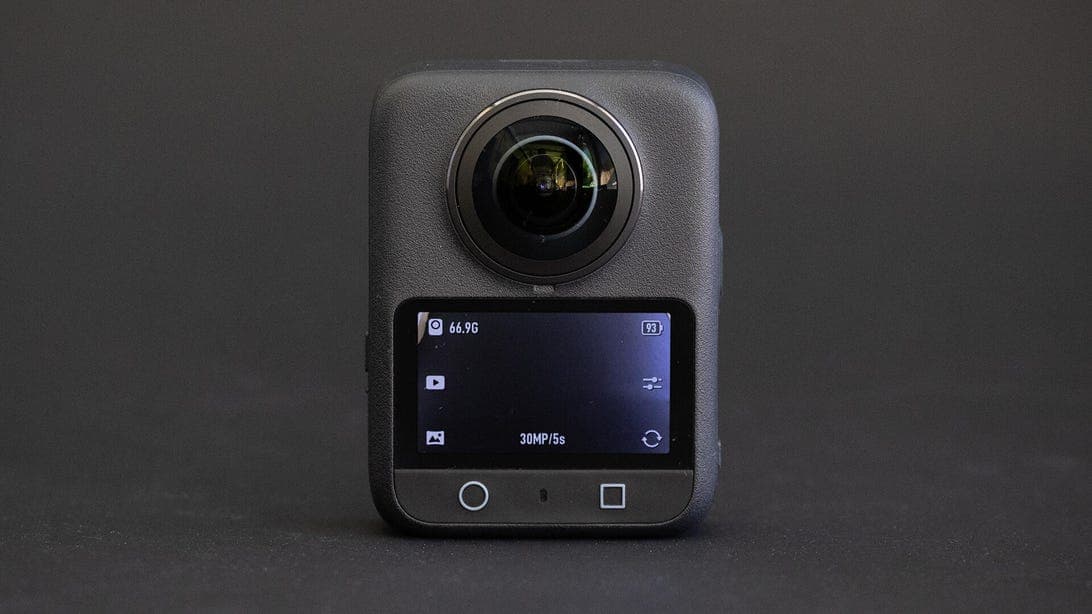
DJI has released a new 360-degree camera, the Osmo 360, packing hardware that rivals offerings from Insta360 and GoPro. The device captures high-resolution spherical video and photos with impressive stabilization. But a straight recommendation is hard to give. The reason has little to do with image quality.
The catch is regulatory. The Federal Communications Commission recently issued a ruling that could restrict DJI drone operations in the United States. While the Osmo 360 is not a drone itself, DJI's deep ties to the drone market mean the camera's appeal partially depends on aerial use. Many buyers look to pair a 360 camera with a drone for immersive aerial shots. That use case now faces an uncertain future.
Hardware and Design
The Osmo 360 is a sleek, portable device with dual lenses that stitch together a seamless 360-degree view. It records in 5.7K resolution at 30 frames per second. The built-in stabilization keeps footage smooth even during fast motion. A small touchscreen allows for quick settings adjustments. The camera is water resistant without a housing, a feature that matches competitors. DJI also includes a tripod mount and a protective carrying case.
Battery life is solid at about 90 minutes of continuous recording. The companion app offers AI-powered editing tools that simplify creating shareable clips. The overall build quality feels premium, as expected from DJI.
The Regulatory Cloud
The FCC's ruling, finalized last month, designates DJI as a national security risk due to alleged ties to the Chinese government. This could eventually ban new DJI drone models from being sold or operated in the U.S. For now, existing drone owners can fly, but future sales may be blocked.
DJI has pushed back against the ruling, calling it baseless. But the uncertainty already affects buyers. Anyone considering a DJI drone to pair with the Osmo 360 may hesitate. The camera itself can be used handheld or mounted on non-DJI drones, but that limits integration advantages. DJI's ecosystem—including features like direct gimbal control and seamless data transfer—only works fully with DJI drones.
Why This Matters
This situation directly affects consumers who want a reliable 360-degree camera for both ground and aerial use. The Osmo 360 is a capable standalone device, but its full potential depends on a DJI drone partnership that may not be available in the U.S. much longer. Buyers must weigh the hardware quality against the risk of losing future access to the ecosystem. The FCC ruling also signals broader tensions between U.S. regulators and Chinese tech companies, which could affect other DJI products down the road.