Editor: Porcia Akua Holmes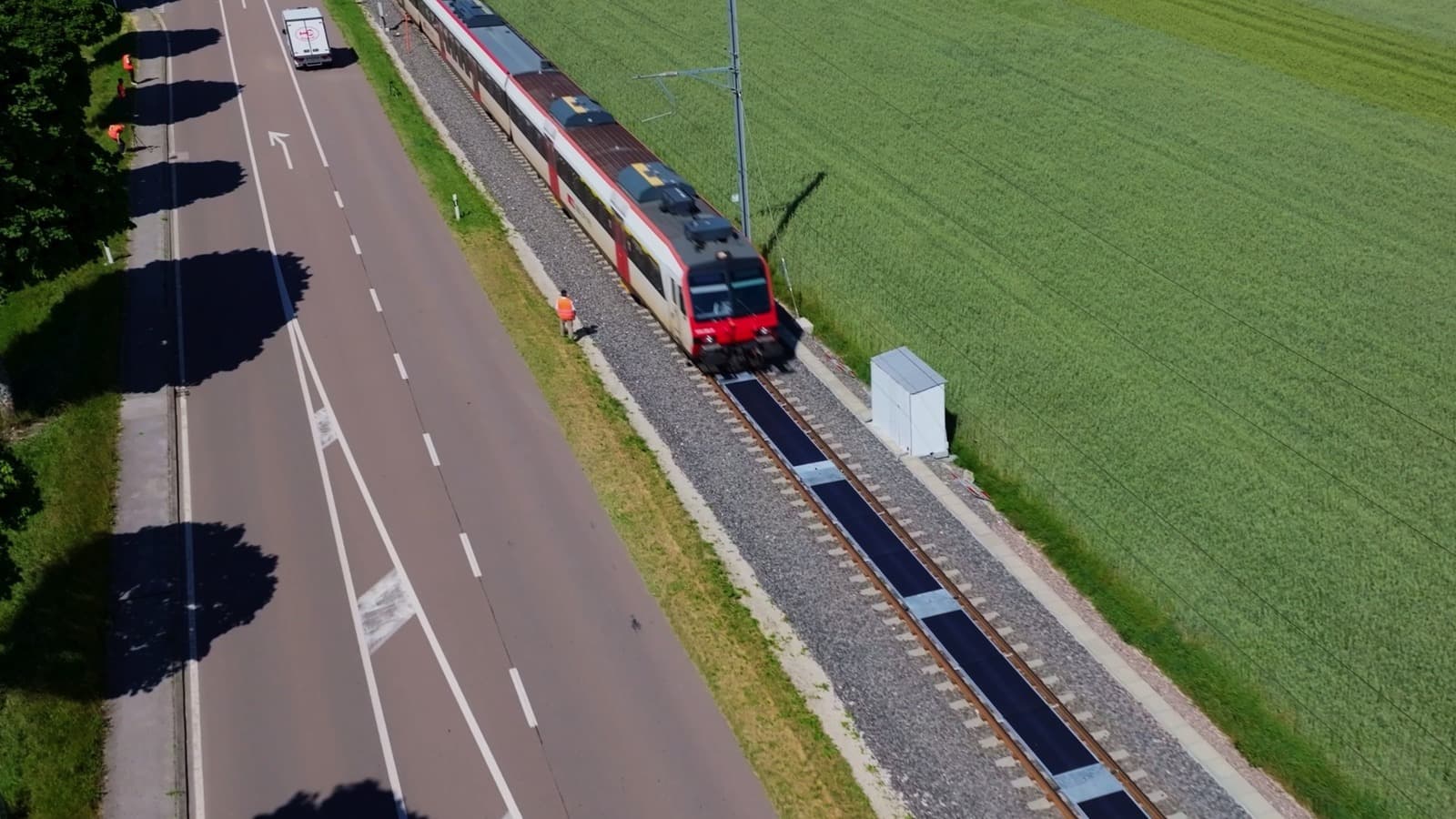
Switzerland has successfully tested an innovative system that places solar panels directly between railway tracks, and the technology is now drawing serious interest from several other nations. The pilot project, conducted on a section of the Swiss rail network, generated enough electricity to help power trains and station operations, proving the concept viable for broader deployment.
How the Solar Track System Works
Engineers designed custom solar panels that fit snugly between the rails without interfering with train wheels or track maintenance equipment. The panels are semi-flexible, durable enough to handle foot traffic and debris kicked up by passing trains. During the Swiss trial, the panels generated a steady supply of electricity that offset a portion of the rail network's power demand.
The system does not require additional land, making it attractive for dense urban corridors where space for solar farms is limited. Because railways already exist across vast distances, the technology could turn millions of miles of track into clean energy assets.
International Adoption Gaining Momentum
Several European countries have expressed interest in following Switzerland's lead. Austria, Germany and the Netherlands are studying the feasibility of solar track installations on their own rail networks. Beyond Europe, India and Japan have also approached Swiss researchers for technical data and pilot planning.
Interest from these countries signals a shift toward viewing railway infrastructure not just as transport routes but as energy generation platforms. The Swiss breakthrough provides a proven model that can be adapted to different climates and track conditions.
Why This Matters
The technology directly addresses two major challenges: decarbonizing transportation and expanding renewable energy without land-use conflicts. For governments under pressure to meet climate goals, solar railways offer a practical way to generate power from existing infrastructure. Rail operators stand to lower their electricity bills significantly, while countries with limited land for traditional solar farms gain a new energy source.
The biggest impact, however, could be on global rail expansion. As developing nations build new rail lines, incorporating solar panels from the start could make those networks cleaner and more energy independent from day one. Switzerland's solar railway breakthrough might be coming to several new countries, and the ripple effects on energy policy and rail economics could be substantial.