Senior Editor: Alan Agbele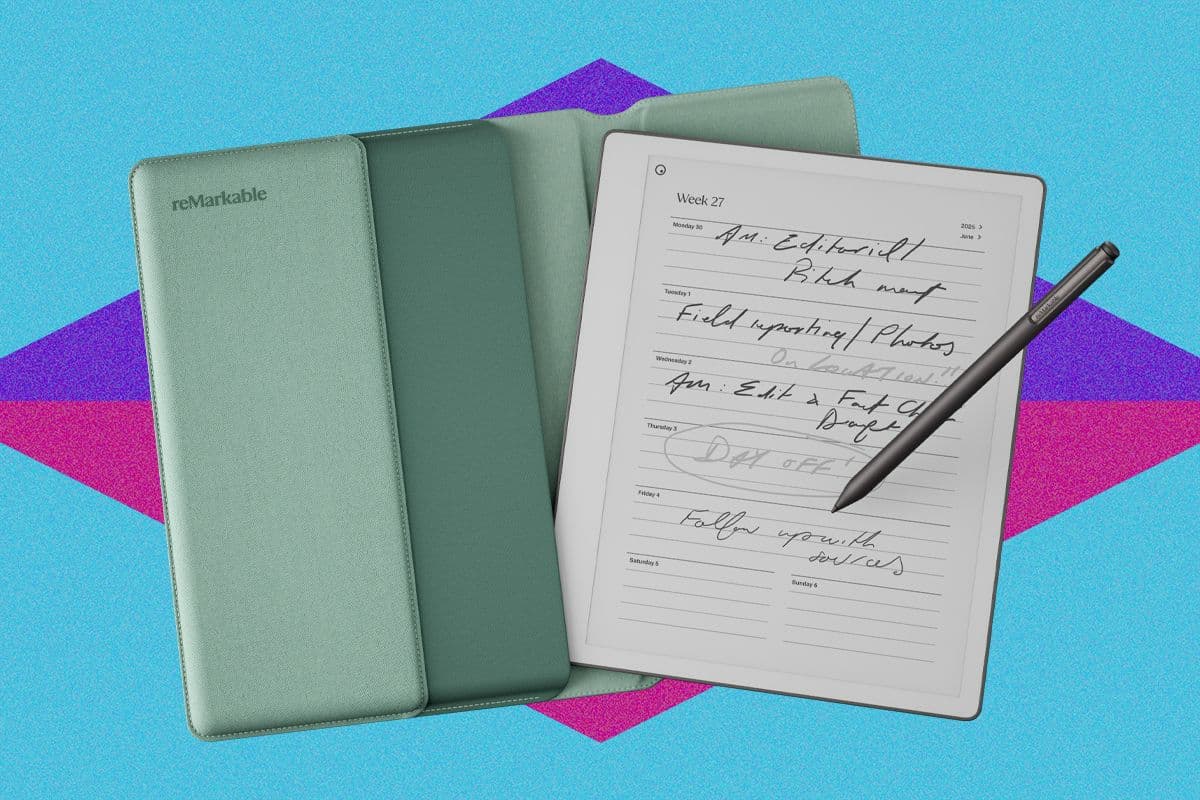
Paper notebooks have long been the default for quick sketches, meeting minutes and lecture notes. But a new generation of digital tools is changing that equation. Recent hands-on evaluations, including a roundup labeled the 'Best Digital Notebooks,' show that these devices now offer a writing experience surprisingly close to pen on paper while adding capabilities paper cannot match.
The Evolution of Digital Note-Taking
Handwriting digitization has been around for years, but early devices suffered from lag, poor stylus accuracy and limited storage. Today's digital notebooks, led by brands such as reMarkable, Supernote and Rocketbook, have solved many of those problems. They use low-latency ePaper or LCD screens that feel responsive, and they sync automatically with services like Google Drive, Dropbox and OneNote.
This evolution matters because handwriting aids memory retention in ways typing does not. Research continues to show that students who write by hand recall information better than those who type. Digital notebooks preserve that cognitive benefit while eliminating the physical clutter of stacks of paper notebooks.
Key Findings From the Latest Tests
The 'Best Digital Notebooks' evaluation put several flagship models through rigorous testing over several weeks. According to the 'Here Are My Favorites' summary, the most significant improvements fall into three categories:
These advances mean buyers no longer have to trade tactile pleasure for digital convenience. The gap between analog and digital note-taking has narrowed significantly.
What the Market Shift Means for Buyers
With so many options available, choosing the right digital notebook depends on individual workflow. Students might prioritize portability and price, professionals may need robust document organization, and artists require high pressure sensitivity and palm rejection. The 'Here Are My Favorites' list reflects this segmentation, recommending different devices for different roles.
Price points range from around $30 for reusable smart notebooks like Rocketbook to $500 or more for premium ePaper tablets from reMarkable and Supernote. Subscription services for cloud features add ongoing cost, so buyers should factor in long-term ownership expenses.
Why This Matters
The steady improvement of digital notebooks signals a broader shift in how people capture and manage information. As remote work and hybrid education become permanent fixtures, the ability to digitize handwritten notes seamlessly becomes more valuable. For knowledge workers, students and creatives, these devices reduce friction between the moment of insight and its storage, retrieval and sharing.
If the trend continues, paper notebooks may go the way of the Filofax: still beloved by enthusiasts but overshadowed by digital alternatives that serve the same purpose with greater efficiency. The 'Best Digital Notebooks' designation, while subjective, underscores that the technology has reached a tipping point where it can realistically replace paper for most users.