Editor: Porcia Akua Holmes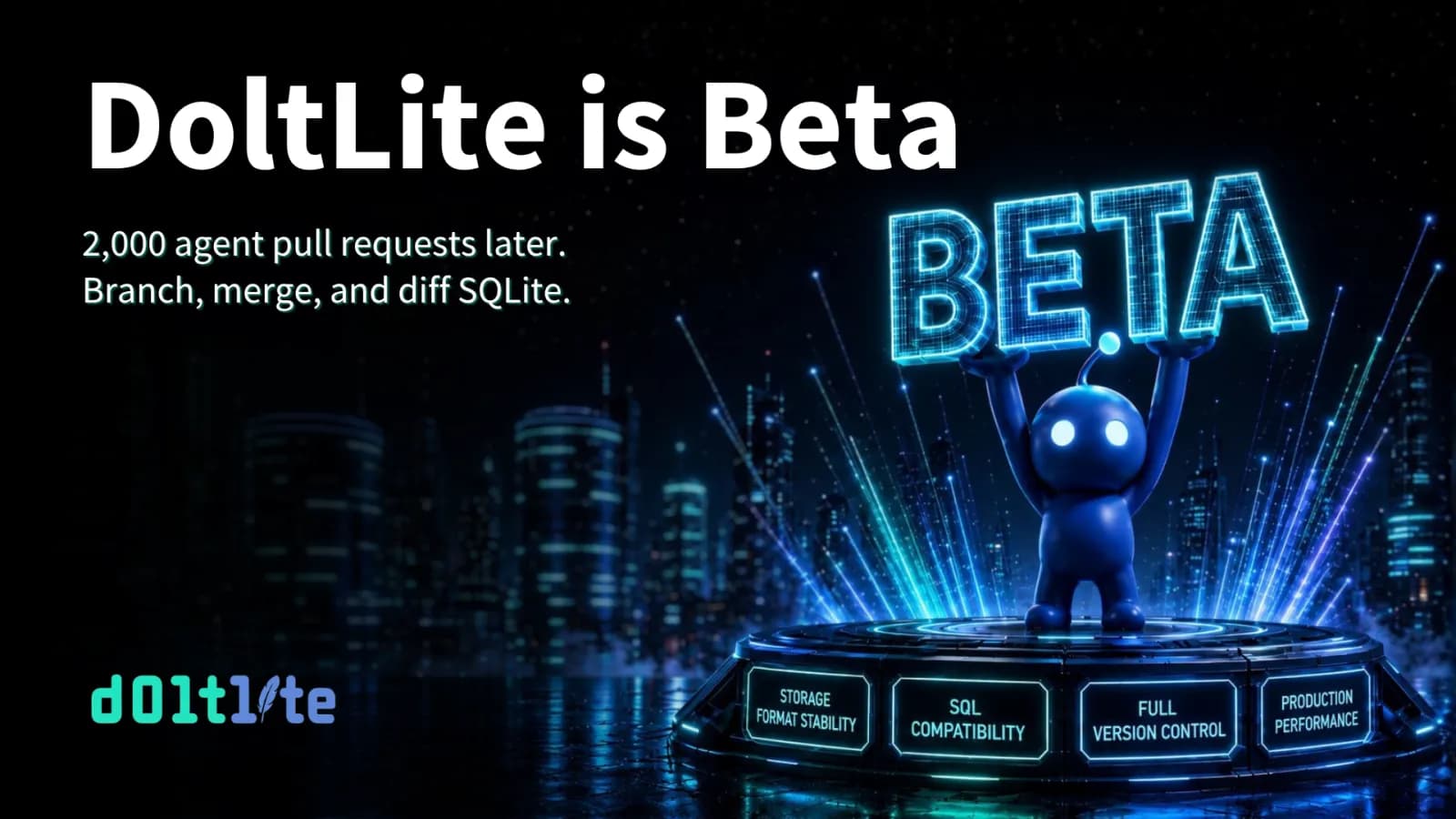
A new open-source project called DoltLite offers developers a way to apply Git-style version control directly to their database contents by forking the widely used SQLite engine. The project provides commands for branching, merging, diffing and inspecting historical changes to relational data.
The Technical Approach
DoltLite extends the core SQLite engine with additional tables and functions that record every write operation. Users can create branches, commit changes, roll back to previous states and merge diverged histories. The syntax mirrors Git commands such as dolt checkout and dolt merge, lowering the learning curve for developers already accustomed to that workflow.
Automated Development Pipeline
What makes DoltLite unusual is its origin story. The codebase was built through roughly 2,000 pull requests generated not by human contributors but by autonomous AI agents. Each agent tackled small, well-defined tasks such as implementing a single function or fixing a test failure. The method allowed the project to go from concept to working prototype rapidly, though it raises questions about code review practices and long-term maintainability.
Why This Matters
Database version control remains a persistent challenge in software engineering. Most teams rely on manual migrations or tightly coupled server-side solutions that do not carry over to local or embedded use cases like mobile apps or IoT devices. By bringing version control directly into SQLite, the dominant embedded database engine, DoltLite could simplify reproducibility and auditability for thousands of applications. If the automated contribution model proves reliable, it may also accelerate the pace of open-source development generally.
The practical impact extends beyond convenience. Industries that require strict data lineage, such as finance or healthcare, could use DoltLite’s history tracking to prove exactly when and how data changed. For smaller teams, the ability to experiment fearlessly with branch-and-merge workflows may reduce errors and improve collaboration around shared database files.