Editor: Porcia Akua Holmes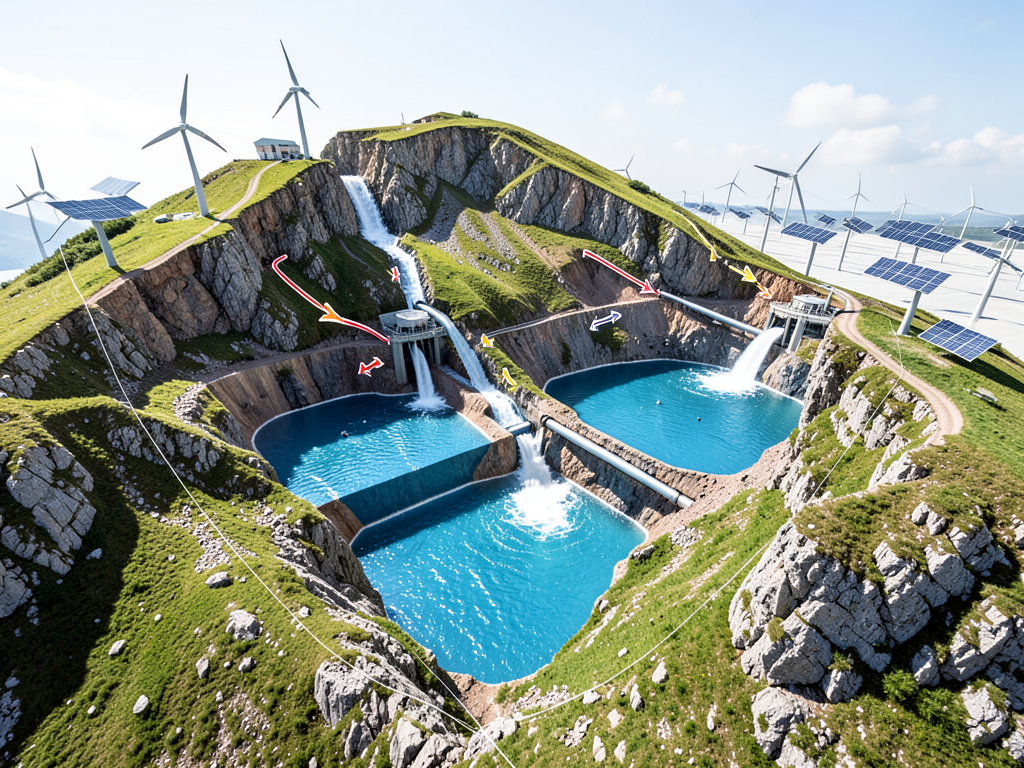
China is building a massive energy storage system inside a mountain, a pumped-storage hydro plant designed to act as a giant battery for the country's growing renewable energy grid. The project, located in the mountainous region of Sichuan, represents a significant step in solving one of clean energy's biggest challenges: storing power for when the sun is not shining or the wind is not blowing.
How the Mountain Battery Works
The plant uses two reservoirs carved into the mountain at different heights. During periods of low demand or high renewable output, excess electricity from solar and wind farms pumps water from the lower reservoir to the upper one. When demand spikes, the water flows back down, spinning turbines to generate electricity.
This system can store massive amounts of energy for hours or even days, far exceeding the capacity of conventional lithium-ion batteries. The plant's design also reduces land use and visual disruption by embedding the infrastructure within the mountain itself.
Why This Matters
The success of this project could reshape how countries approach renewable energy storage. As solar and wind capacity expands globally, the need for long-duration, cost-effective storage becomes urgent. Lithium-ion batteries, while useful for short-term storage, are expensive and degrade over time. Pumped-storage hydro offers a proven, durable alternative that can handle the scale required for national grids.
For China, which leads the world in renewable energy installations, this plant provides a template for integrating intermittent power sources without relying on fossil fuel backups. Other nations with mountainous terrain, including the United States and parts of Europe, may follow suit with similar projects. The environmental cost of construction, however, remains a concern, as carving into mountains can disrupt local ecosystems.
Challenges and Limitations
Despite its promise, pumped-storage hydro is not a universal solution. The technology requires specific geography: two reservoirs at different elevations with sufficient water supply. This limits where such plants can be built. Construction also carries a high upfront cost and can take years to complete.
Additionally, the efficiency of the system is not perfect. Pumping water uphill consumes more energy than the turbines can recover, typically achieving round-trip efficiency of 70 to 80 percent. This means some energy is lost in the process, though the trade-off is acceptable for grid stability and long-term storage.
What This Means for Clean Energy
The mountain-sized battery in China signals a shift toward large-scale, infrastructure-based energy storage. While not a replacement for battery technology, it fills a critical gap in the clean energy ecosystem. As more countries aim for net-zero emissions, projects like this will become essential for balancing supply and demand.
For consumers, the impact will be indirect but significant. More reliable renewable energy means fewer blackouts and lower long-term electricity costs as fossil fuel plants are phased out. The success of this plant could accelerate the transition to a fully renewable grid, making clean energy more practical and dependable.