Senior Editor: Alan Agbele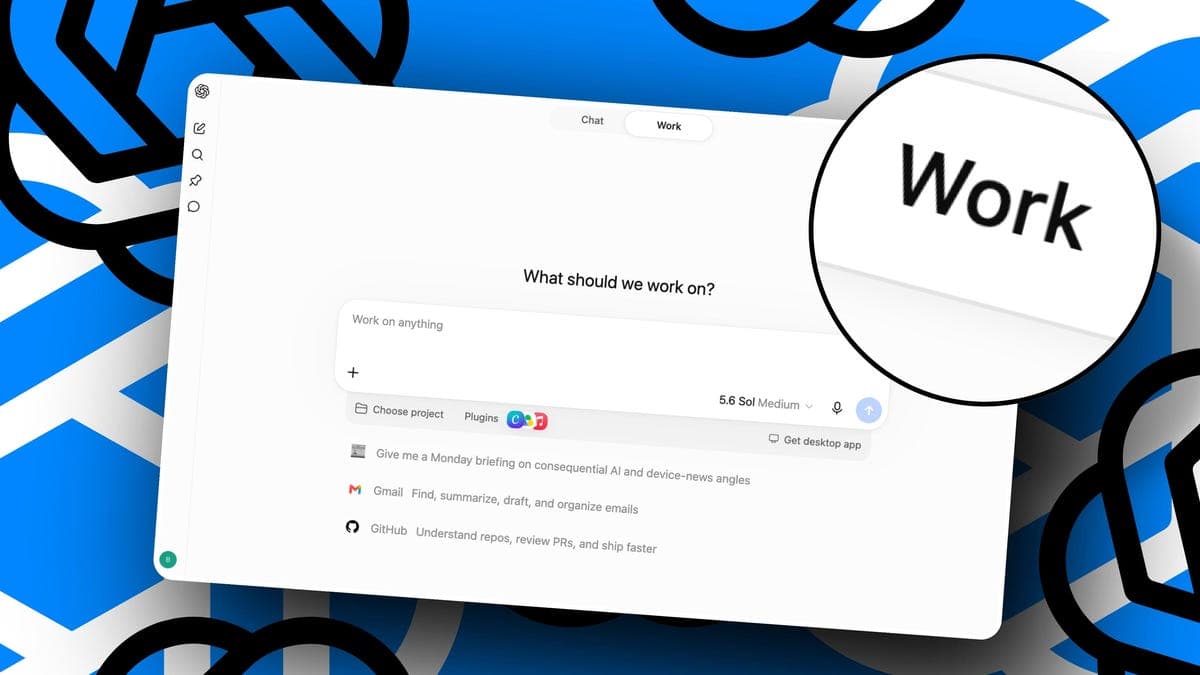
ChatGPT Work, a new agentic AI tool from OpenAI, introduces the ability to automate research, manage files and execute multistep projects with minimal human oversight. The system departs from traditional chatbot interactions by operating more like a virtual assistant that can independently plan and carry out complex sequences of tasks.
What ChatGPT Work Does
ChatGPT Work operates as an autonomous agent that can take on goals defined in natural language. The system can scrape websites for research, organize files across folders and execute pipelines of tasks such as data extraction followed by report generation. It does not rely on constant human prompts for each action; instead it plans its workflow and executes steps sequentially or in parallel when dependencies allow.
This capability moves ChatGPT Work beyond standard conversational AI into the category of agentic systems. Users describe the experience as closer to delegating a task to a junior employee than querying a search engine.
Capabilities and Current Risks
Early adopters report that ChatGPT Work performs well on structured tasks but struggles with ambiguous instructions or tasks requiring subjective judgment. OpenAI has built in safety guardrails such as approval prompts before high-risk actions, but the risk of unintended execution remains.
Why This Matters
The launch of ChatGPT Work signals a broader industry pivot toward agentic AI. For knowledge workers, this could mean offloading routine research, reporting and data orchestration to automated agents, freeing time for higher-level strategy. The implications, however, extend beyond convenience. Companies that integrate agentic AI into workflows risk losing visibility into how decisions are made and what data is exposed during autonomous operations.
Regulators are starting to watch this space closely. The European Union's AI Act and similar frameworks in other jurisdictions may classify agentic systems as high-risk applications. For users, the main takeaway is that agentic AI like ChatGPT Work offers real utility but demands a new level of literacy around supervision and error correction.