Senior Editor: Alan Agbele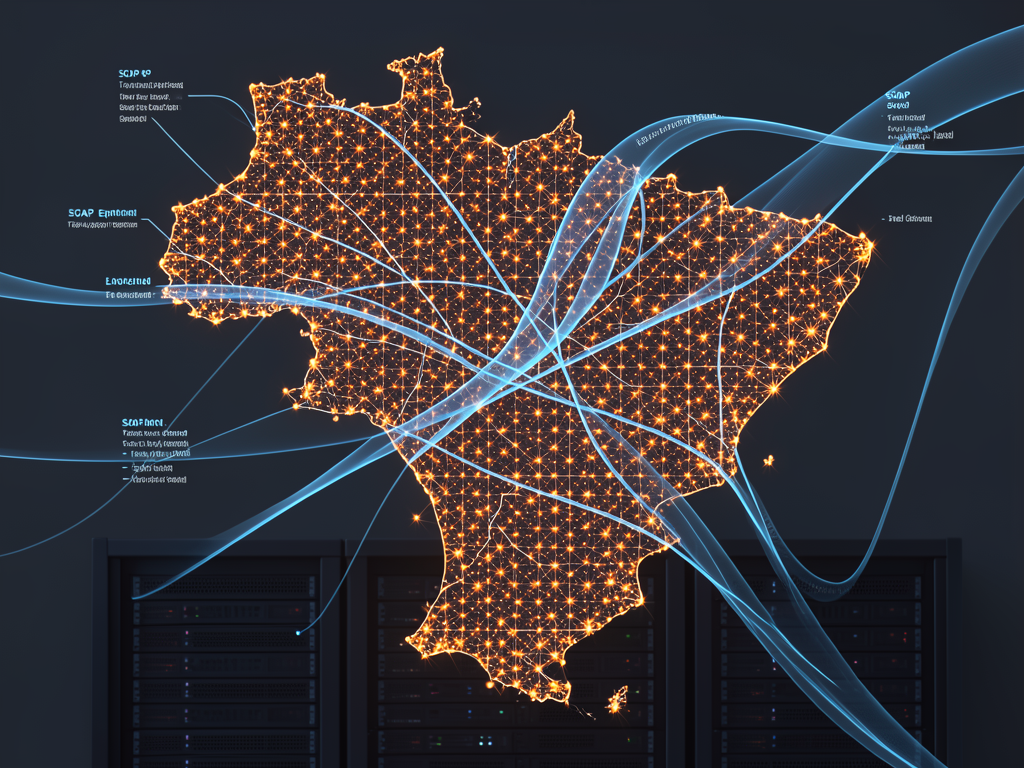
Brazil’s tax authority operates one of the world’s most sophisticated digital billing systems. Yet every single invoice issued across the country relies on SOAP 1.2, a web service protocol many developers considered obsolete years ago. Researchers working under the name “Every” completed a full map of Brazil’s invoice infrastructure, revealing the sheer scale of SOAP dependence.
The Scope of the Mapping Effort
The Every team scraped public listings, government registries and service endpoints to build a complete picture of Brazil’s invoice network. They identified over 12,000 unique SOAP services handling authorization, consultation and cancellation requests. The results confirm that SOAP 1.2 remains the sole transport layer for the nation’s invoicing pipeline.
Key findings from the mapping include:
Why SOAP Endured in Brazil
Several factors explain why SOAP 1.2 never disappeared from Brazil’s tax ecosystem. Government procurement rules tend to lock in proven standards. Migration would force hundreds of thousands of companies to retool their internal accounting software simultaneously. Additionally, SOAP’s strict contract model provides reliability guarantees that REST APIs often lack when high-volume financial data is exchanged.
Why This Matters
The continued dominance of SOAP 1.2 creates both risk and opportunity. Any vulnerability in the aging protocol could disrupt the entire formal economy. At the same time, the rigid schema prevents integration with modern authentication methods such as OAuth 2.0 or JSON Web Tokens. Brazil’s central bank and treasury now face mounting pressure to design a migration path toward lighter-weight alternatives without breaking the monthly flow of nearly two billion invoices. Companies developing software for the Brazilian market will also need to maintain dual support for SOAP and any future replacement.
Lessons for Global Infrastructure
The Every project demonstrates that legacy protocols can survive indefinitely when embedded in regulatory frameworks. Other nations with similar centralized tax systems may be running comparable unexpected dependency stacks. The findings also challenge assumptions that modern API standards have fully displaced older technologies. For developers, the Brazil case underscores the importance of auditing dependencies before assuming what powers a country’s critical back office.