Senior Editor: Alan Agbele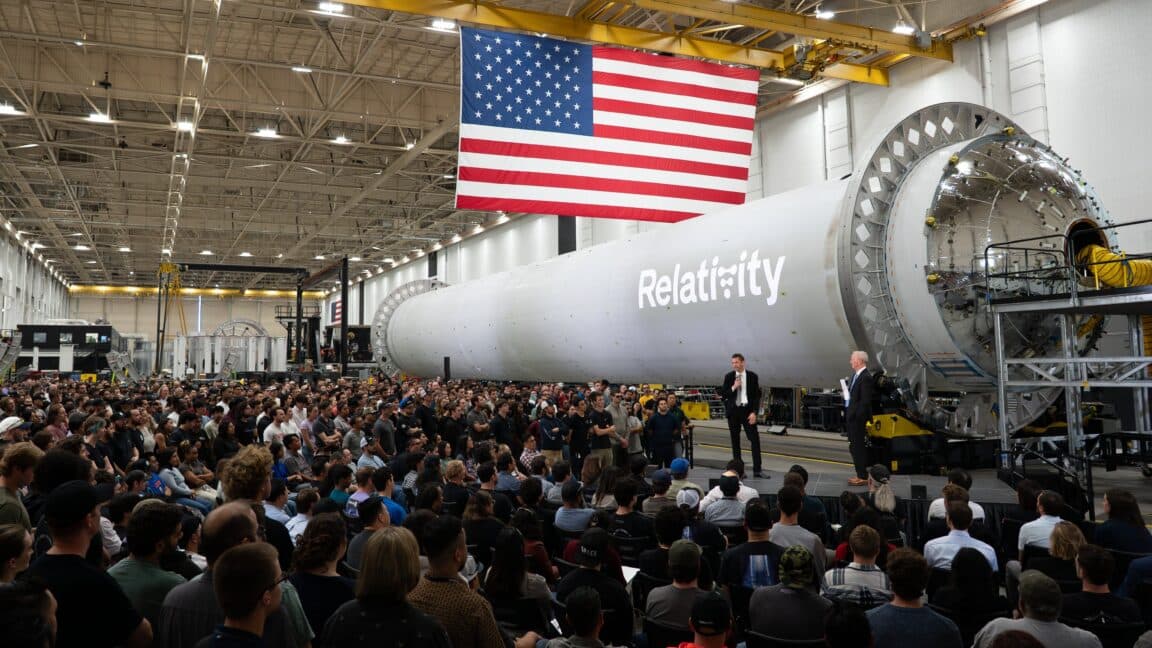
Space industry activity is picking up across multiple fronts this week. Blue Origin has started rebuilding its launch pad after a recent incident, while Relativity Space is setting its sights on Mars. These developments come alongside continued testing delays for European startup Isar Aerospace.
Blue Origin Launch Pad Reconstruction Underway
Blue Origin has begun reconstruction work at its Cape Canaveral launch facility following damage sustained during a previous test flight. The company is moving quickly to restore operational capability at the site, which serves as a key hub for its New Glenn rocket program. Engineers are assessing structural components and preparing for a return to flight operations.
Relativity Space Targets Mars Missions
Relativity Space has announced plans to aim for Mars with its upcoming Terran R rocket platform. The company is shifting focus from Earth orbit missions toward interplanetary travel, marking an ambitious expansion of its original business model. Relativity's 3D-printed manufacturing approach could give it cost advantages for deep space missions.
Isar Aerospace Faces Continued Test Flight Delays
Isar Aerospace, one of Europe's most prominent new rocket startups, continues to face setbacks in its test flight program. The company scrubbed a recent launch attempt after detecting off-nominal behavior in the vehicle's fluid systems. Engineers are now analyzing data to identify the root cause of the issue.
The Spectrum rocket has only flown once before, on a failed launch last year that lasted less than 30 seconds. Despite raising nearly $1 billion in funding, Isar still lacks critical flight experience needed to prove its technology works reliably.
Why This Matters
The space industry is entering a period of intense competition among both established players and newcomers. Blue Origin's ability to quickly rebuild after setbacks will determine whether it can challenge SpaceX's dominance in heavy lift launches. Relativity's Mars ambitions signal growing confidence that private companies can tackle interplanetary missions.
For European space efforts, Isar's struggles highlight the difficulty of building reliable rockets from scratch even with substantial funding. The company's success or failure could shape investor attitudes toward other European launch startups.