Senior Editor: Alan Agbele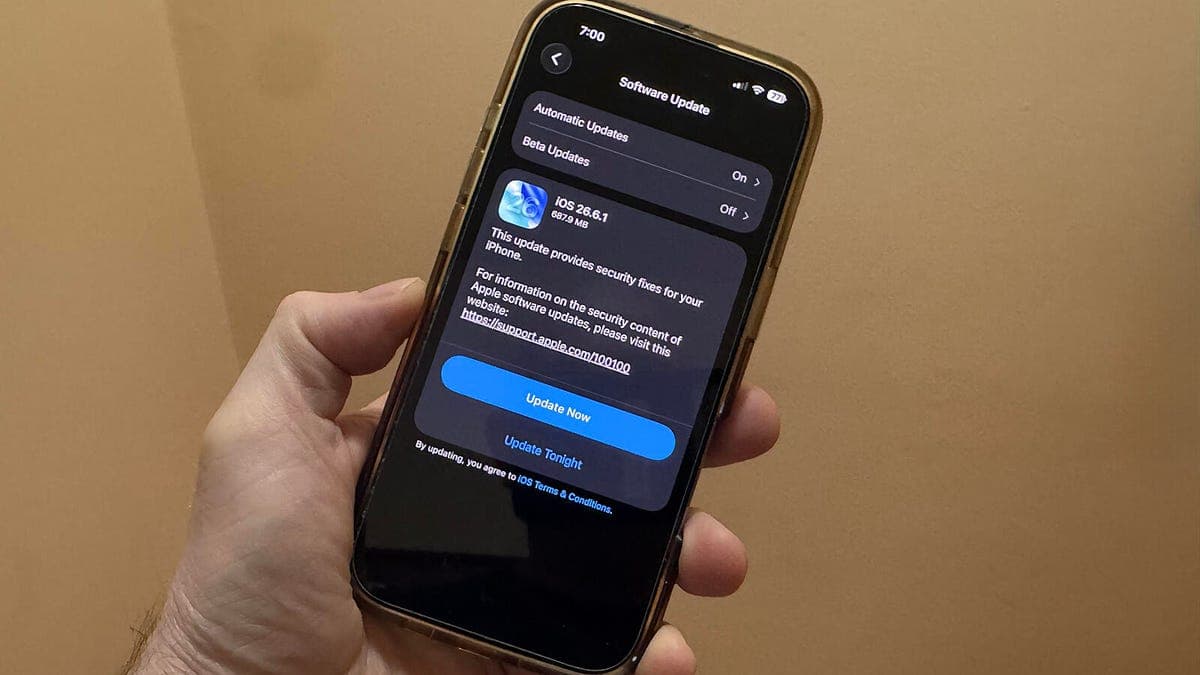
Apple released a security update for iOS 26.6.1 on Tuesday, closing 29 reported vulnerabilities that could leave devices open to remote attacks or system crashes. The patch covers iPhones, iPads and Macs, making it one of the most extensive security rollouts from the company this year.
Vulnerabilities Across Core Components
The 29 fixes address issues in several foundational parts of Apple's operating systems. Security researchers flagged problems in the kernel, which controls system resources, and in WebKit, the engine behind Safari. One vulnerability in CoreAudio could allow audio processing to trigger arbitrary code execution, a risk that could be activated by simply playing a malicious audio file.
Other bugs affected the Accessibility framework, the ImageIO library and the Reset feature. Each flaw carries a potential for system crashes or data exposure. Apple's advisory credits multiple external researchers for discovering the flaws.
Wider Implications for Device Security
This patch follows a pattern of increasing vulnerability density in mobile operating systems. As iOS and its counterparts become more complex, the attack surface expands. Apple has issued more than a dozen cumulative security updates in the past year, reflecting the persistent arms race between exploit developers and platform engineers.
Device owners often delay updates due to inconvenience or fear of performance changes. That gap, however long, creates an open window for malware. In enterprise environments, a single unpatched device can serve as an entry point into the entire network. The 26.6.1 update does not introduce new features or interface changes. Its sole purpose is security hardening, which makes deferring it especially risky.
Why This Matters
For everyday users, the practical consequence is straightforward: anyone not running iOS 26.6.1, iPadOS 26.6.1 or macOS Sequoia 15.0.1 is exposed to known exploit paths. Because Apple does not issue interim fixes for older operating system versions, users on unsupported hardware or those who avoid updates face an indefinite risk.
Organizations managing fleets of Apple devices should treat this update as a mandatory deployment. The vulnerabilities are not theoretical; several have already been reported as actively exploited in the wild, according to security monitoring firms. The delay between disclosure and patch application is the primary factor in many successful cyberattacks. Installing the update now closes those doors before attackers can turn them into breaches.
How to Update
The update appears in the Settings app under General > Software Update. Apple recommends backing up the device before installation, though the process does not typically erase data. Users on older devices should confirm compatibility: the iPhone XR and later, iPad 7th generation and later, and Macs with Apple silicon or Intel chips with T2 Security Chip are supported. The update size varies by device but typically runs between 200 MB and 600 MB.