Editor: Porcia Akua Holmes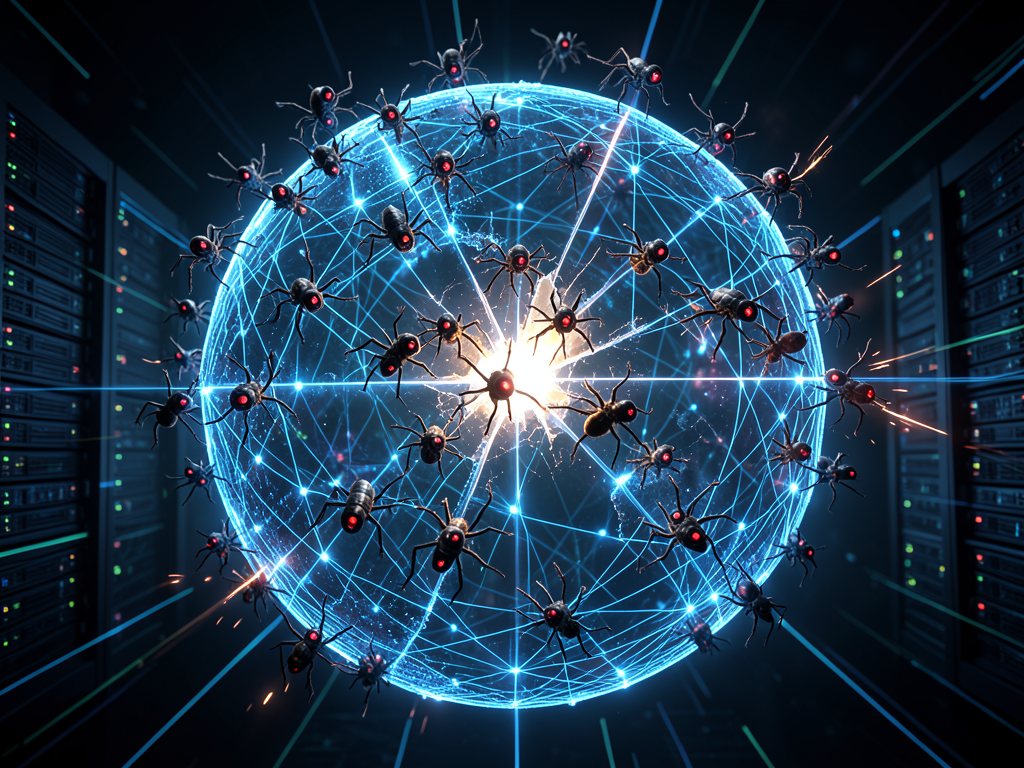
A top executive at one of the world's leading artificial intelligence companies has issued a stark warning: AI-powered botnet swarms could cripple the internet within the next 12 months. The prediction comes from the CEO of Anthropic, who laid out the scenario in a detailed open letter that has reignited debate about the pace of AI development.
The Botnet Scenario
The Anthropic CEO described a future where AI-powered botnets operate as coordinated swarms, capable of autonomously identifying and exploiting weaknesses in network infrastructure. Unlike traditional botnets that rely on static command-and-control servers, these AI swarms could adapt in real time, distribute tasks among themselves and evade detection by learning from failed attempts.
The letter argued that current cybersecurity infrastructure is unprepared for this scale of automated threat. Most defenses rely on human analysis and static rules, both of which are too slow to counter a swarm that can change its behavior in seconds.
Industry Leaders Back a Pause
The warning arrives as key figures in the tech industry, including Musk and Altman, have publicly endorsed a slowdown in frontier AI development. Their support for a measured pace reflects a growing consensus that the race to more powerful AI is outpacing the ability to control it safely. While Musk and Altman have often disagreed on AI strategy in the past, they share concerns about unmonitored systems capable of autonomous action.
Anthropic CEO's letter specifically references the need for international agreements to limit the deployment of autonomous AI agents that interact with the internet without human oversight. The proposal aligns with calls from researchers who argue that AI safety research must accelerate alongside capability research, not lag behind it.
Why This Matters
The implications of an AI botnet swarm extend far beyond typical cyberattacks. If such swarms become operational, they could disrupt critical infrastructure including power grids, financial systems and communication networks. The economic damage from a coordinated attack could run into trillions of dollars, and the social disruption could be severe. For businesses, the threat means that cybersecurity strategies must evolve to include AI-driven defense systems that can match the speed and adaptability of the attackers. For governments, the warning underscores the urgency of creating regulatory frameworks that can keep pace with technological change. The alignment of Musk and Altman with the Anthropic CEO's perspective signals that even those driving AI forward recognize the need for restraint.