Senior Editor: Alan Agbele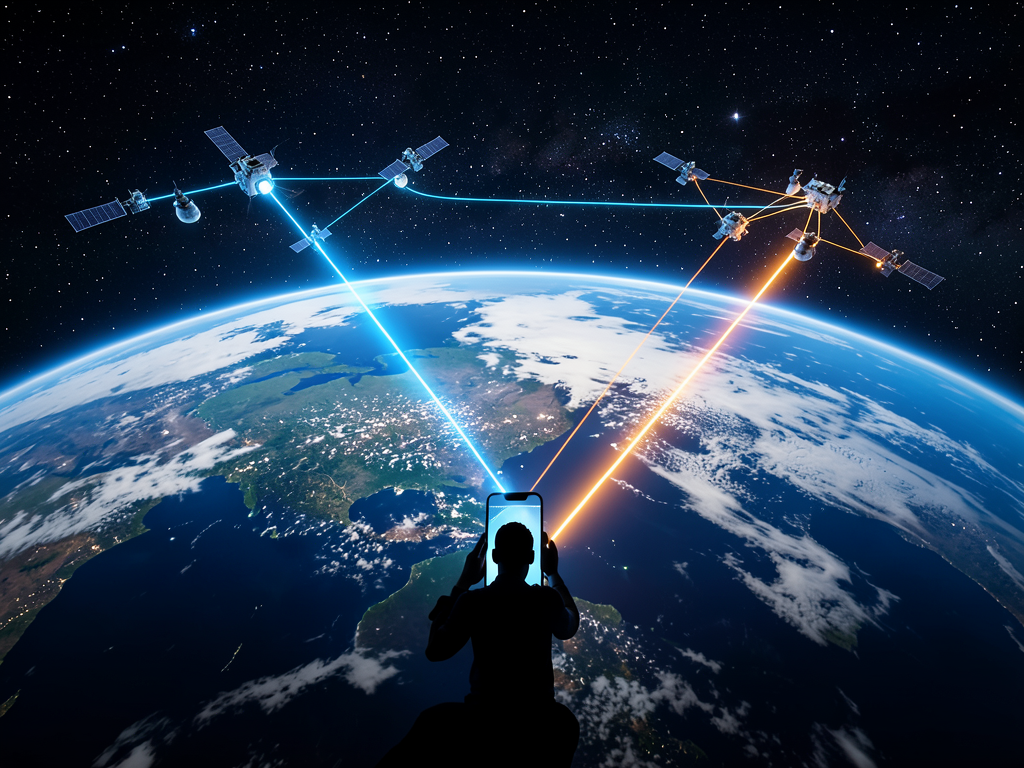
Amazon is escalating its push into satellite-based mobile phone connectivity, a move that directly challenges SpaceX's early lead in the direct-to-cell market. The company's Project Kuiper network, already licensed for broadband, will now include capabilities to connect standard smartphones without specialized hardware. This expansion puts two of the world's most valuable companies on a collision course over a nascent but potentially transformative technology.
The Technical Shift Behind Direct-to-Cell
Traditional satellite phones require bulky antennas and dedicated hardware. Both Amazon and SpaceX are pursuing a different approach: using modified satellites that act as cell towers in space. The key technology is an adaptive beamforming system that compensates for the distance and motion of low-Earth orbit satellites. Amazon will integrate these radios into its planned 3,236-satellite Project Kuiper constellation, which is already under construction with prototype launches completed.
This technical path, however, involves significant hurdles. Satellites must maintain precise timing synchronization with terrestrial networks to avoid interference. Amazon has partnered with telecom operators in several countries to test the handoff between space-based and ground-based cells. The company has not disclosed a launch timeline for commercial direct-to-cell service.
Competitive Pressure Mounts on SpaceX
SpaceX has been first to market with its Starlink Direct to Cell service, which began beta testing with T-Mobile in 2024. But Amazon's expansion puts the pressure back on SpaceX to scale faster and prove reliability before a well-funded rival catches up. The financial stakes are immense: connecting the roughly 3 billion people who still lack reliable mobile coverage represents a market worth tens of billions annually.
Both companies face similar technical and regulatory barriers. The Federal Communications Commission and international bodies must approve spectrum use and orbital slots. Amazon, however, brings an advantage in cloud computing through Amazon Web Services, which can handle the data routing and network management needed for seamless satellite-terrestrial integration.
Why This Matters
The satellite-to-phone race will determine whether millions of people in rural and remote areas finally gain reliable mobile access. For consumers, the biggest near-term benefit is likely to be emergency connectivity and the gradual elimination of dead zones on highways and in national parks. For the telecom industry, the threat is more existential: satellite operators could bypass traditional carriers and offer service directly, disrupting the decades-old model of cellular infrastructure investment. If Amazon and SpaceX both succeed, the pressure on mobile network operators to cut roaming fees and expand coverage will intensify. The loser in this scenario is not any single company but the status quo itself.