Senior Editor: Alan Agbele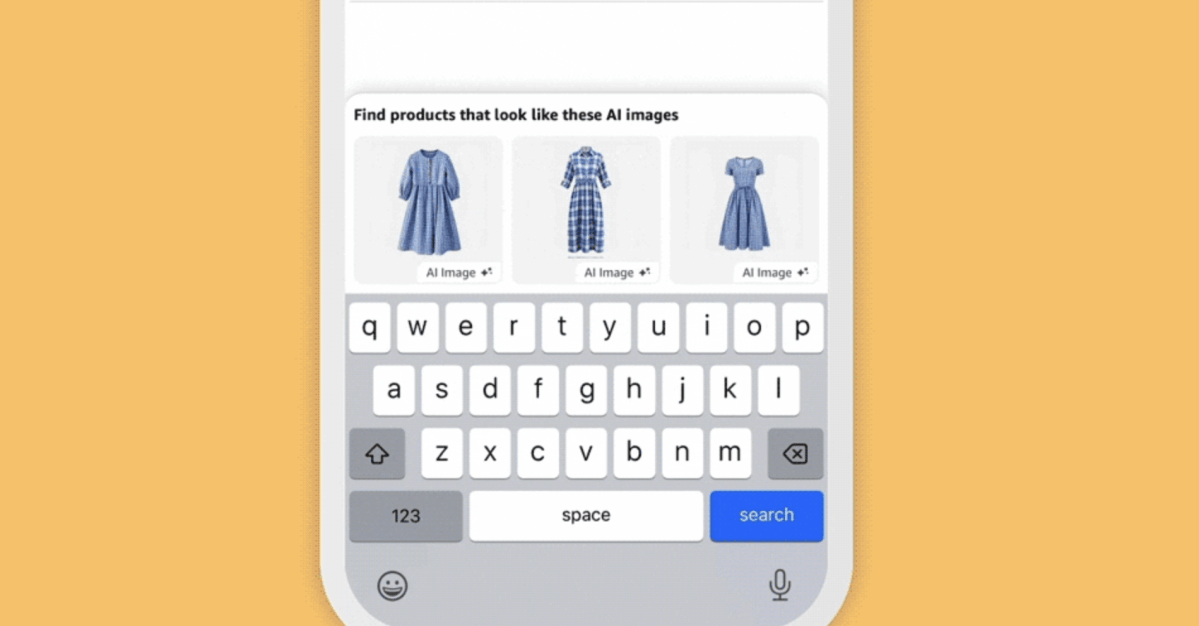
Shoppers typing vague descriptions into Amazon's search bar are now seeing AI-generated images appear automatically. The images do not correspond to real products. They are invented based on the text entered.
The feature is designed to help customers find items when they cannot recall specific style names. Amazon gives the example of searching for a "shirt with a draped collar" when the correct term is "cowl neck." The AI produces an image matching the description, and users can tap it to search for similar real products.
How It Works
Amazon's visual search tool generates images for clothing and home goods. When a shopper starts typing, the AI creates a composite image on the fly. Tapping that image triggers a standard product search for items that look similar.
The company says the feature works best for textures, patterns and style details that are hard to put into words. It may reduce the friction of describing a specific shape or fabric.
Why This Matters
Amazon's move represents a growing trend of integrating generative AI directly into shopping interfaces. Instead of searching by keyword alone, consumers can now search by visual concept. This could reshape how people browse and discover products.
For sellers, the feature creates new demands on product imagery and tagging. Listings need to match AI-generated expectations more closely. Shoppers who rely on visual search may become more selective.
There is also a trust consideration. The AI images are clearly labeled as generated, but some users may find the distinction confusing. Amazon will need to manage expectations to avoid frustration when the generated image does not match any available product.
Limitations and Concerns
The feature currently only covers two categories: clothing and home goods. Amazon has not announced plans to expand to electronics, tools or other categories. The AI's accuracy also depends on the quality of Amazon's catalog and the clarity of the search description.
Privacy questions remain. Amazon's AI must process typed descriptions in real time, which requires data collection. The company has not detailed how it handles or stores these inputs.
Despite these limitations, the feature signals Amazon's ambition to make search more visual and intuitive. It is one of several AI-powered updates the company has introduced recently, including review summaries and product recommendations.