Senior Editor: Alan Agbele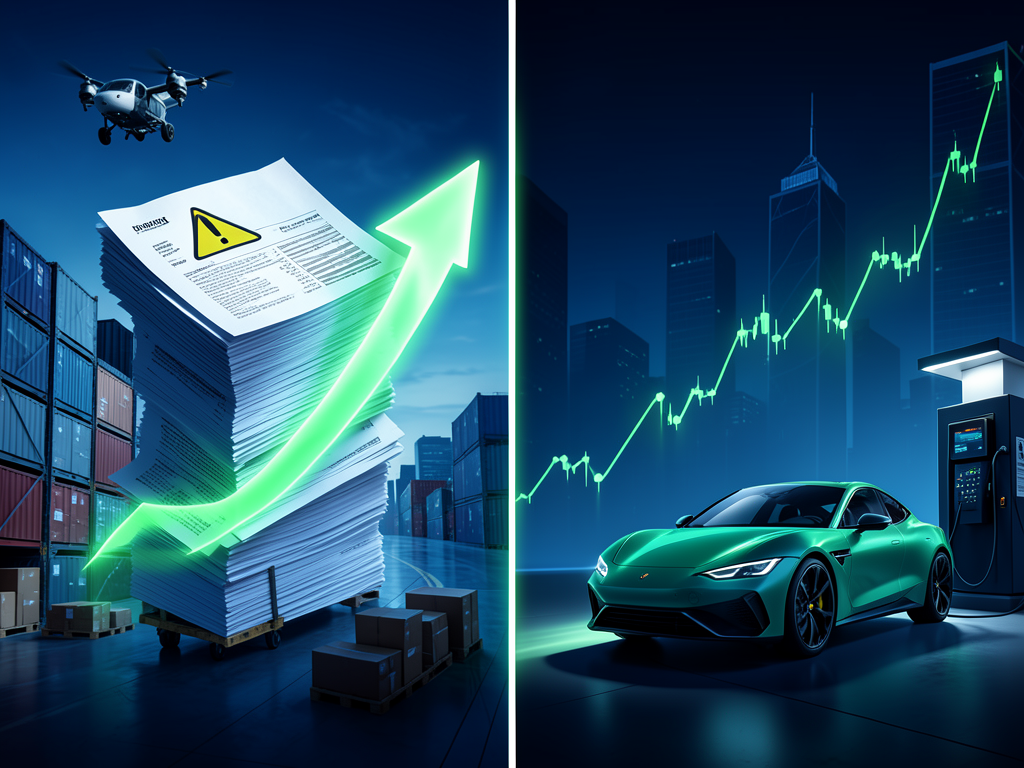
Two of the most valuable companies in the world began their public trading life with a stark warning: they might never turn a profit. Amazon and Tesla each included explicit language in their initial public offering documents cautioning investors that profitability was not guaranteed. Which companies issued such warnings? They used the exact phrase that they might never achieve profitability. More than two decades later, those warnings look like extraordinary understatements.
The IPOs That Made History
Amazon went public in May 1997 with an offering price of $18 per share. The company's S-1 filing included a risk factor stating that it "may not achieve profitability" due to heavy investments in growth and infrastructure. At the time, Amazon was a small online bookstore with limited revenue and mounting losses. Investors who bought at the IPO and held through the dot-com crash have seen returns exceeding 200,000%.
Tesla followed a similar path. The electric carmaker filed for its IPO in 2010 with a warning that it had incurred losses since inception and might never become profitable. Tesla's offering raised about $226 million, giving it a valuation of $1.7 billion. Today, Tesla is worth more than $500 billion and dominates the global EV market.
Why Such Warnings Are Standard
Risk disclosures of this kind are not unusual in tech IPOs. The Securities and Exchange Commission requires companies to list all material risks that could affect financial performance. For young, unprofitable firms, the possibility of never reaching profitability is a standard caveat. Most companies that include such language do not go on to succeed. Investors must separate boilerplate warnings from genuine structural problems. In the cases of Amazon and Tesla, the risks were real but the execution overcame them.
Why This Matters
The examples of Amazon and Tesla shape how venture capitalists and institutional investors evaluate today's crop of money-losing startups. Companies such as Uber and Lyft have included similar warnings in their own public filings, yet few have achieved the market domination of Amazon or Tesla. The lesson is not that every unprofitable company will succeed but that long-term vision and operational discipline can overcome initial losses. Investors who dismiss profitability warnings entirely may miss the next giant, but the vast majority of such warnings remain valid. The caution remains: a promise of future profitability is not a guarantee, even for companies that later change the world.