Editor: Porcia Akua Holmes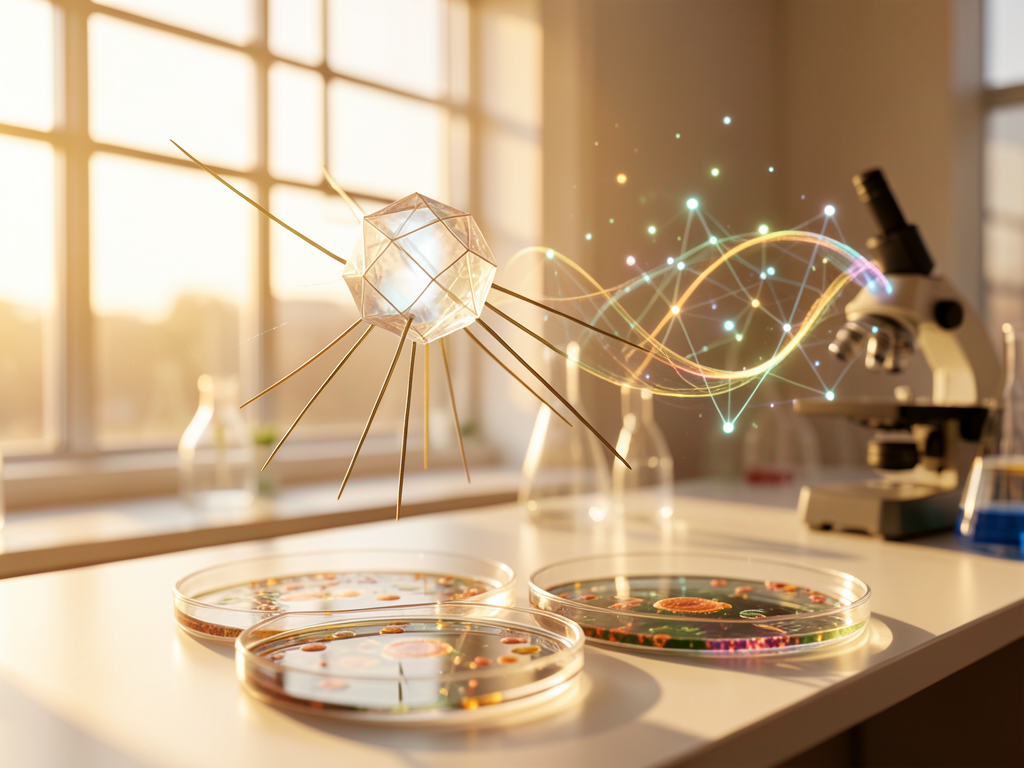
Samuel King, a Stanford University PhD candidate, used a generative AI model to design viruses that actually work. The bacteriophages he created are not yet artificial life, but they represent a significant step toward AI-driven biology. The implications for medicine and biosecurity are enormous.
From Code to Contagion: How AI Designed a Virus
King's approach used a generative AI model to propose genetic blueprints for microscopic viruses. The model learned from known bacteriophage genomes and generated new sequences. These sequences were then synthesized and tested in the lab. The result: viruses that could infect and kill bacteria.
This is not yet AI-generated life. The viruses are still based on natural templates. However, the success shows that AI can design functional biological agents. That capability could accelerate drug development and phage therapy.
The Science Behind the Breakthrough
Bacteriophages are viruses that infect bacteria. They are already used as alternatives to antibiotics. King's AI model generated novel phage genomes that had never existed in nature. The model predicted which sequences would fold into functional proteins. This is a major advance in computational biology.
The work was conducted at Stanford University and the Arc Institute. King was named one of MIT Technology Review's Innovators Under 35. His research opens new ways of seeing biology.
Why This Matters
The ability to design viruses with AI changes the threat landscape. It lowers the barrier for creating dangerous pathogens. A malicious actor could potentially use similar tools to design harmful viruses. This is a classic dual-use dilemma.
Pharmaceutical companies and biotech startups will benefit from faster drug discovery. But governments and security agencies must now grapple with how to regulate AI-designed biology. The line between beneficial and harmful applications is blurry.
Patients with antibiotic-resistant infections could gain access to personalized phage therapies. That is a positive outcome. Yet the same technology could be misused. The international community needs to establish norms and safeguards.
What You Need to Know
King's work is a proof of concept. It shows that AI can generate genetic sequences that produce working viruses. The AI model was trained on existing phage data. It did not create life from scratch. The viruses were synthesized and tested in a laboratory setting.
The research was highlighted in a Roundtables conversation with James O'Donnell, an AI reporter. The session covered King's work and his recognition as an Innovator Under 35. It also explored new ways of seeing biology through AI.
The Road Ahead for AI and Biosecurity
King's research is a wake-up call. It demonstrates that AI can be a powerful tool for biology. The scientific community must proactively address the risks. Otherwise, the technology could be weaponized.
Some experts call for a moratorium on AI-designed viruses. Others argue that responsible research should continue. The debate is just beginning. What is clear is that AI and biology are converging faster than regulations can keep up.
Stanford University and the Arc Institute are at the forefront of this field. Their work will influence policy and public perception. The world is watching.