Senior Editor: Alan Agbele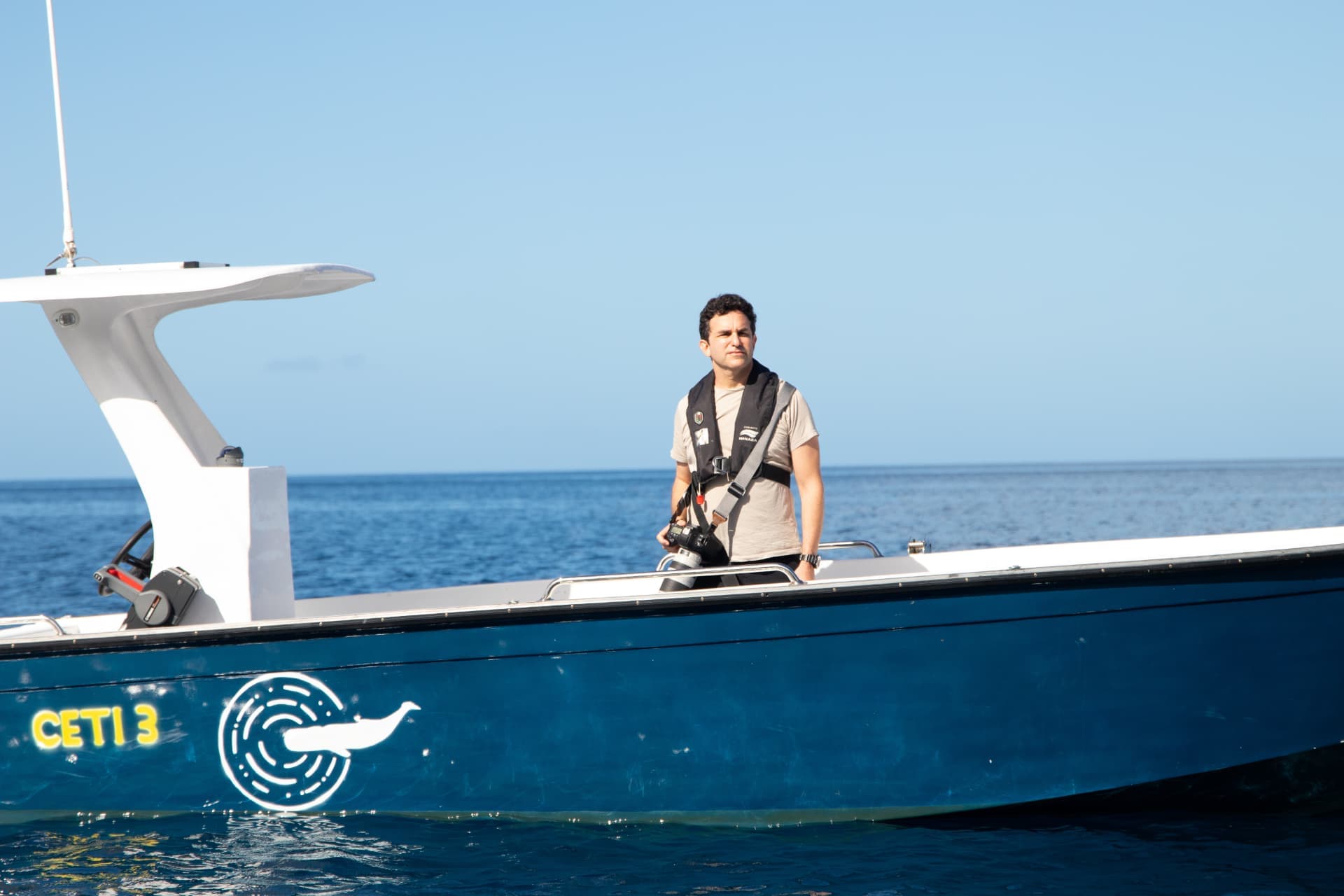
For decades, whale songs have fascinated scientists and the public alike. Now, machine learning is unlocking their secrets. A researcher known as the man who listens to whales has developed AI models capable of analyzing the complex patterns of cetacean vocalizations, moving from simple detection to potential translation.
How AI Decodes Whale Songs
Traditional bioacoustics relied on human analysts manually labeling spectrograms, a slow and subjective process. The new approach uses convolutional neural networks and transformer architectures to process high-frequency recordings in real time. These models don't just detect sounds; they learn the syntax of whale communication.
Key technical advances include:
These breakthroughs have turned whale song analysis from a niche field into a data-rich research domain.
Why This Matters
The implications extend far beyond marine biology. If AI can decode non-human communication, it redefines our understanding of intelligence on Earth. Conservation efforts will gain a powerful tool: real-time alerts when whales enter shipping lanes or face acoustic pollution from naval sonar. The researchers, however, acknowledge the ethical challenges. Two-way communication experiments raise questions about consent and welfare. Regulators will need to weigh scientific curiosity against the risk of disturbing natural behavior.
For the tech industry, this work validates that transformer models originally built for human language can generalize to entirely different communicative systems. The same architectures used for GPT and Bard are now parsing whale song. That crossover may drive new funding for bioacoustics AI startups.
The Road Ahead
The man who listens to whales and his team plan to deploy autonomous buoys equipped with the AI model along major migration routes. They aim to create a global acoustic network that provides live insights into cetacean behavior. Success depends on continued collaboration between marine ecologists and machine learning engineers. If the project scales, it could transform how humanity relates to the ocean's largest minds.