Senior Editor: Alan Agbele
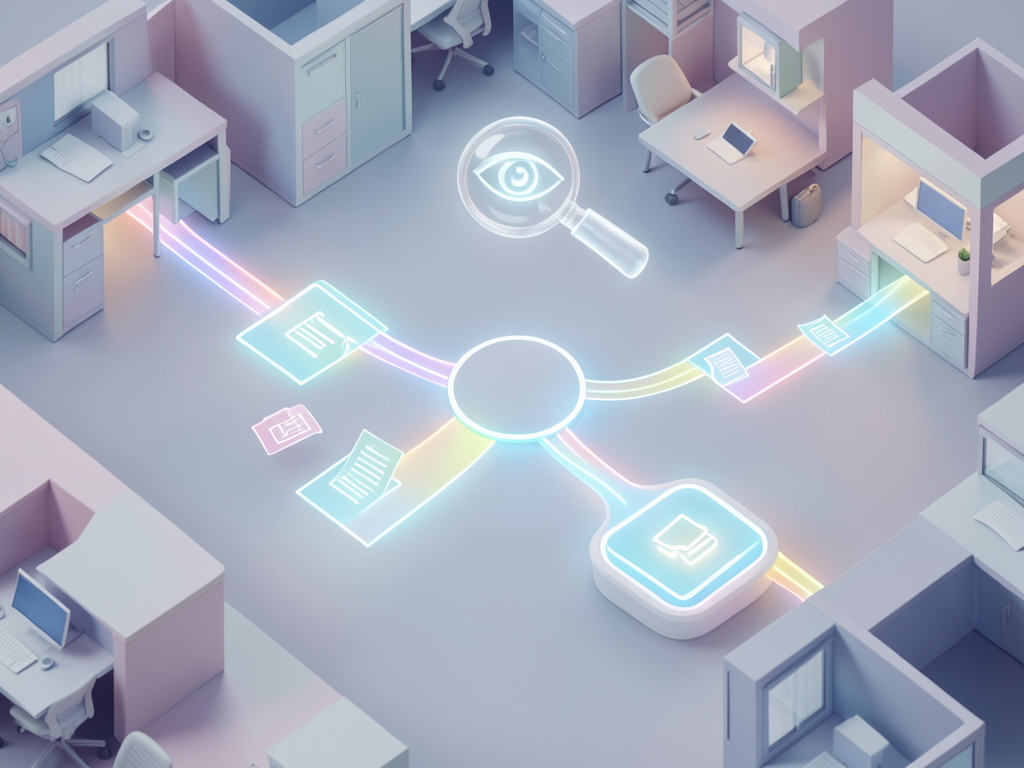
A sales representative asks an AI agent for customer pricing. The agent pulls from restricted pricing systems, internal communications and archived quotes, then hands the output to a second agent that drafts a proposal. No human checks either handoff. When unapproved, confidential information surfaces in the proposal, nobody can trace where the data entered the workflow or how it spread.
Why Agentic Workflows Break Traditional Security Models
Enterprise security has long focused on static assets. Firewalls guard networks, endpoint tools watch devices and access controls gate applications. Agentic AI, however, operates in the spaces between those controls.
An agent may ingest a document, summarize it, pass the summary to another agent and store the result in a third system. Each step creates a new copy with new permissions and new risk. The original classification often does not travel with the data.
This is why the report from MIT Technology Review and Cyberhaven frames AI security as a data visibility problem rather than a tooling problem. Adding another scanner does not help if the organization cannot see the path data takes.
The Difference Between Static Files and Moving Data
Static files sit in known locations with known owners. Moving data has no fixed home. It is continuously ingested, copied, summarized, transformed, reused and redistributed in new forms.
Security teams that map only repositories and databases will miss the agent-to-agent handoffs where most of the risk now accumulates. The sales proposal scenario is not an edge case. It is a template for how everyday enterprise work is starting to run.
What Data Lineage Actually Delivers
Data lineage tracks the origin, movement and transformation of information across systems, files and agents. For agentic AI, it answers three practical questions that access controls alone cannot.
Those answers matter for governance, accountability and trust. They also matter for incident response. Without lineage, a breach investigation becomes guesswork about which agent touched what and when.
The NIST AI Risk Management Framework already points organizations toward mapping, measuring and managing AI risks. Data lineage gives security teams the operational evidence to do that mapping in real time rather than in retrospect.
Why This Matters
The organizations most exposed are not the ones experimenting with a single chatbot. They are the ones already running multiple agents across sales, finance, legal and engineering, where sensitive data crosses departmental boundaries every hour.
For security leaders, the practical change is a shift in budget and attention. Endpoint and network tools remain necessary, but they will not answer the question a regulator or a customer will ask after an incident: where did this data go?
For AI vendors, lineage is becoming a procurement requirement. Enterprises that cannot demonstrate traceability across agent workflows will struggle to pass internal risk reviews, especially in regulated industries.
For employees, the implication is subtler. When agents act on their behalf, the human remains accountable for the output. Lineage is what makes that accountability possible instead of theoretical.
The Governance Shift Ahead
Agentic AI adoption is outpacing the controls designed to supervise it. The gap will not close by slowing deployment. It will close by making data movement visible enough to govern.
That means treating lineage as core infrastructure, not a reporting feature. It means classifying data at the point of ingestion so the label survives every transformation. It also means auditing agent handoffs with the same rigor applied to human approvals.
The sales proposal scenario ends with a leak nobody can explain. The next generation of enterprise security has to end differently.