Senior Editor: Alan Agbele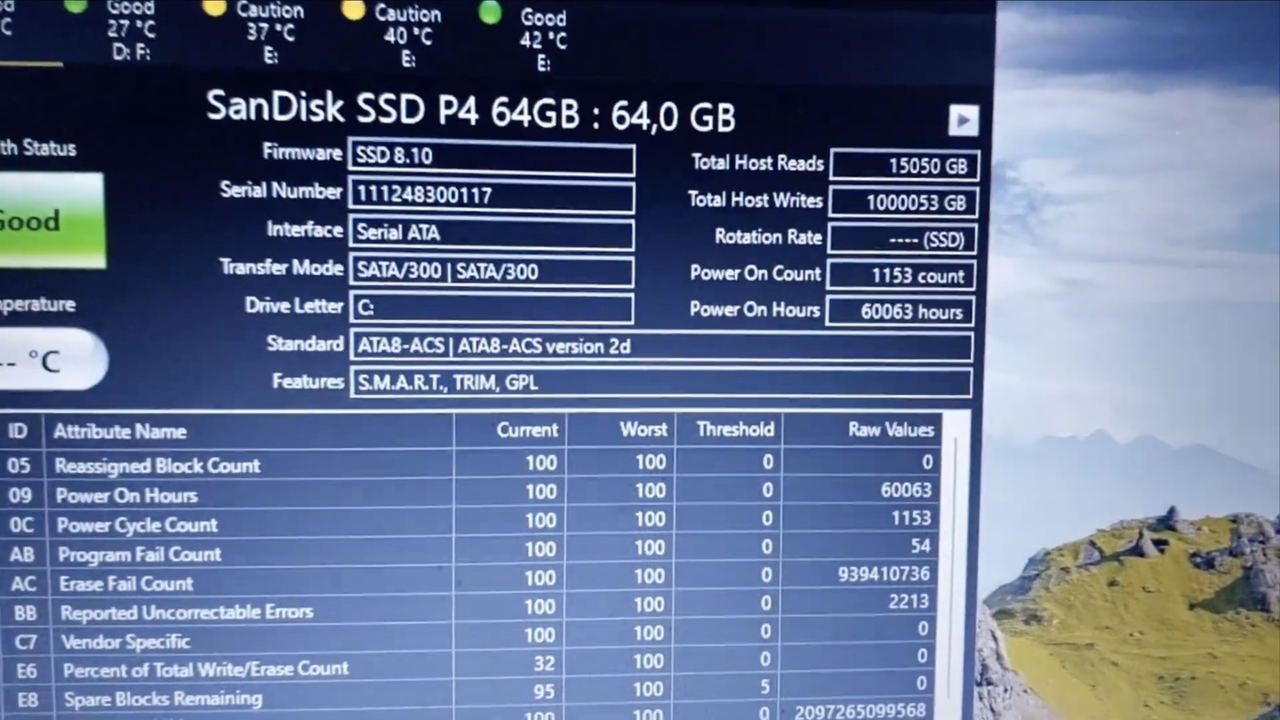
A storage enthusiast has written one petabyte of data to a Sandisk P4 SATA II SSD released 16 years ago. The drive not only survived the test but exceeded its official endurance rating by roughly 25 times.
The Experiment and Its Results
The test involved continuously writing data to the legacy solid-state drive until it reached the petabyte milestone. The Sandisk P4 was originally rated for a total bytes written (TBW) of around 40 terabytes. Reaching one petabyte represents a write endurance that is 25 times higher than the manufacturer's specification.
Throughout the experiment, the drive remained operational and did not fail or exhibit significant data corruption. This outcome challenges common assumptions about the lifespan of older SSDs under heavy write workloads.
Why This Matters
For consumers and IT professionals managing aging hardware, this result offers practical reassurance. Many older SSDs are still in use in secondary systems or budget builds. The test suggests that even early-generation SATA II drives can handle far more writes than their conservative ratings imply.
This also provides insight into NAND flash memory longevity. While modern SSDs use denser and more complex architectures that can be less durable per cell, older drives built with larger process nodes may offer unexpected resilience. Users should not assume that an old SSD is near failure simply because it has accumulated many writes.
Broader Implications for Storage Technology
The experiment highlights a gap between official endurance ratings and real-world performance. Manufacturers set TBW limits conservatively to ensure reliability across all usage scenarios. In practice, many drives can operate well beyond those limits before encountering issues.
This does not mean all old SSDs will perform similarly. Factors such as controller quality, firmware optimization and workload patterns play major roles in actual lifespan. However, for light to moderate use cases like boot drives or media storage, an older SATA II SSD may remain viable for years longer than expected.
A Reminder About Hardware Longevity
The petabyte write test serves as a reminder that hardware often outlasts its warranty period when treated reasonably. For users holding onto older PCs or repurposing retired components, this kind of evidence supports continued use rather than forced upgrades based on age alone.
As storage technology evolves toward PCIe Gen5 and beyond, experiments like this provide valuable perspective on how far consumer-grade NAND has come since the early days of solid-state drives.