Senior Editor: Alan Agbele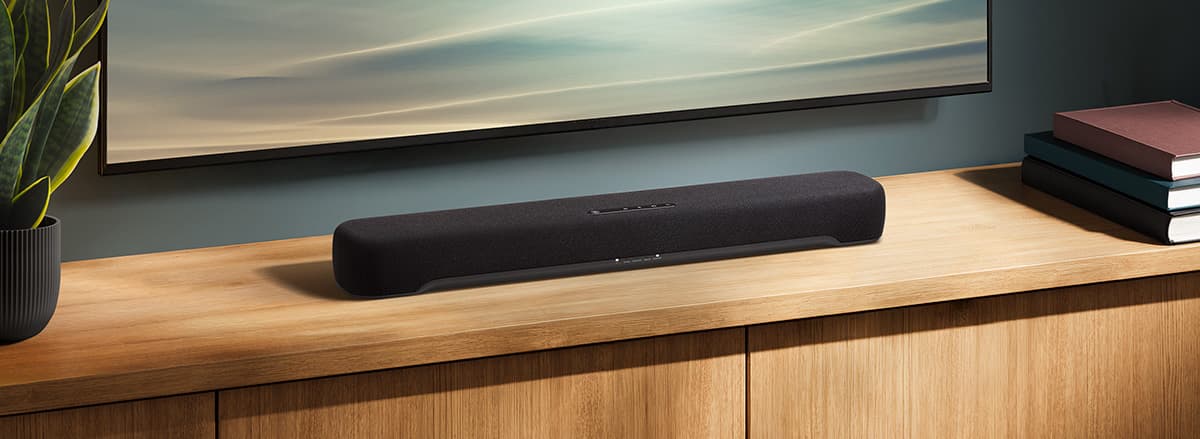
Yamaha has updated its smallest soundbar model with Dolby Atmos support, bringing object-based spatial audio to a form factor designed for tight spaces and minimalist setups. The move marks a significant shift for a company that has historically reserved immersive audio features for larger, premium soundbar models.
Closing the Size Gap
Soundbar manufacturers have long wrestled with a basic challenge: delivering convincing Dolby Atmos requires upward-firing drivers or psychoacoustic processing, both of which demand physical space. Yamaha's approach in its smallest model relies on virtual height rendering combined with digital signal processing to create the illusion of overhead sound. Yamaha engineers tuned the system to prioritize clarity and dialogue intelligibility, which are common pain points in compact audio designs.
Why This Matters
The arrival of Dolby Atmos in Yamaha's smallest soundbar changes the buying calculus for millions of apartment dwellers and bedroom TV owners. These users previously had to choose between a full-size soundbar that dominated a room or a basic stereo bar that lacked height effects. Yamaha's update removes that compromise. For the company, the move protects its market share against aggressive competitors that already ship Atmos in compact packages. Sonos, for example, offers the Beam with virtual Atmos, and Samsung's Q-Series includes compact bars with upward-firing drivers. Yamaha cannot afford to cede this segment. For consumers, the practical outcome is clearer: immersive audio is becoming a standard expectation rather than a premium add-on.
Market Implications for Compact Audio
Yamaha's decision reflects a broader industry move toward feature parity across product tiers. In the past, Dolby Atmos was marketed primarily to home theater enthusiasts with dedicated ceiling speakers or high-end soundbars. Today, streaming services such as Netflix, Apple TV and Amazon Prime Video increasingly default to Atmos audio tracks, making compatibility a baseline requirement rather than a differentiator. Yamaha's upgrade also hints at a pricing strategy shift. If the company keeps the compact model at a competitive price point while adding Atmos, it could pressure other brands to include the feature without raising prices. That dynamic benefits budget-conscious buyers who want better audio but resist paying a premium for it.
What the Upgrade Means for Setup Simplicity
One factor that may sway potential buyers is ease of installation. Compact soundbar owners often want a single-bar solution without external subwoofers or satellite speakers cluttering a room. Yamaha's updated model keeps that simplicity intact. The soundbar connects via HDMI eARC or optical cable and handles all audio decoding internally. Users do not need to run additional wires or pair wireless subwoofers to experience the height effects. That approach aligns with how most people actually use soundbars: as a plug-and-play upgrade to built-in TV speakers. For anyone who has hesitated to buy a soundbar because of complexity, this update removes one more barrier.