Senior Editor: Alan Agbele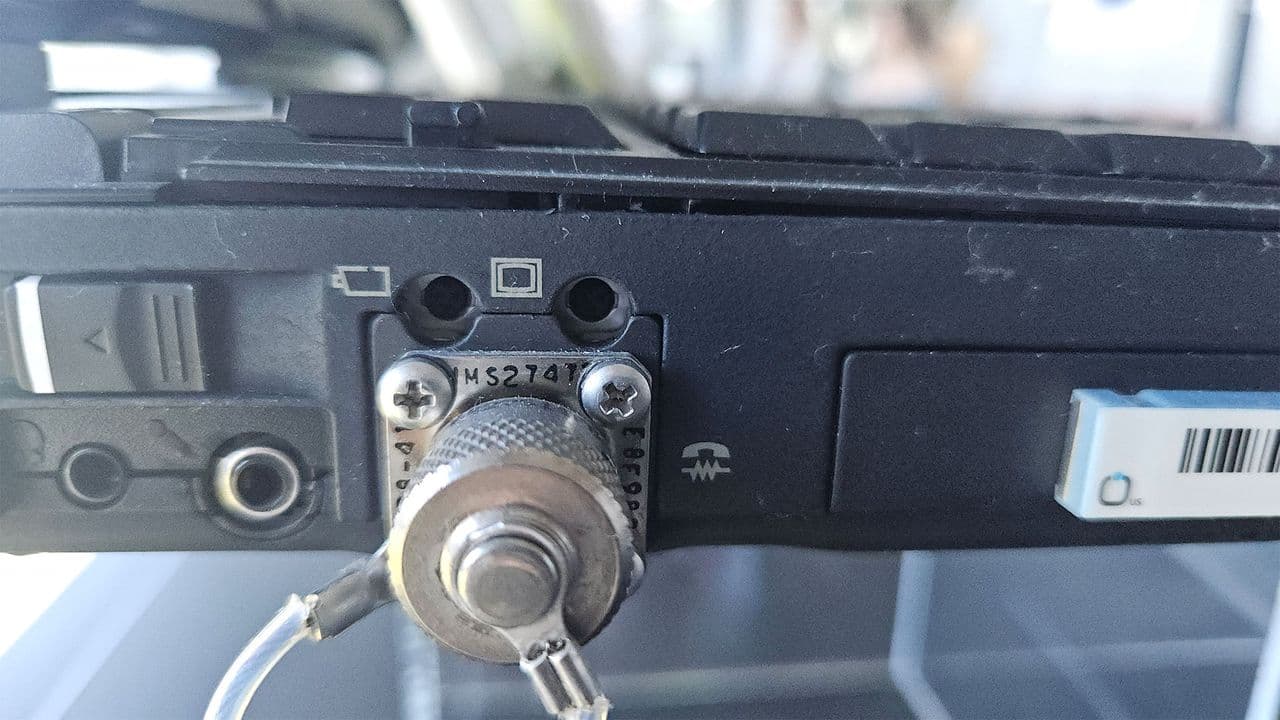
When laptops were first sent to the International Space Station, they carried onboard modem ports that were completely useless in orbit. NASA decided to remove those ports and replace them with a standardized power connector called a cannon plug. The modification reduced the need for multiple chargers and eliminated unnecessary weight and failure points.
How the Cannon Plug Replaced Modem Ports
Roush, an engineer with a passion for space technology, shared photos of the modified laptops during a visit to the NASA Stennis visitor center. The laptops, typically Lenovo ThinkPads and other machines, had their telephony modem ports removed. In their place, Lockheed Martin installed a cannon plug designed to connect to the ISS's DC power outlets. This meant astronauts no longer needed to carry nine different laptop chargers.
The decision was driven by the harsh realities of space travel. Every gram counts, and every connector introduces a potential failure point. Standardizing on a single connector also made it easier to swap equipment between modules and crews.
The Forgotten History of Space Laptops
During his visit, Roush noted that the NASA Stennis visitor center had almost no information about the cannon plug modification on display. He turned to online resources he had used previously but found many had disappeared. “The old internet is dying, and with it, we risk losing a lot of useful history,” he said. The engineer expressed concern that the false belief in an eternal internet will cause documented history to be lost when servers shut down.
Some of those lost resources may still be accessible through the Wayback Machine, but that service itself faces challenges. In April, stories emerged about the Internet Archive struggling with skyrocketing storage costs driven by the AI boom. Both NAND and mechanical hard drives have faced shortages, making it more expensive to preserve web history.
Why This Matters
The story of the ISS laptop modification is more than a historical curiosity. It illustrates a core engineering principle: reduce complexity to increase reliability. For future space missions, especially long-duration flights to the Moon or Mars, every simplification matters. The same principle applies to consumer electronics where proprietary chargers create waste and confusion.
Beyond hardware, the disappearance of the sources documenting this modification highlights a broader problem. As web pages vanish and archival services struggle financially, institutional knowledge about past engineering decisions may become harder to find. Roush's warning about the old internet echoes concerns from historians and archivists who rely on the Wayback Machine to preserve digital history.
Modern Hardware Replaces Legacy Systems
The cannibalized laptops from the late 1990s are no longer in use. In April, HP sent more than 100 Z Workstations to the ISS. These PCs pack Core Ultra 9 processors and RTX Pro Blackwell graphics. HP put the workstations through two years of rigorous testing before deployment. The company also supplies universal AC/DC power adapters designed to function both on the ISS and on Earth, continuing the tradition of standardized power.