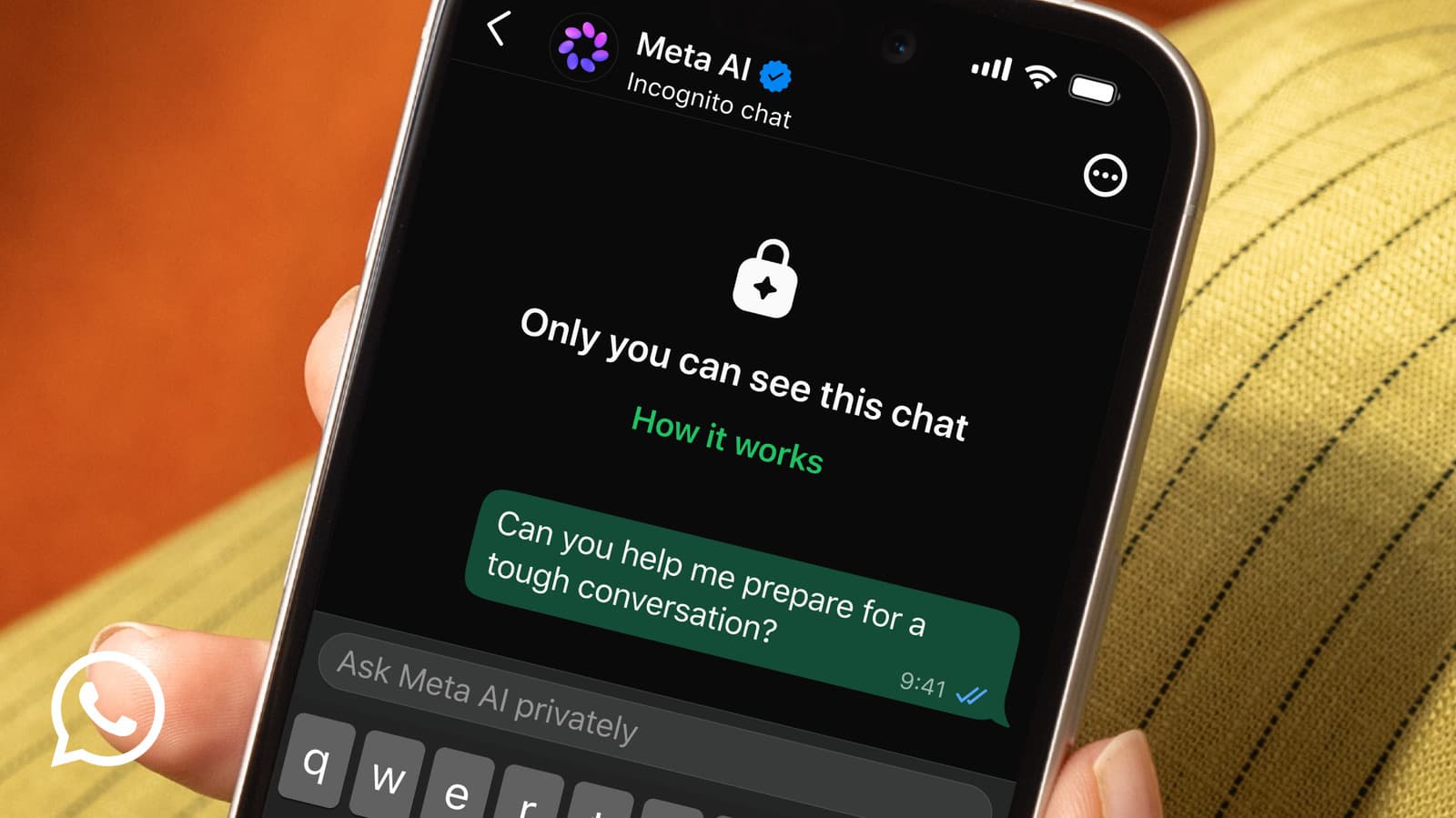
WhatsApp is rolling out a new privacy feature for users who interact with its artificial intelligence assistant. The messaging platform will soon offer an incognito chat mode for conversations with Meta AI. Messages sent in this mode will not be saved to chat history. Meta also confirmed it will not use those conversations to train its AI models.
The feature addresses growing concerns about data collection and AI training. Many users have worried that casual chats with AI assistants could be stored and repurposed. Incognito mode gives them a clear opt out. No one else, including Meta, will be able to read those exchanges.
How Incognito Chat Works
Users will activate the incognito option before starting a conversation with Meta AI. Once enabled, the chat session becomes ephemeral. Messages disappear when the session ends. They are not stored locally on the device or on Meta's servers.
This is a significant shift from standard AI chats on WhatsApp. Normally, users can scroll back through past conversations. The AI assistant also uses those past exchanges to improve its responses. Incognito mode breaks both of those patterns.
The feature is still being tested. WhatsApp has not announced a specific release date. Early reports suggest it will roll out globally in the coming weeks.
Why This Matters
Privacy has become a flashpoint for AI powered messaging tools. Users want the convenience of an AI assistant without sacrificing control over their data. Incognito chat directly addresses that tension.
People who discuss sensitive topics with Meta AI can now do so with confidence. No record of the conversation will remain. This is especially important for users in regions with strict data surveillance or those who share personal information during a chat.
The move also pressures competitors like Google and Apple to offer similar protections. If WhatsApp can deliver ephemeral AI interactions, other platforms will likely follow. The industry standard for AI chat privacy is about to shift.
For Meta, the feature is a strategic win. It demonstrates a commitment to user privacy at a time when regulators are scrutinizing AI data practices. It may also encourage more people to try Meta AI without fear of long term data tracking.