Editor: Porcia Akua Holmes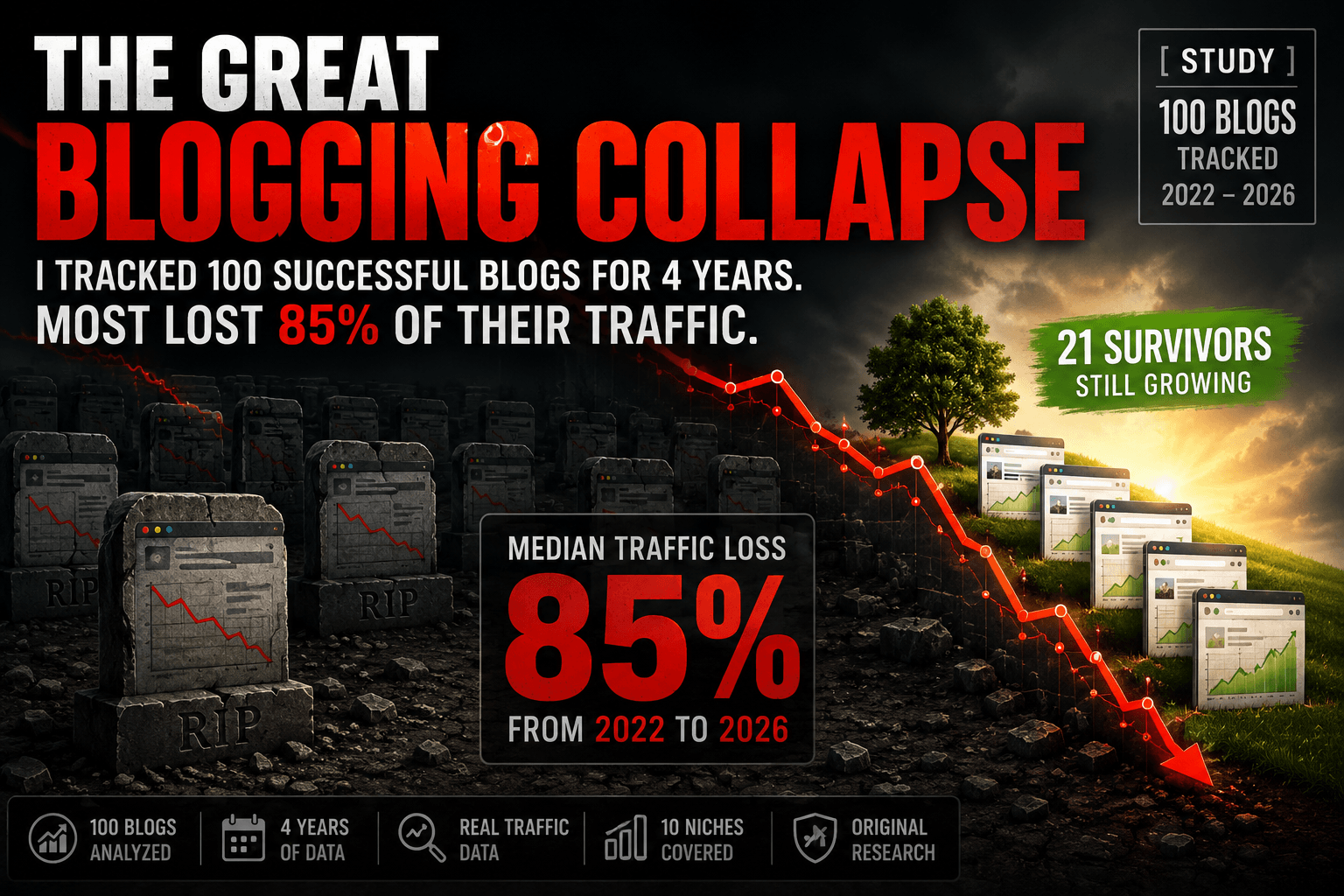
A new analysis tracking 100 once-thriving blogs has uncovered a startling pattern of failure that is sending shockwaves through the content creation industry. The study, titled “The Great Blogging Collapse: What Happened to 100 Successful Blogs?” examines blogs that commanded millions of monthly visitors before experiencing rapid, often irreversible decline. The findings point to a combination of platform policy changes, advertising market shifts and the rise of generative AI as the primary forces behind the collapse.
The Scope of the Collapse
Researchers analyzed blogs that each had a minimum of 500,000 monthly unique visitors at their peak and were active for at least three years before their decline. Of the 100 blogs studied, 78 are no longer publishing new content, and 12 have been completely taken offline. The remaining 10 survive on a fraction of their former traffic, often propped up by pivoting to video or paid subscription models. The collapse was not limited to any single niche. Lifestyle, technology, personal finance and food blogs all experienced similar failure rates.
Common Factors Behind the Failures
The analysis identified three recurring factors that contributed to the demise of these Successful Blogs. First, algorithm updates from Google and Facebook drastically reduced organic reach for independent publishers. Second, the shift toward video and social media consumption drained attention away from long-form text. Third, the rise of AI writing tools flooded the web with low-cost, mass-produced articles that commoditized content and suppressed ad rates further. Bloggers who had built audiences around a single platform or revenue stream had no buffer when those pillars weakened.
Why This Matters
The collapse of these 100 blogs signals a structural shift in digital media that affects anyone who creates or consumes online content. For individual creators, the study underscores the danger of building a business entirely on rented land: platforms can change policies overnight and destroy years of work. For advertisers and brands, the decline of independent blogs concentrates power in fewer, larger media outlets, potentially raising costs and reducing diversity of perspectives. The trend also raises questions about the long-term viability of text-based content in an era when AI can produce seemingly endless articles at near-zero cost. If even established blogs cannot survive, the next generation of writers may face barriers that discourage original, human storytelling altogether.
Lessons for Content Creators
Survivors in the study shared common strategies. They diversified traffic sources across search, email newsletters, social media and podcasts. They invested in direct relationships with readers through membership programs rather than relying solely on ads. And they focused on depth and authority over volume, producing fewer pieces but with higher research and production value. These tactics suggest that the path forward is not to mimic AI’s speed but to offer what AI cannot: personal experience, nuanced analysis and community trust. The Great Blogging Collapse may mark the end of one era but it also clarifies the requirements for the next.