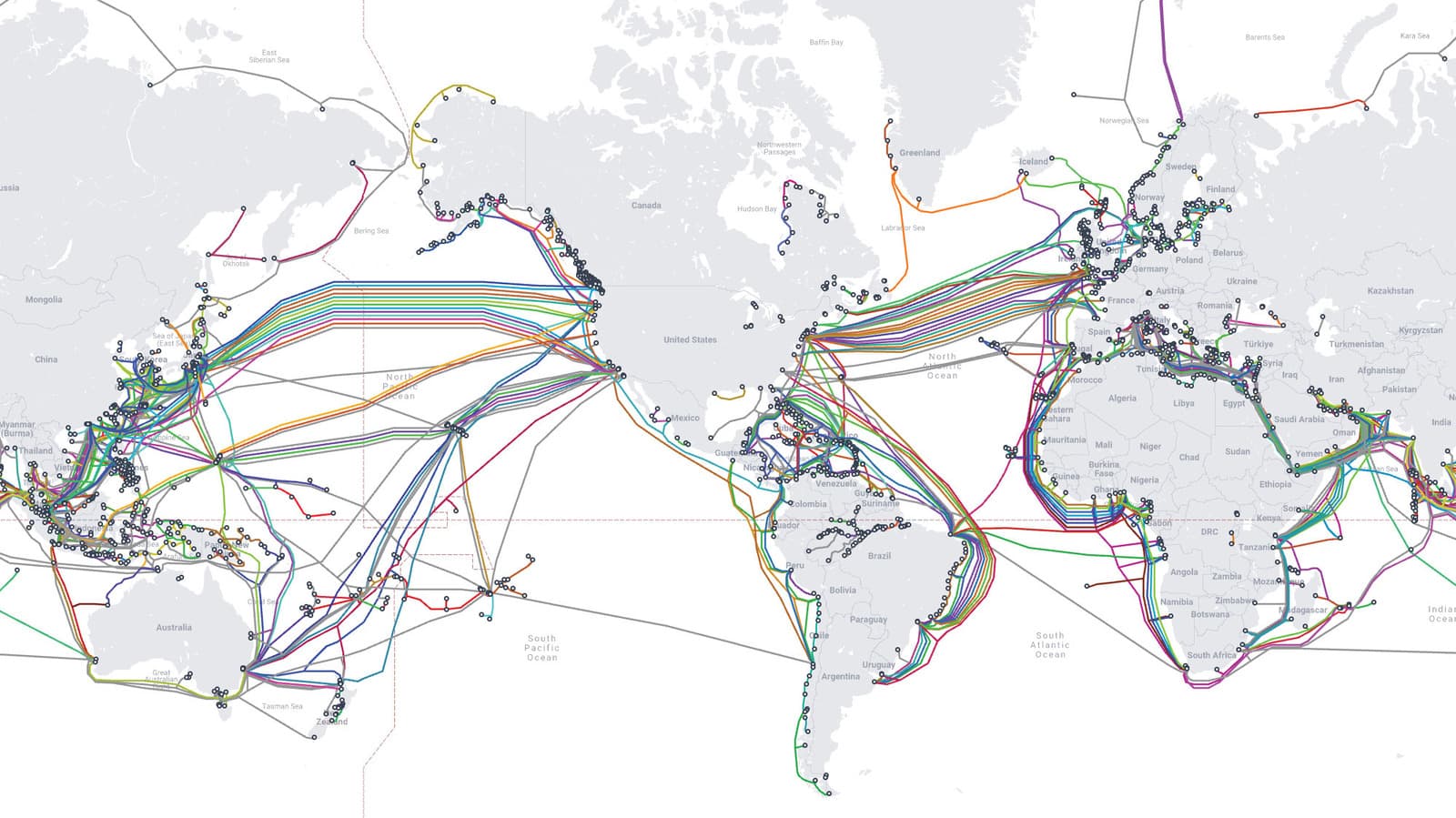
Every second vast amounts of data cross oceans through cables thinner than a garden hose These submarine communications cables carry nearly all intercontinental internet traffic yet most people never think about them
The Hidden Infrastructure
More than 400 active undersea cables span over one million kilometers across every ocean basin They connect continents enabling everything from video calls to financial transactions Data travels as pulses of light through hair thin strands of glass fiber wrapped in protective layers of steel wire plastic insulation
Cables lie on the seafloor at depths reaching eight kilometers Despite their critical role they face constant threats Ship anchors fishing trawlers underwater landslides earthquakes even shark bites cause dozens of breaks each year
Who Owns the Ocean Floor
A decade ago telecommunications consortiums owned most submarine cables Today major tech companies dominate Google has invested in more than a dozen private projects since 2016 Facebook Amazon Microsoft have also built their own networks This shift gives them control over routing costs latency but also concentrates risk in private hands
Vulnerability Repair Cycle
When a cable breaks internet service can degrade severely for millions Repairing deep sea faults requires specialized ships that may take weeks just to reach location The process involves grappling hooks retrieving broken ends splicing fibers onboard then carefully lowering repaired section back down Each operation costs hundreds of thousands dollars sometimes millions
Security Geopolitical Risks
Undersea cables present surveillance opportunities because they are difficult monitor continuously Intelligence agencies known tap into them intercept data Governments increasingly wary foreign vessels operating near critical landing points Recent incidents Red Sea saw multiple cuts affecting Europe Asia traffic raising suspicions sabotage though natural causes also possible Cable protection zones exist around some landing stations but enforcement varies widely leaving many sections vulnerable tampering accidental damage alike
Why This Matters
Global internet reliability hinges on these fragile lines staying intact As demand surges streaming cloud computing AI any major outage carries economic consequences worth billions daily lost commerce alone Companies invest billions building redundant routes new systems But fundamental vulnerability persists Our connected world rests on thin glass strands ocean floor exposed natural disasters human activity geopolitical tensions Understanding this hidden network helps explain why internet access remains uneven why disruptions happen why securing this infrastructure has become national priority for many governments