Senior Editor: Alan Agbele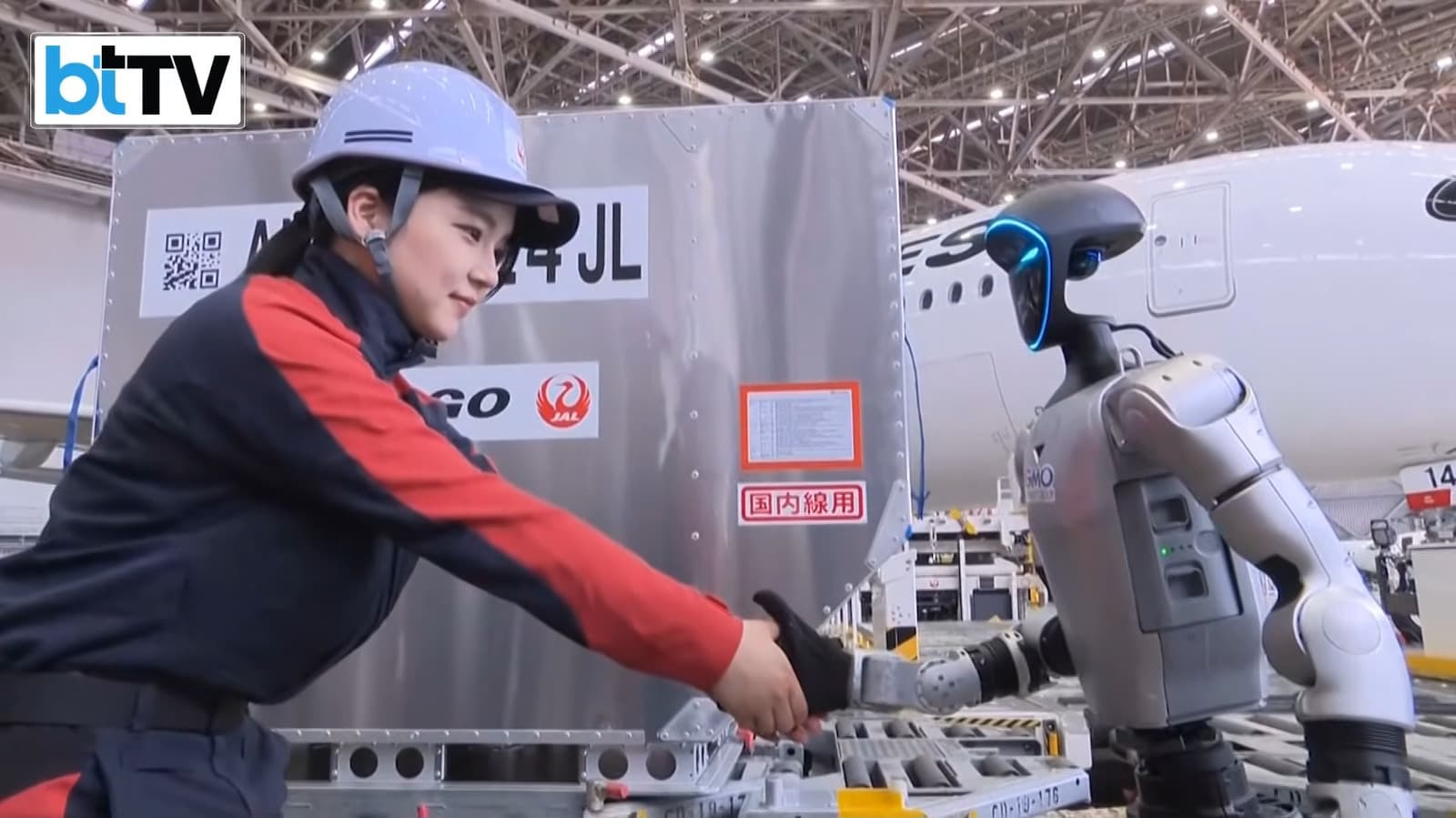
Tokyo's Haneda Airport will soon add humanoid robots to its baggage handling team. The robots, built by Sarcos, are designed to lift heavy luggage and reduce physical strain on human workers.
The deployment marks one of the first real-world uses of full-size humanoid robots in a major airport setting. Ten units of the Guardian GT robot will begin work in April.
Robots Built for Heavy Lifting
Each Guardian GT robot stands roughly two meters tall and has arms that can lift up to 500 pounds. The machines are controlled remotely by human operators who use a wearable exoskeleton suit to mirror their movements. This allows the robot to handle baggage with precision while keeping the operator at a safe distance.
Sarcos, the company behind the robot, says the technology reduces injury risks for workers who routinely lift heavy bags. The robots can also operate in areas with high temperatures or tight spaces that are difficult for humans.
The airport plans to use the robots for loading and unloading cargo from aircraft, sorting luggage and moving oversized items. The initial rollout will focus on international flights where baggage volume is highest.
Why This Matters
This deployment signals a shift in how automation enters the workforce. Unlike factory robots that perform repetitive tasks in fixed positions, humanoid robots can move freely and adapt to changing environments. That makes them useful in places like airports, where every bag is different and the layout is constantly shifting.
For airport workers, the robots could reduce physical injuries and fatigue. But the move also raises questions about job displacement. Airport unions have expressed concern that automation could replace human roles over time. Sarcos says the robots are meant to assist, not replace, workers by handling the most physically demanding tasks.
Haneda is one of the busiest airports in Asia, handling over 80 million passengers annually before the pandemic. If the robot deployment succeeds, other airports could follow. The technology is still expensive, but costs are expected to drop as production scales.
The Guardian GT robots will be monitored closely during the trial period. Airport officials say they will evaluate safety, efficiency and worker feedback before expanding the program.