Senior Editor: Alan Agbele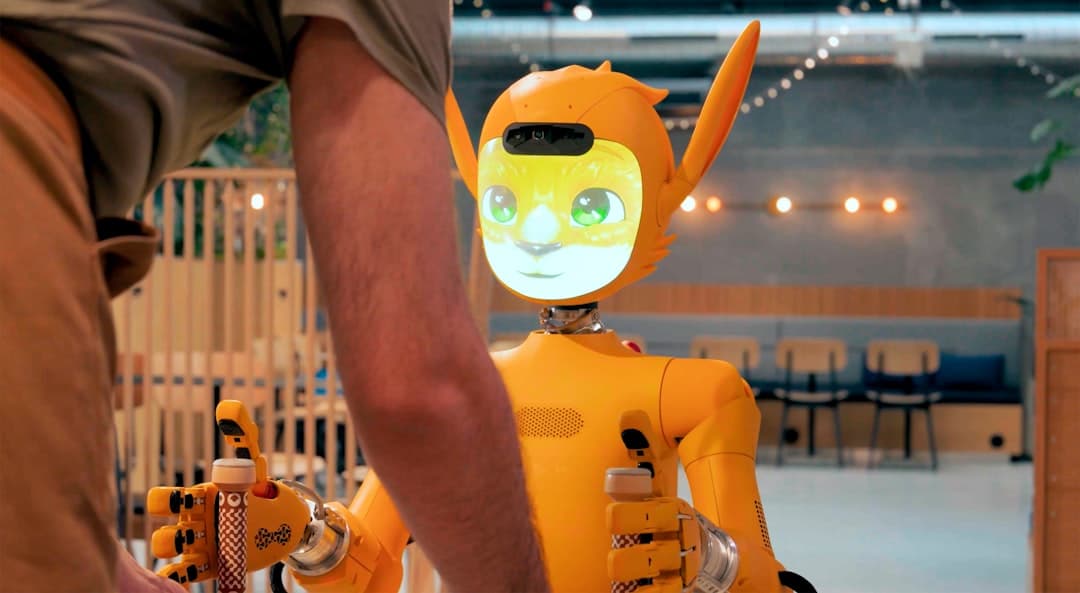
A startup founded by former Nvidia researchers has developed a system that allows humanoid robots to retrieve packages, climb stairs and unpack boxes without any human steering. The breakthrough, from Swiss company Flexion Robotics, shifts the focus from purely mimicking human motion to enabling machines to make independent decisions about which physical skill to apply in real time.
How the System Works
The core innovation lies in the layer that sits above the robot's physical capabilities. Flexion Robotics first trains the humanoid to perform basic movements such as walking, crouching, reaching and gripping. Once these skills are established, a separate higher-level AI monitors the environment and selects the appropriate skill on the fly. For example, when encountering stairs, the system automatically triggers the climbing routine rather than attempting a different locomotion strategy.
The approach reduces the need for extensive manual coding for every possible scenario. Instead of writing specific instructions for each task, the AI learns to sequence skills in response to sensory input. This makes the robot more capable of handling tasks like retrieving a package from a shelf and then unpacking it on a counter, all without a human teleoperator.
Autonomous Adaptation
Flexion Robotics positions its work as a move away from rigid humanoid control systems. Most current humanoid robots rely on either constant human direction or heavily scripted actions that break down when conditions change. The Swiss startup's approach aims for what it calls autonomous adaptation.
The robots can handle slight variations in their environment, such as boxes in different positions or stairs with varying heights, without needing a software update. This capability is critical for practical deployment in logistics centers, warehouses and eventually home environments where layouts change constantly. The company says the goal is not just to complete tasks but to adapt to unforeseen obstacles.
Why This Matters
The ability for humanoid robots to operate without continuous human oversight has major implications for industries facing labor shortages. If Flexion Robotics succeeds, it could reduce the cost and complexity of deploying humanoids in roles like package handling, inventory management and domestic assistance. The key shift that matters for companies is the reduction in setup time, workers no longer need to program each movement sequence. Instead, the robot learns core skills and then figures out the rest on its own. This lowers the barrier for small and medium businesses to adopt automation. The long-term impact, however, rests on whether the system can handle truly unpredictable situations safely and reliably at scale.
Competitive Landscape
Several companies are racing to bring general-purpose humanoid robots to market. Tesla's Optimus, Figure AI and Boston Dynamics each pursue different technical approaches. Flexion Robotics differentiates itself by focusing on the cognitive layer that controls physical actions rather than building the most advanced hardware. Its founders bring expertise from Nvidia, which provides the GPU computing power needed for these AI models.
The startup's strategy suggests that the path to useful humanoids may depend more on software intelligence than on mechanical engineering. If a robot can already walk and grasp, the ability to decide when to do what becomes the limiting factor. Flexion Robotics aims to solve that bottleneck with its skill selection system.