Editor: Porcia Akua Holmes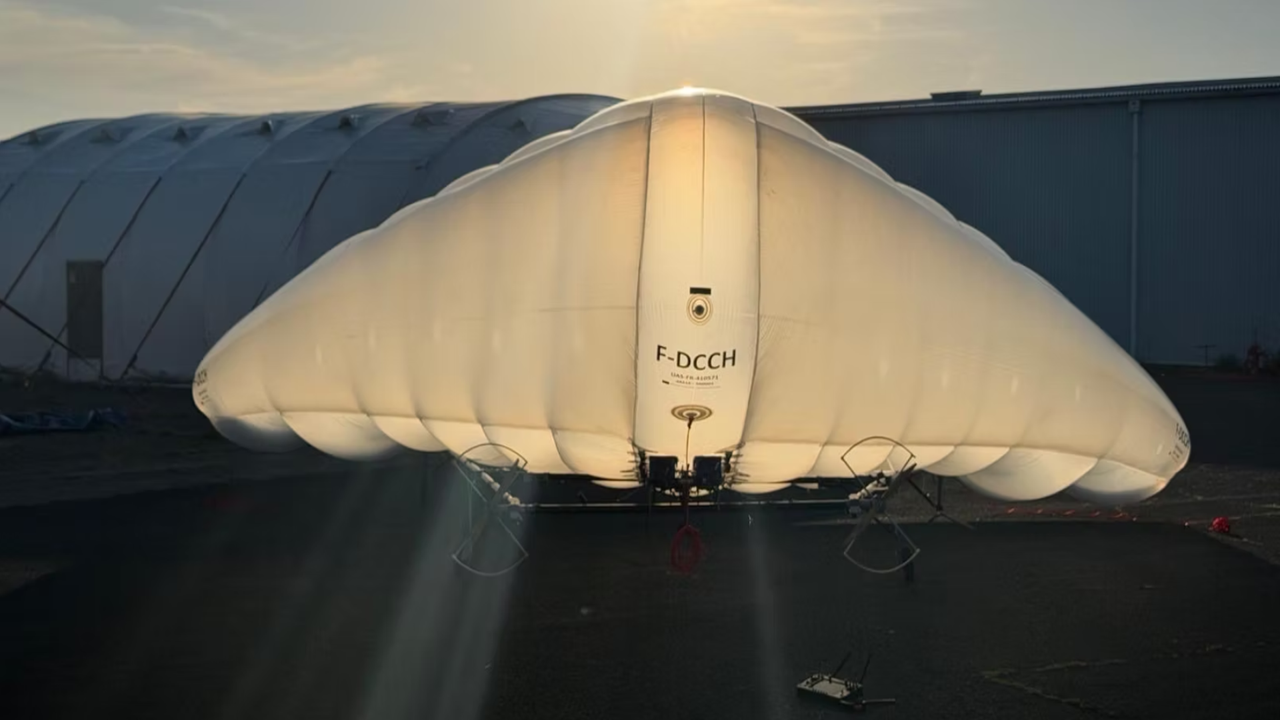
Celeste Ecoflyers, a French aerospace startup, has completed initial flight tests for a drone that combines an inflatable structure with extended endurance. The daS10, equipped with an 8-meter pneumatic wing, can remain airborne for more than 10 hours and cover approximately 500 miles in one direction. When deflated, the entire aircraft fits inside a standard car with folded seats.
How the Inflatable Wing Works
Celeste Ecoflyers built the daS10 around a pressurized textile envelope that serves as the wing structure. The pneumatic wing generates lift while avoiding the weight penalties of traditional rigid frames. This reduces energy consumption and enables longer flight times compared to many small multirotor drones.
The inflated structure can be deflated when not in use, allowing the drone to be stored in a compact space. That design choice also simplifies transport and deployment in field conditions.
Key Features and Specifications
Long-Endurance Applications
The daS10 is designed for inspection, surveillance and remote logistics. Current consumer drones like the DJI Mavic 4 Pro offer about 50 minutes of flight time, which limits their use for monitoring pipelines, large infrastructure or disaster zones. The inflatable drone's extended endurance addresses that gap.
Traditional fixed-wing aircraft can cover long distances but require more infrastructure and transport. The daS10's ability to deflate and pack into a vehicle could make it an attractive option for emergency response teams, military units and commercial operators needing persistent aerial coverage without heavy support equipment.
Why This Matters
The daS10 represents a shift in how long-endurance drones can be deployed. Its inflatable structure reduces weight and cost barriers that have limited the adoption of larger unmanned aircraft. For operators in remote areas or disaster zones, the ability to carry a capable surveillance drone in a standard vehicle could improve response times and reduce logistical burdens.
However, the drone's real-world performance depends on factors such as payload capacity, weather tolerance and the durability of the textile envelope. Celeste Ecoflyers has not disclosed all operational specifications, so independent verification is needed. If the technology proves reliable, it could open new use cases for aerial monitoring in agriculture, infrastructure inspection and humanitarian aid.