Senior Editor: Alan Agbele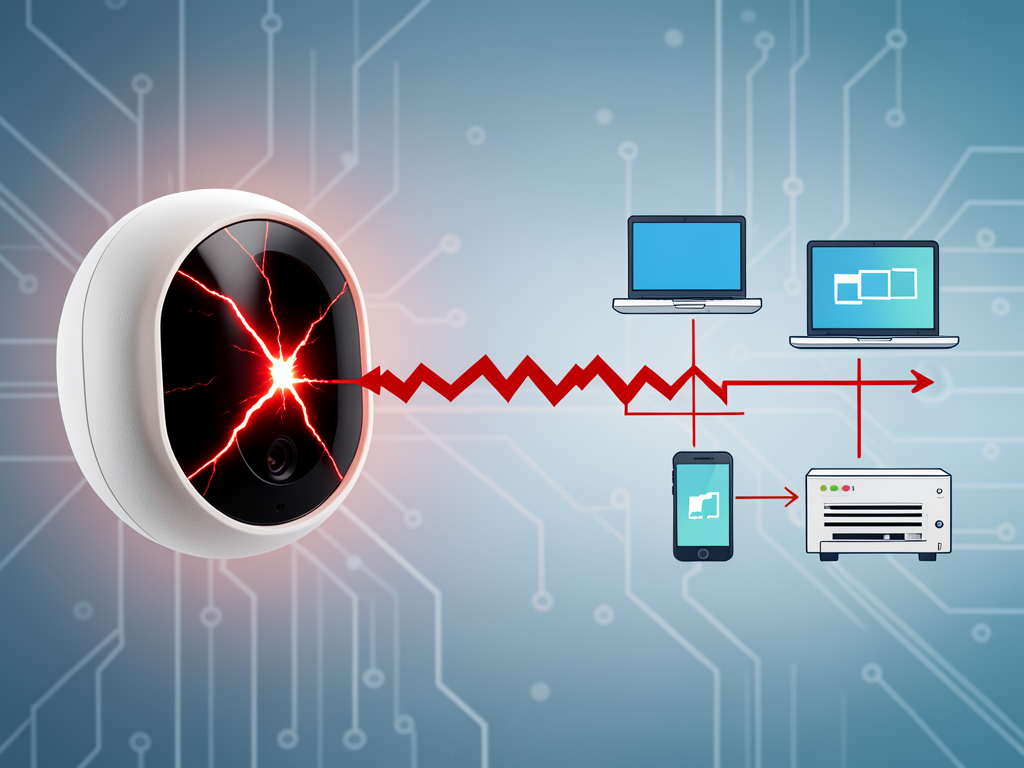
Smart doorbells have become a weak link in home network security. Researchers have demonstrated how attackers can exploit these devices to move from a single IoT gadget into the entire home network, accessing computers, phones and other sensitive systems.
How Doorbells Become Gateways
From smart doorbells, attackers can use basic techniques like ARP spoofing or exploiting default credentials to hop onto the local network. Many doorbell cameras connect to the same Wi-Fi network as laptops and phones, creating a flat network topology that offers little resistance to lateral movement.
The vulnerability is not theoretical. Researchers at NCC Group recently demonstrated a proof-of-concept attack on a popular doorbell model, showing how an attacker could capture Wi-Fi credentials and then scan for other devices on the same subnet.
Broader IoT Security Concerns
The doorbell problem reflects a wider issue across the Internet of Things. Many consumer devices ship with weak security defaults, limited update support and no built-in network isolation. This trend has drawn attention from regulators and security advocates who argue for baseline security standards.
Why This Matters
The shift from doorbell to home network represents a fundamental security gap for millions of households. As smart home adoption grows, the attack surface expands without corresponding security improvements. Consumers face an asymmetric threat: a $50 doorbell can expose personal data, banking credentials and family privacy. Regulators in the US and EU are pushing for labeling programs that would inform buyers about a device's security posture, but such measures remain voluntary in most markets. Until IoT manufacturers treat security as a core feature rather than an afterthought, the doorbell will remain an open door.
What You Can Do
Home users can take practical steps to reduce risk. Segmenting IoT devices onto a guest network limits lateral movement. Disabling remote access when not needed and regularly checking for firmware updates also helps. For advanced users, deploying a firewall or a separate VLAN for IoT devices adds strong protection.