Senior Editor: Alan Agbele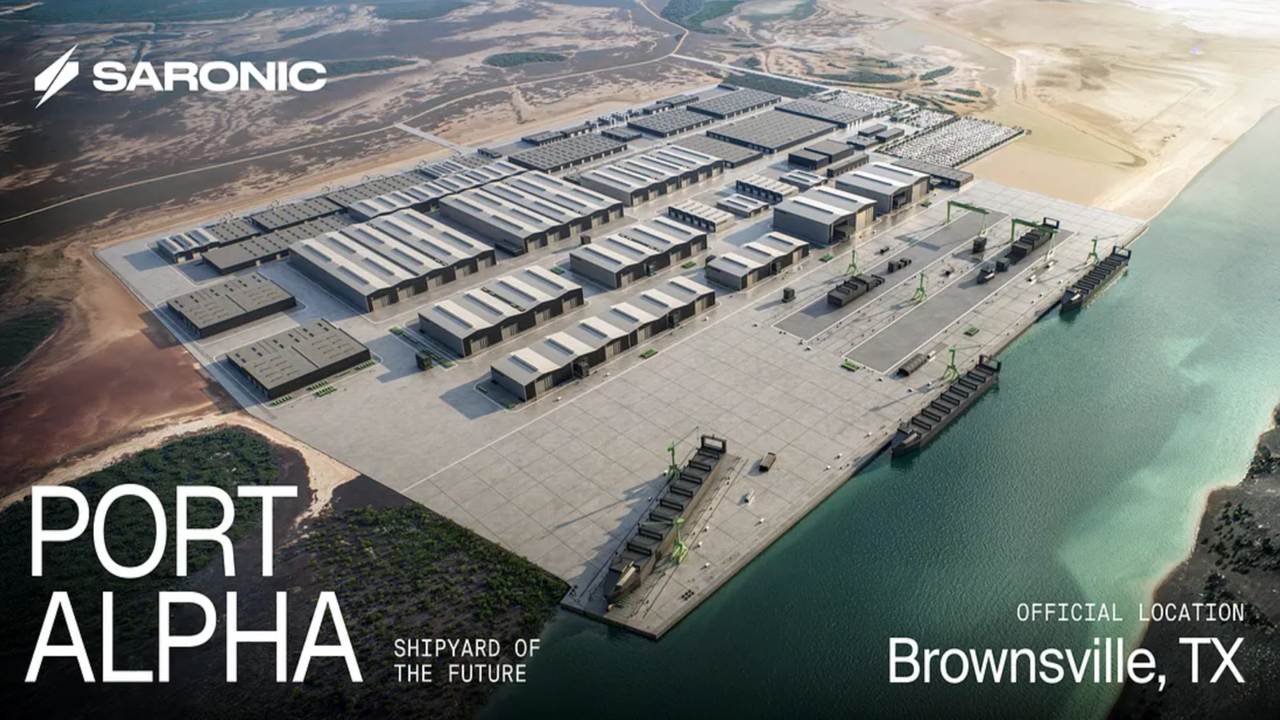
Forget traditional shipbuilding methods. Saronic has announced plans to build Port Alpha, a $3.2 billion autonomous shipyard in Brownsville, Texas, that will dwarf every stadium planned for the 2026 World Cup combined. The facility is designed to produce unmanned naval vessels at a scale not seen since World War II, marking a radical shift in how the United States approaches maritime manufacturing.
A Shipyard Larger Than World Cup Stadiums
Port Alpha will occupy an 835-acre site along the Texas coast, with expansion options that could make it one of the largest shipbuilding facilities in the country. To put that in perspective, the combined footprint of every stadium hosting the 2026 World Cup would fit inside Port Alpha's potential 4,400-acre boundary. The shipyard's initial production lines will handle vessels up to 850 feet long, with capacity to eventually build ships exceeding 1,200 feet.
Saronic chose Brownsville after a yearlong search that considered workforce availability, infrastructure and logistics. The location offers deep-water channel access and multimodal transport links essential for large-scale maritime manufacturing.
Rebuilding American Shipbuilding Capacity
The project is expected to generate $3.2 billion in private investment and produce up to 10,000 direct jobs over the next decade. Roles will span welding, machining, robotics, software engineering and naval architecture. Texas Governor Greg Abbott said the facility could generate roughly $750 million in annual wages once fully staffed.
Saronic plans to partner with technical colleges and universities to develop apprenticeship and training programs. The company estimates Port Alpha could deliver $160 billion in regional economic impact for Cameron County and $264.5 billion across Texas.
What Port Alpha Will Produce
Unlike traditional shipyards that build crewed warships, Port Alpha will focus on autonomous vessels using software-defined manufacturing. Saronic already produces several unmanned systems, and Port Alpha will scale that output dramatically.
Saronic expects Port Alpha to produce these vessels at a speed and volume unmatched since World War II, though it has not disclosed specific production targets or timelines.
Why This Matters
The shift toward autonomous naval vessels represents a strategic realignment in American defense manufacturing. Port Alpha positions Saronic to supply the Navy with cheaper, faster-to-build drone ships that can operate in contested waters without risking crewed lives. If successful, the facility could reduce American dependence on traditional shipyards, which have struggled with cost overruns and delays. For the Texas economy, Port Alpha offers a multidecade investment in industrial employment and infrastructure. For competitors and foreign adversaries, it signals a new era in which software-defined production outpaces conventional shipbuilding.