 Senior Editor: Alan Agbele
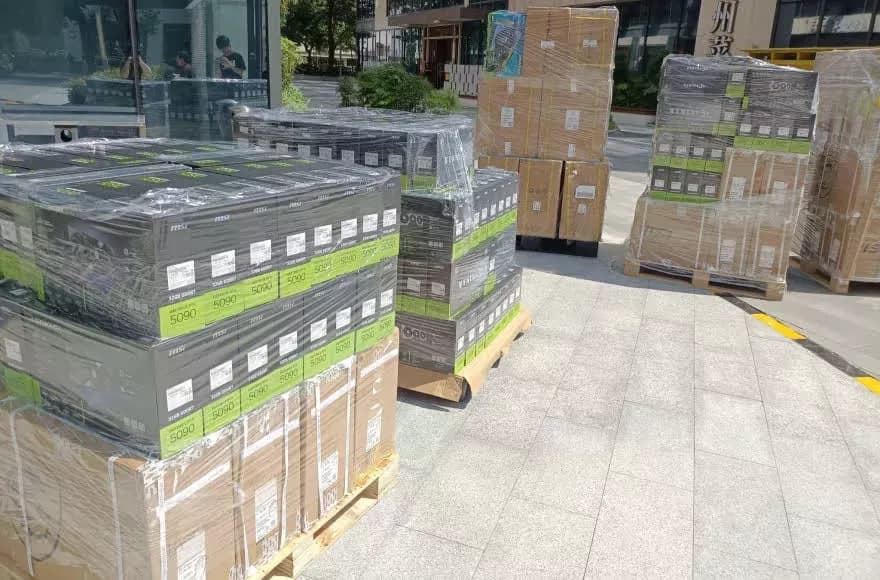
Two pallets of Nvidia RTX 5090 graphics cards valued at $470,000 vanished at São Paulo airport while in transit to Brazilian distributor Oderço Distribuidora. Three airport workers are now implicated in the theft, and at least one of the stolen cards has appeared for sale online.
The Anatomy of a High-Value Cargo Theft
The theft occurred while the shipment was moving through São Paulo airport en route to Oderço Distribuidora, a Brazilian importer and distributor of computer hardware. The two pallets of RTX 5090 cards never reached the company.
Brazilian authorities have identified three airport workers as suspects. The involvement of insiders points to a broader vulnerability in air cargo logistics, where multiple handlers touch high-value shipments before they reach their destination.
One of the stolen RTX 5090 cards has since surfaced online, suggesting the stolen inventory is already entering secondary markets. That development complicates recovery efforts and raises questions about how stolen electronics are resold.
Why the RTX 5090 Is a Magnet for Thieves
Nvidia's RTX 5090 sits at the top of the consumer GPU stack, commanding prices that make it attractive to both legitimate buyers and criminal networks. The card's high value-to-weight ratio makes it ideal for cargo theft.
Demand for flagship GPUs consistently outstrips supply, creating a gray market where stolen units can be moved quickly. The RTX 5090's launch has been marked by limited availability, which further inflates resale prices.
Why This Matters
The São Paulo heist is not an isolated incident. It highlights a systemic weakness in how high-value electronics move through international logistics hubs. Airport cargo operations rely on layers of contractors, and each handoff represents a potential point of failure.
For Oderço Distribuidora, the loss represents a direct financial hit and a disruption to its supply chain. The company must now navigate insurance claims and customer expectations while authorities pursue the suspects.
Consumers, meanwhile, face a more subtle risk. Stolen GPUs that surface online may carry no warranty and could be tied to criminal investigations. Buyers who chase deals on unofficial marketplaces may unknowingly purchase stolen property.
The case also raises questions for Nvidia and its distribution partners. As GPU prices climb, the incentive for theft grows. Supply chain security may become a more prominent concern for hardware makers and logistics providers alike.
What Comes Next for Cargo Security and the Gray Market
Brazilian authorities are continuing to investigate the involvement of the three airport workers. Their cooperation could reveal how the stolen cards were moved out of the airport and into the resale pipeline.
The appearance of one stolen RTX 5090 online suggests that recovery will be partial at best. Tracking stolen electronics through secondary markets remains difficult, especially when serial numbers are not consistently monitored.
For the hardware industry, the incident underscores the need for tighter controls on high-value shipments. Enhanced tracking, tamper-evident packaging and stricter vetting of cargo handlers could reduce future losses.
Buyers should treat unusually low prices on flagship GPUs with suspicion. The safest path remains purchasing from authorized retailers, even if it means paying more or waiting for stock.


