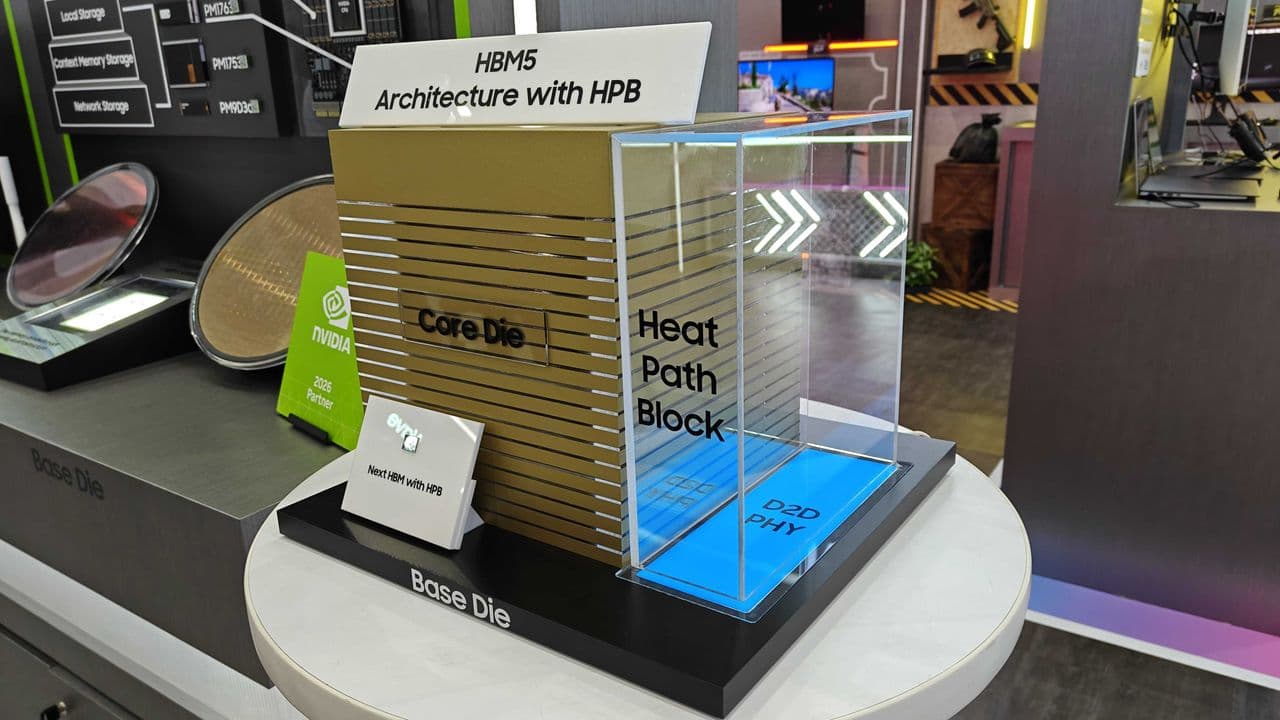
Samsung has taken the wraps off its first physical prototype of HBM5 memory at Computex in Taipei. The eighth generation high bandwidth memory incorporates a new in-package cooling technology called Heat Path Block, marking a significant design shift for AI memory.
Cooling Race Heats Up
The thermal performance of high bandwidth memory has become a critical factor as AI workloads demand faster data transfer. Samsung's move directly challenges rival SK hynix, which has its own cooling innovations in development. The memory industry now faces a race to keep next generation chips from overheating while maintaining speed gains.
Samsung's prototype shows the company is betting on in-package solutions rather than external cooling methods. This approach could allow denser memory stacks without sacrificing reliability.
How Heat Path Block Works
The Heat Path Block design integrates a cooling structure directly into the memory package. It creates a dedicated thermal pathway to draw heat away from the memory dies. Samsung says this allows higher sustained performance during intensive AI training and inference tasks.
Early testing suggests the system can handle the thermal output of future HBM5 chips operating at speeds beyond current standards. Samsung did not disclose specific temperature reduction figures but emphasized that the design is a core part of its HBM5 roadmap.
Why This Matters
This development affects every company building AI hardware. HBM memory is a key component in GPUs and accelerators used for training large language models and running inference at scale. Improved cooling directly translates to faster processing, lower energy costs and longer hardware lifespan.
Data center operators face growing pressure to manage heat in dense server racks. A memory solution that reduces thermal load without adding bulky external coolers offers a clear advantage. Samsung's approach could influence how AI infrastructure is designed in the coming years.
What's Next
Samsung plans to begin mass production of HBM5 in late 2026. The company will need to prove that Heat Path Block works reliably at scale. SK hynix and Micron are also developing their own HBM5 solutions, keeping the pressure on Samsung to deliver a competitive product.
For now, the prototype gives a clear signal: thermal management is now a primary battleground in high bandwidth memory, not just speed or capacity.