Editor: Porcia Akua Holmes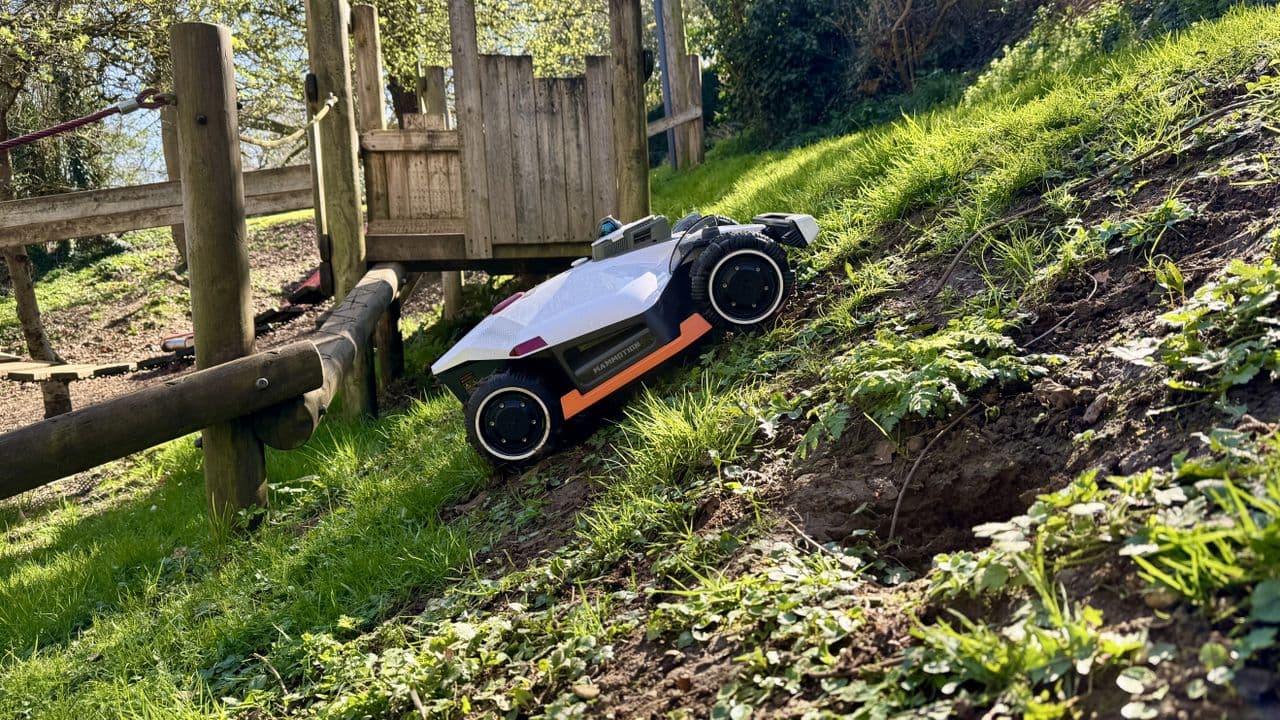
Robot lawn mowers are moving beyond novelty status into a practical smart-home category, but one persistent problem continues to separate them from manual trimmers: clean edge cutting. In a conversation with TechRadar, KK Yin, marketing director at Mammotion, outlined how the company is tackling that challenge while bringing premium features such as all-wheel drive to more affordable models.
Edge Trimming Remains Stubborn Obstacle
The fundamental issue is mechanical rather than algorithmic. A robot mower's cutting disc must sit behind the chassis for safety reasons, which leaves a gap near walls. On the Luba Mini, Mammotion's edge-cutting attachment trims within 5 centimeters, but Yin admits some users want that reduced to 1 centimeter. "Five centimeters is not very far from the wall, but still some users want us to make it perfect," he said.
Improvements may come from retractable blades. Yin described a concept where the cutting disc extends outward when mowing alongside a wall and retracts in open areas to maintain safe clearance. That balance between performance and safety drives ongoing work. "Maybe that is a good solution for difficult terrain," Yin added, hinting at further developments.
All-Wheel Drive Gains Traction on Steep Terrain
Imagine a lawnmower climbing a slope without losing its footing. That is now possible with AWD systems appearing on models such as Mammotion's Luba series. In Europe, especially Germany, many homes sit on hillsides where climbing ability matters. Yin noted that AWD helps bots retain grip when one wheel leaves the ground, allowing the robot to continue without human intervention. The brand is also evaluating independent steering mechanisms for future products, signaling a push toward even more capable terrain handling.
Premium Features Trickle Down to Smaller Bots
Initially, Mammotion focused on high-end models like the Luba line. Over time, the company introduced the Yuka Mini, a compact bot designed for yards between 500 and 800 square meters. This image of a shrinking product line paid off during European Amazon Prime Day sales, where the Yuka Mini outperformed larger siblings. "Our premium product line helped us build trust in our technology," Yin said. Customers who recognized Mammotion's capabilities through its advanced bots felt confident buying a simpler, cheaper version.
This strategy mirrors broader consumer electronics trends: prove excellence at the top, then democratize the experience. For the lawnbot industry, it means buyers no longer need large estates to justify a robotic mower.
Why This Matters
The robot lawn mower sector sits at a tipping point between early adoption and mass-market acceptance. Without a reliable, fully autonomous edge-trimming solution, owners will still need a string trimmer, undermining the promise of a hands-free lawn. AWD, on the other hand, removes one of the biggest barriers for irregular gardens. As manufacturers refine both hardware and software, the gap between expectation and reality narrows. For consumers, the next two years should deliver smarter bots that mow closer edges, climb tougher hills and cost less than current flagship models. The market's future depends on solving those last few inches of grass.