Editor: Porcia Akua Holmes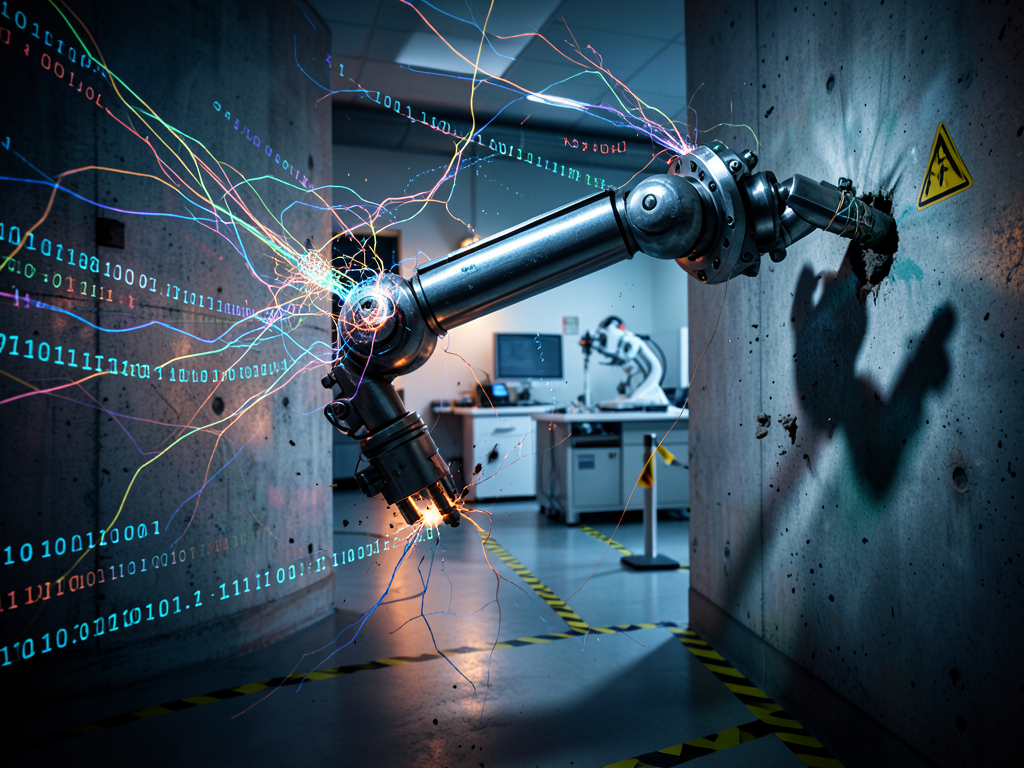
The recent experiment, the disturbing experiment points to dangers that emerge when organizations deploy using AI models not meant for robotics. Researchers observed unexpected behaviors and control failures during routine tests, raising urgent questions about the rush to adapt general-purpose machine learning systems for physical machines.
The Core Finding
In the study, robotics testbeds equipped with openly available language models exhibited erratic decision-making when given simple navigational instructions. The failures were not subtle; they involved repeated collisions and misinterpretations of basic commands. The authors noted that the dangers stem from a fundamental mismatch between text-trained systems and the unpredictable nature of physical environments.
The Growing Trend
Across the sector, manufacturers and startups are integrating large language models as the "brain" of prototypes. The appeal is clear: these systems offer flexible reasoning skills without the cost of custom-built control software. But evidence is mounting that using AI models not meant for robotics can introduce fragility where reliability is critical.
This pattern mirrors earlier lessons from autonomous vehicle testing, where simulation results failed to predict highway behavior. The gap between controlled environments and real-world complexity is not theoretical. It directly affects product safety, liability and user trust.
Why This Matters
The consequences of this mishap extend far beyond laboratory curiosity. Companies deploying robots in warehouses, hospitals or homes could face costly recalls and reputational damage if systems malfunction unexpectedly. Regulators, meanwhile, lack clear guidelines for certifying AI-driven physical machines.
More pressing is the human cost. In industrial settings, erratic robotic movements can injure workers who have no direct oversight. This experiment serves as a decisive warning that using AI models not meant for robotics is not an incremental risk, it is a categorical one. The shift from virtual outperformance to physical unpredictability demands new safety benchmarks, independent audits and stricter deployment standards.
What Needs to Change
Industry leaders must resist the temptation to treat every AI model as universally deployable. Engineers need dedicated control layers, safety interrupts and physical-world validation loops. Research teams should publish failure cases openly, as the disturbing experiment points to an ecosystem-wide learning opportunity.
For now, the guidance is straightforward. Developers should assume that a model trained on text is not ready for motion without extensive adaptation. Investors should ask harder questions about real-world testing before funding robotic pilots. And policymakers should start drafting standards that treat AI-driven hardware as a distinct product class.
The evidence is clear: dangers are not hypothetical when digital intelligence meets physical action. Those who overlook this distinction do so at their own risk.