Editor: Porcia Akua Holmes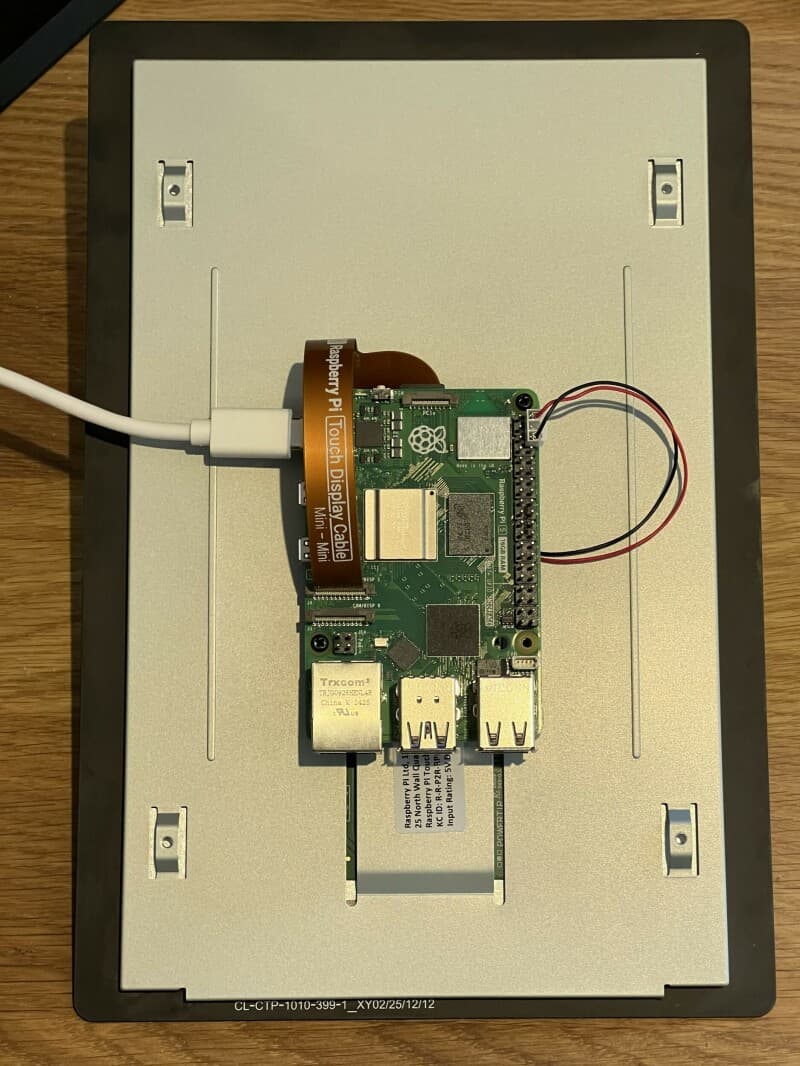
Raspberry Pi has expanded its Touch Display 2 lineup with a 10.1-inch model built for applications that need more screen real estate, such as dashboards, entertainment systems and touch-enabled information kiosks. The new panel sits above the existing 5-inch and 7-inch variants, offering a native portrait resolution of 1,920 by 1,200 pixels.
New Display Specs and Compatibility
The 10.1-inch panel uses an IPS TFT LCD with 24-bit RGB color and a 35 ms touch response time, according to Raspberry Pi. The viewing angle is 85 degrees, and the unit measures 161.8 by 247.3 mm. The active area is 135.4 by 216.6 mm, leaving a substantial bezel for mounting. The display connects via a ribbon cable and draws power from two GPIO pins, requiring a Pi 5 or an IO Board for Compute Modules.
Key specifications include:
Past Touch Displays used two DSI lanes, but the higher resolution of the new model demands four lanes. The Register reported that Raspberry Pi justified the Pi 5 requirement by noting the newer display connector on the Pi 5 and Compute Module IO Boards supports this. Users should also consider the Pi 5's heat output when mounting the board behind the screen.
Why This Matters
The 10.1-inch Touch Display 2 opens up larger projects for Raspberry Pi users, but the dependency on the Pi 5 raises the total cost significantly. A 2 GB Pi 5 adds roughly $50, bringing the combined price to around $130 before an enclosure. The heat generated by the Pi 5 could require active cooling in sealed enclosures, complicating dashboard or kiosk designs. For integrators, the mandatory EEPROM update adds a configuration step that may catch newcomers off guard. The display runs Raspberry Pi OS, which provides basic touch drivers and an on-screen keyboard, but the OS is not optimized for touch-heavy interfaces. Users expecting a tablet-like experience will be disappointed. Instead, the display is best suited for fixed-function projects where a crisp, large touchscreen is needed without the complexity of a full tablet.
Despite these caveats, the 10.1-inch Touch Display 2 offers a straightforward path to a touch interface for Pi 5-based builds. The image quality is good, and the multitouch capability supports gestures and multiple inputs. For makers and industrial users who need a reliable, large-format touchscreen, this is a natural evolution of the Touch Display line.