Senior Editor: Alan Agbele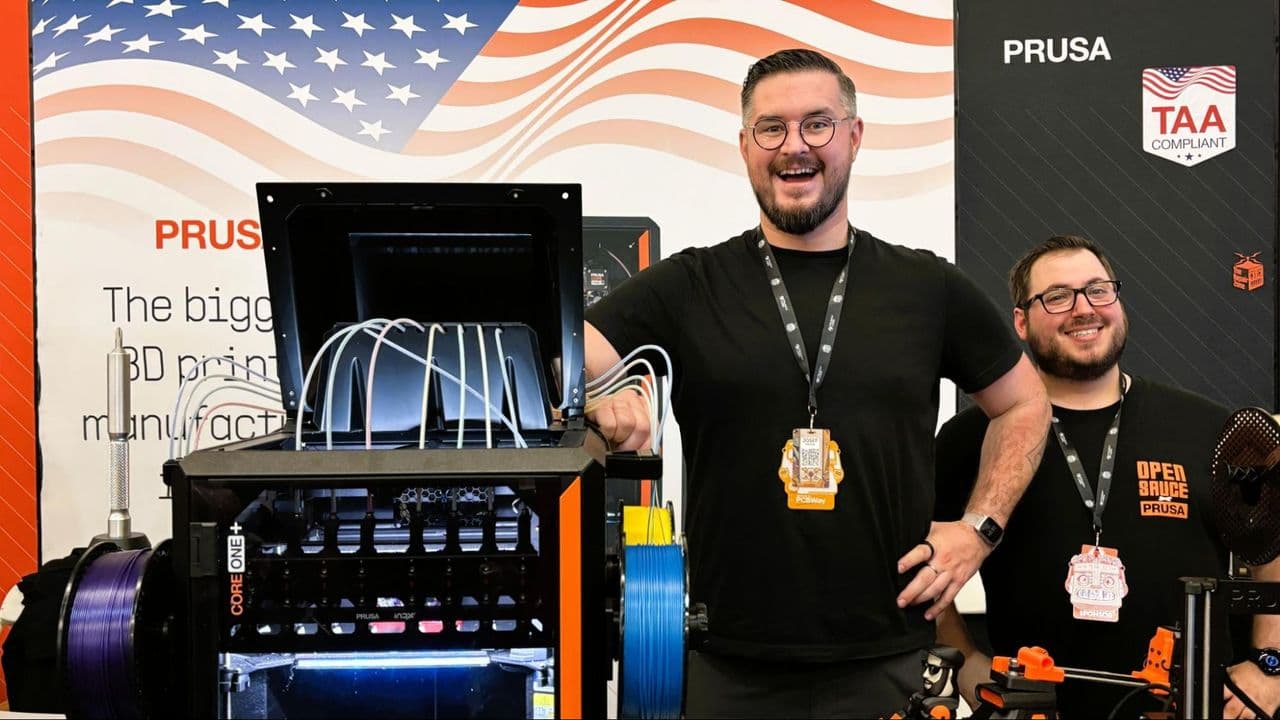
Prusa Research has completed a two-year branding transition by renaming its Delaware-based filament subsidiary Printed Solid to Prusa USA, Inc. The change, confirmed by company representatives at the Open Sauce event, makes official the company's growing footprint in the American market.
From Printed Solid to Prusa USA
Czech Prusa Research acquired Printed Solid in 2022 and has since expanded the Wilmington facility to 100,000 square feet. Josef Prusa remains CEO of both the European parent and the new Prusa USA. A new Marketing Officer has been promoted from within to oversee the American brand. The company now styles itself as a European-American manufacturer with dual production lines in Prague and Delaware.
Josef Prusa described the move as a natural step to support what he called the most important market in the world. At Open Sauce, the company booth declared Prusa the biggest 3D printer manufacturer in the USA, though its monthly output of over 10,000 units remains modest compared to Chinese rivals.
Why This Matters
The rebrand solidifies Prusa Research's bet on American manufacturing at a time when the 3D printing industry faces regulatory headwinds. Several states, including Delaware itself, have introduced bills that would mandate blocking technology on new printers to prevent them from producing gun parts. House Bill 399 in Delaware exemplifies the push for government oversight that conflicts directly with Prusa Research's open-source and right-to-repair philosophy.
For US consumers, the transition means faster shipping and local support services. But the regulatory environment could alter what machines are legally sold. Prusa Research's stance on open hardware and software may put it at odds with lawmakers who see 3D printing as a public safety risk. The company's existing contracts with the US military and government agencies, however, demonstrate its ability to meet high security standards.
What the Rebrand Means for the Industry
The name change from Printed Solid to Prusa USA is more than cosmetic. It signals that Prusa Research intends to compete aggressively in the American market, not just as an importer but as a domestic producer. The Wilmington facility, currently only partially utilized, has clear space for scaling up. If anti-printing legislation stalls or adapts, Prusa USA could become a major manufacturing hub for the western hemisphere. But if compliance costs rise, the company's open-source model may face its toughest test yet.