Senior Editor: Alan Agbele
A private company in California has switched on the world's largest laser designed for commercial fusion energy. The move signals a new phase in the race to harness the power of the sun for clean electricity.
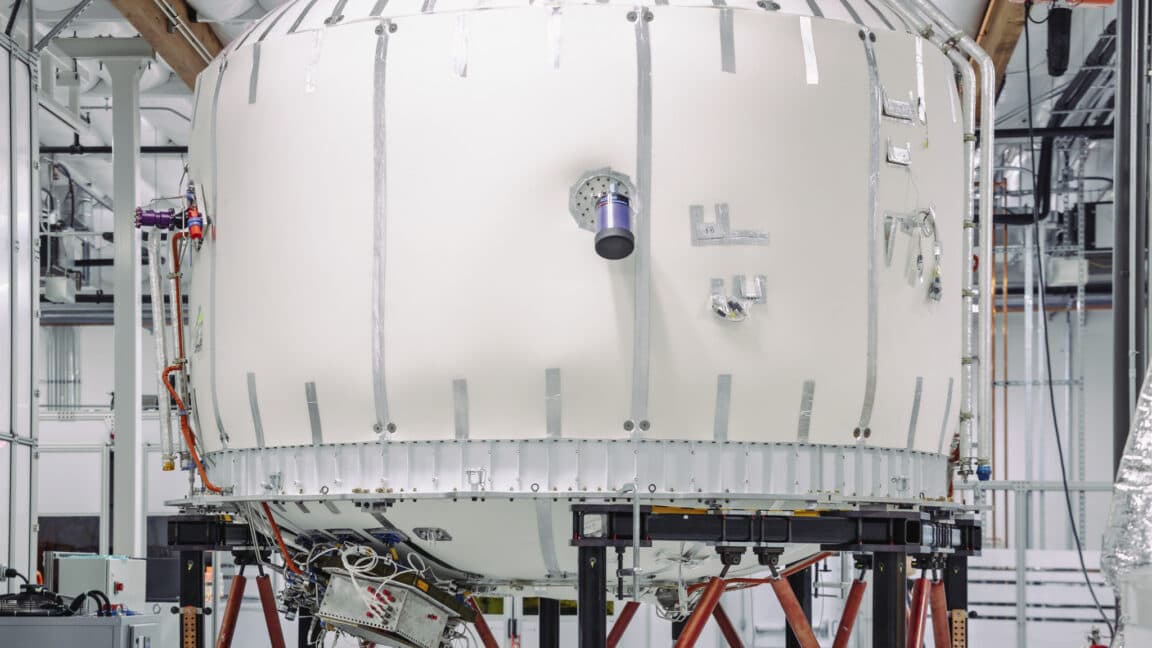
Xcimer Energy’s Phoenix laser fired up inside a 74,000-square-foot facility in Santa Clara. The system uses a krypton fluoride excimer laser, a gas-based design related to technology used in semiconductor manufacturing but scaled up dramatically.
A Different Laser Approach
Phoenix operates at ultraviolet wavelengths. This allows the system to deliver high energy directly to a fusion fuel capsule more efficiently than larger, conventional laser systems.
Most existing fusion laser research uses solid-state lasers. Xcimer’s gas laser architecture offers potential advantages in repetition rate and overall efficiency, both critical for a power plant that must run continuously.
Scaling Toward Commercial Power
The company plans to use Phoenix to validate key physics and engineering concepts. The ultimate goal is to build a demonstration power plant by the early 2030s.
Xcimer’s approach is based on inertial confinement fusion. In this method, lasers compress and heat tiny fuel pellets to trigger fusion reactions. The same principle was used at the National Ignition Facility, which achieved a net energy gain in 2022.
Xcimer aims to build on that breakthrough with a more compact and cost effective system designed for continuous operation. The company has raised significant venture capital from investors including Breakthrough Energy Ventures, a fund backed by Bill Gates.
The startup faces considerable scientific and engineering hurdles. Achieving the precise conditions needed for fusion is extremely difficult. Maintaining those conditions in a repeatable, commercial setting is even harder.
Why This Matters
Fusion energy promises a nearly unlimited source of clean power with no carbon emissions and minimal radioactive waste. If Xcimer succeeds, it could transform global energy markets and accelerate the shift away from fossil fuels.
The project directly affects utilities, energy policy makers and anyone concerned about climate change. A working fusion plant would produce power from seawater derived fuel, with no risk of meltdown and no long lived nuclear waste.
Success is not guaranteed. Many fusion projects have faced delays and cost overruns. But the startup’s progress represents a concrete step toward a goal that has eluded scientists for more than 70 years.
Xcimer is one of several private companies, including Commonwealth Fusion Systems and TAE Technologies, racing to be first to deliver commercial fusion. The Phoenix laser gives the company a powerful tool to test its theories and prove its technology can work at scale.