Editor: Porcia Akua Holmes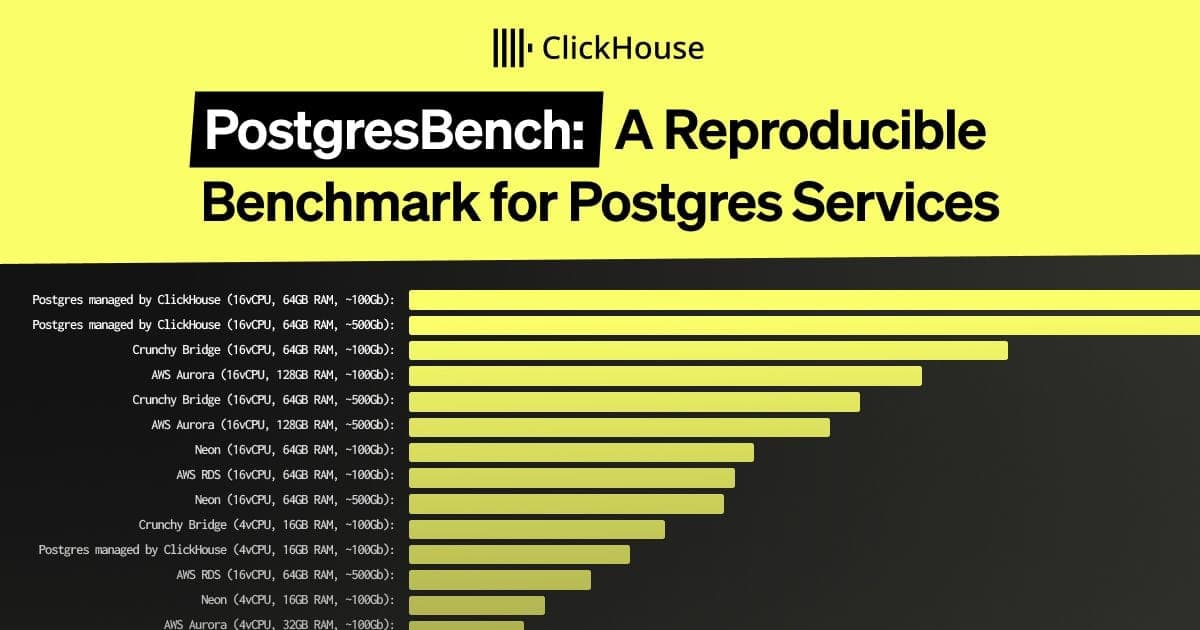
Choosing a PostgreSQL provider has become a high-stakes decision, with options ranging from self-managed instances to fully managed cloud services. The lack of standardized, reproducible benchmarks has left developers relying on anecdotal evidence or vendor-provided numbers. A new open source tool called PostgresBench aims to fill that gap.
The Benchmarking Problem
Performance benchmarks for database services often suffer from a lack of transparency. Vendors control their own test environments, making it difficult to compare results across providers. Even when third-party benchmarks exist, they may not be reproducible, leaving teams skeptical of the numbers. PostgresBench directly addresses this by releasing its entire testing suite as open source software. Anyone can run the same tests on their own infrastructure or against any cloud service provider.
The tool runs a series of workloads that simulate real-world database operations, including read-heavy, write-heavy and mixed transaction patterns. By fixing parameters such as connection count, data size and hardware types, PostgresBench ensures that results can be replicated and verified by independent parties.
Why This Matters
For engineering teams evaluating database solutions, the ability to reproduce a benchmark is critical. It allows them to validate performance claims before committing to a platform. A company considering a migration from a self-hosted Postgres instance to Amazon RDS or Google Cloud SQL can now run the same test suite on both systems and compare apples-to-apples metrics. This reduces the risk of costly surprises after deployment.
The benchmark also benefits the broader Postgres ecosystem. Cloud providers are motivated to optimize their offerings when independent, reproducible data highlights performance gaps. Users gain leverage in negotiations and can demand better performance for their dollars.
Implications for Cloud Providers
Major cloud platforms such as AWS Aurora, Google AlloyDB and Azure Database for PostgreSQL have invested heavily in performance improvements. PostgresBench provides an independent yardstick to measure those claims. Providers that consistently perform well may gain a competitive edge, while others face pressure to improve.
Because the benchmark is open source, it can evolve with the database. Community contributions can add new workloads that reflect emerging patterns, such as AI vector search or real-time analytics. This ensures the benchmark remains relevant as PostgreSQL usage grows.
PostgresBench is still early in its development, but it fills a clear need in the database community. For teams tired of benchmarking mysteries, this tool offers a path to clarity.