Editor: Porcia Akua Holmes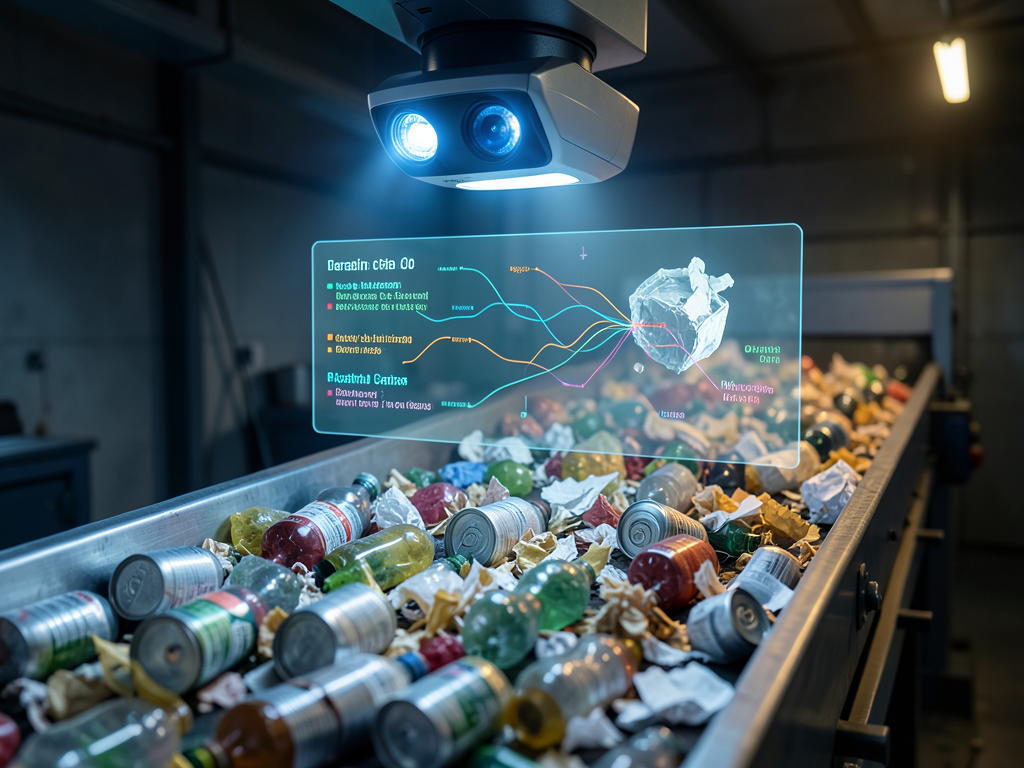
Funding for artificial intelligence applied to real-world settings is accelerating fast. A monthly column on Crunchbase called Interesting Startup Deals You May Have Missed recently spotlighted two companies that illustrate this trend: Greyparrot, which uses computer vision to analyze recycling plant waste, and Emesent, which helps robots navigate underground where GPS does not reach. The column's subtitle, AI For Everything From Recycling To Breathing To Winning Construction Bids, captures the breadth of the technology's reach, though only the recycling and underground navigation deals were detailed.
Greyparrot Turns Trash Into Data
London-based Greyparrot raised a £20.3 million ($27 million) Series B led by technology investor Omar Mir. The company installs AI-powered camera systems above conveyor belts in recycling plants. Its computer vision software identifies materials, products and brands in real time. This data helps operators recover valuable materials, improve sorting efficiency and comply with stricter recycling regulations.
The systems are deployed in more than 20 countries and have analyzed over 1 trillion waste objects. Customers include Waste Management and Veolia. Greyparrot also feeds its data into a platform called Deepnest, which consumer brands such as Unilever, L'Oréal and Kenvue use to understand what happens to their packaging after disposal. The platform aids redesigns and helps companies meet Extended Producer Responsibility rules in Canada and the EU. The fresh funding will expand the company's footprint in North America and Europe and support a goal of preventing more than 1 million tons of waste by 2030.
Emesent Navigates Where GPS Fails
Australian startup Emesent secured $17 million in new funding, including a $10 million equity round and a $7 million venture debt facility. Backers include Main Sequence Technologies, QIC Ventures, Orion Resource Partners, Hostplus and NGS Super. The company plans to scale manufacturing and expand its AI autonomy and cloud mapping platforms.
Emesent is best known for Hovermap, a LiDAR scanning payload that mounts to drones, vehicles or backpacks. It creates detailed 3D maps of mines, tunnels and other hazardous environments. The company's focus, however, is increasingly software. Its Cortex AI platform enables robots to navigate autonomously without GPS. Its Aura cloud platform processes and analyzes spatial data. The technology is deployed at more than 200 mine sites worldwide. Emesent is also expanding into defense, critical infrastructure and construction sectors.
Why This Matters
Both Greyparrot and Emesent show that AI investors are shifting focus from screens to the physical world. The nearly 80% year-over-year increase in physical AI funding signals that industries like waste management, mining and defense see clear returns from automation. For consumers, that means more efficient recycling systems and safer extraction of resources. For regulators, it means better data to enforce environmental rules. For the companies themselves, the challenge now is scaling production and proving that these technologies can work reliably at global scale.