Senior Editor: Alan Agbele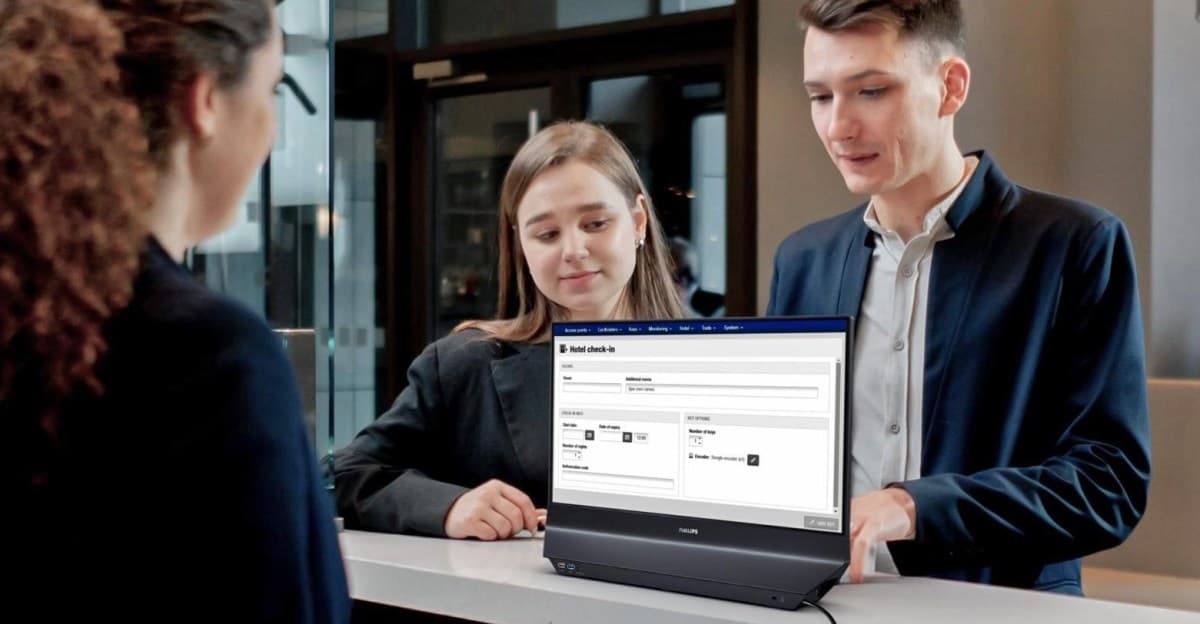
Philips has introduced a business monitor that solves a common problem for receptionists, salespeople and doctors: the need to turn a screen around so a customer can see it. The 24B2D5300 features displays on both the front and back of the panel, allowing two people to view content simultaneously from opposite sides of a desk.
The design targets customer-facing roles where sharing information is routine. A car salesperson walking a buyer through configuration options or a doctor conferring with a patient no longer needs to angle their display awkwardly. The monitor keeps one screen facing the worker while the other faces the client, making interactions smoother.
Design and Availability
Philips calls the 24B2D5300 a business monitor, but the dual-sided feature sets it apart from typical models. The display is a 24-inch LCD panel with standard resolution. Both sides show the same image, which is mirrored rather than extended. This means it works best for sharing visual information, not for separate tasks.
The monitor will launch in parts of Europe next month. It carries a price tag of £359.99, which converts to roughly $484. Availability outside Europe has not been announced. The product is already listed on Philips' UK website with full specifications.
Use Cases Beyond the Front Desk
While the primary audience includes customer service and medical professionals, Philips notes potential coworking applications. Two colleagues sharing a desk could each view content from their own side. The design also reduces the need to physically rotate a monitor, which can cause wear over time.
Privacy is a consideration. Both sides display the same content, so anything visible to the worker is also visible to the person opposite. Users handling sensitive data may need to be cautious. For public-facing tasks like showing a menu or a form, the arrangement is straightforward.
Why This Matters
This monitor addresses a real friction point in many workplaces. Front desk staff, receptionists and salespeople often have to twist their screens or lean away so customers can see. The dual-sided design eliminates that awkward dance. It also saves space by removing the need for a separate secondary display facing outward.
The price is reasonable for a specialized business tool. If the concept gains traction, other manufacturers may follow with similar designs. For now, Philips offers a practical solution to a small but persistent problem.