Senior Editor: Alan Agbele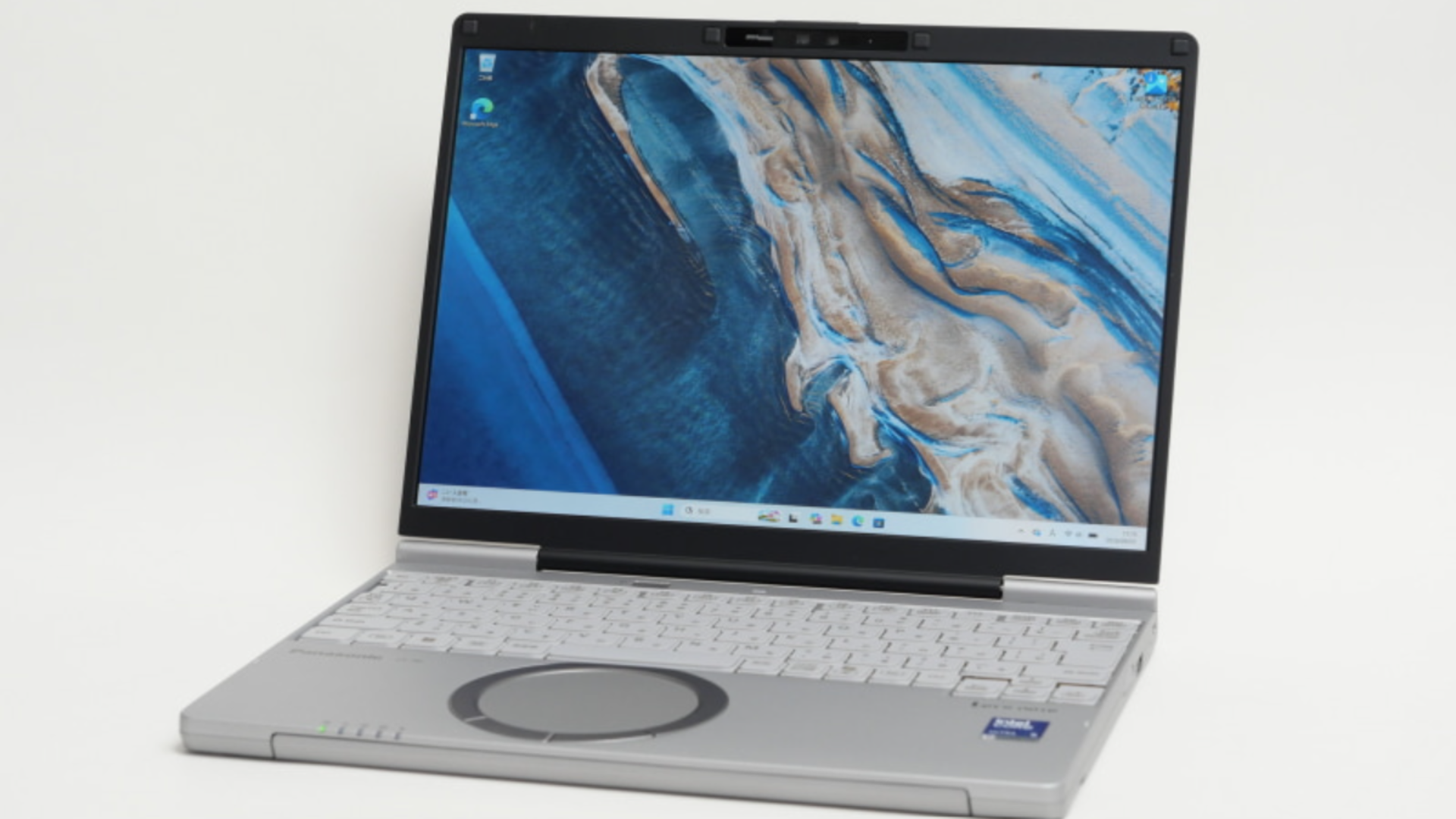
Panasonic has released the Let's Note SC7, a 919-gram business notebook that passes military-grade drop tests and delivers nearly 23 hours of battery life from a removable power pack. The device reinforces Japan's longstanding dominance in engineering ultra-light laptops for professionals who refuse to compromise on durability.
Design Built for the Road
Panasonic engineers built the SC7 around a magnesium alloy chassis that measures just 19.9 mm thick. The notebook survived internal drop tests from 76 centimeters and 30 centimeters across 26 directions. It also passed a 100 kgf pressure vibration test and met the MIL-STD-810H standard set by the US Department of Defense. Few compact business notebooks built outside Japan undergo this level of physical stress testing before commercial release.
The distinct circular touchpad, a hallmark of Panasonic's Let's Note line, lets users scroll by tracing a finger along the outer rim. A 12.4-inch display with a 3:2 aspect ratio shows more vertical content for document editing and web browsing. For security, the SC7 includes facial recognition via infrared camera and a fingerprint sensor embedded in the power button.
Performance and Battery Benchmarks
Inside the SC7, the Intel Core Ultra 5 325 processor pairs with a 47 TOPS neural processing unit, meeting requirements for Microsoft's Copilot+ PC program. This enables both cloud-based and local artificial intelligence processing directly on the device. Panasonic's proprietary MaxPerformer heat and power tuning system allows the processor to run at full capacity during intensive tasks.
On Geekbench 7, the Let's Note SC7 scored 2354 points on single-core tasks and 10437 points on multi-core benchmarks. Battery testing under PCMark 10's Modern Office profile returned roughly 22 hours and 59 minutes of continuous everyday use. The 56Wh removable battery, attached with two screws rather than a latch, charges to about 46% in 30 minutes using the bundled 65W USB PD adapter. Panasonic rates the battery at 17.7 hours for video playback and 32.4 hours in idle mode under JEITA 3.0 standards.
Why This Matters
The SC7 highlights a growing divide in the laptop market. While most manufacturers chase thinness by gluing batteries and using fragile materials, Panasonic continues to prioritize serviceability and ruggedness. This approach appeals to field workers, engineers and business travelers who need a machine that survives drops and can have its battery swapped without tools. The trade-off is a high price and limited distribution, but for those who can access it, the Let's Note SC7 offers capabilities few competitors match. Japanese manufacturers like Panasonic remain the undisputed leaders in this niche, proving that ultra-light design does not have to sacrifice durability or repairability.
The notebook is available in gray, black, rose and deep indigo, but Panasonic has not indicated any plans to sell it outside Japan. At 298,100 yen (about $1,880), the Let's Note SC7 is a premium investment for professionals who demand the best in portability and toughness.