Editor: Porcia Akua Holmes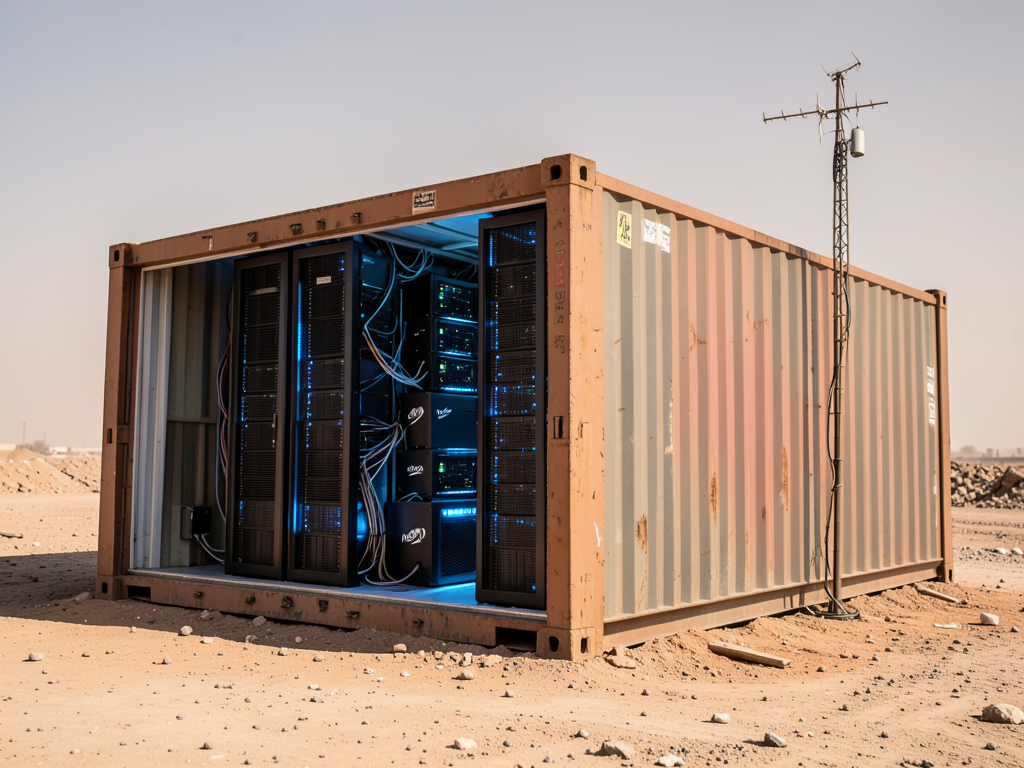
Palantir Technologies and infrastructure firm Armada have started deploying self-contained data centers built inside standard shipping containers, designed to run advanced AI models directly in combat zones without constant cloud connectivity. Each mobile unit carries Nvidia's B300 AI accelerators to process intelligence and sensor data at the edge, reducing dependence on vulnerable communications links.
Mobile AI Infrastructure for Frontline Operations
Chad Wahlquist, a Forward Deployed Architect at Palantir Technologies, demonstrated the system inside one containerized data center during the July 2026 announcement. Unlike conventional cloud-based systems, these units process information without maintaining any constant link to public cloud infrastructure. They can also be completely isolated from external networks when operational security requires a higher level of separation.
Hardware and Software Stack
The containerized data centers run on Nvidia's B300 AI accelerators, paired with Palantir's modular AIP platform. This setup supports open-weight AI models that can adapt to mission-specific requirements. Palantir and Armada designed the system to process intelligence without sending data back to a distant cloud, a crucial feature for operations where communications links face jamming or physical destruction risks.
Alex Karp, chief executive of Palantir, has praised Ukraine's wartime innovation cycle as instructive for allies, arguing that the conflict exposes a widening gap between military theory and modern combat reality. Karp credited Ukrainian engineers and soldiers with adapting battlefield technology at a pace unmatched by most peacetime institutions.
Why This Matters
This deployment tests whether distributed edge AI can survive sustained combat operations. If successful, it could reshape how military forces deploy computing power, moving away from reliance on centralized cloud infrastructure vulnerable to attack. The shift represents a broader trend of AI processing moving from data centers to tactical environments where milliseconds matter and connectivity is not guaranteed. However, no public independent verification exists of the technology's actual battlefield performance by Palantir, Armada or any military partner, leaving questions about its reliability under combat stress.
The containerized approach also offers stronger resilience than systems dependent on a single centralized data center. Losing contact with the cloud or losing one mobile node does not disable the entire network, as other units can continue processing information locally.