Editor: Porcia Akua Holmes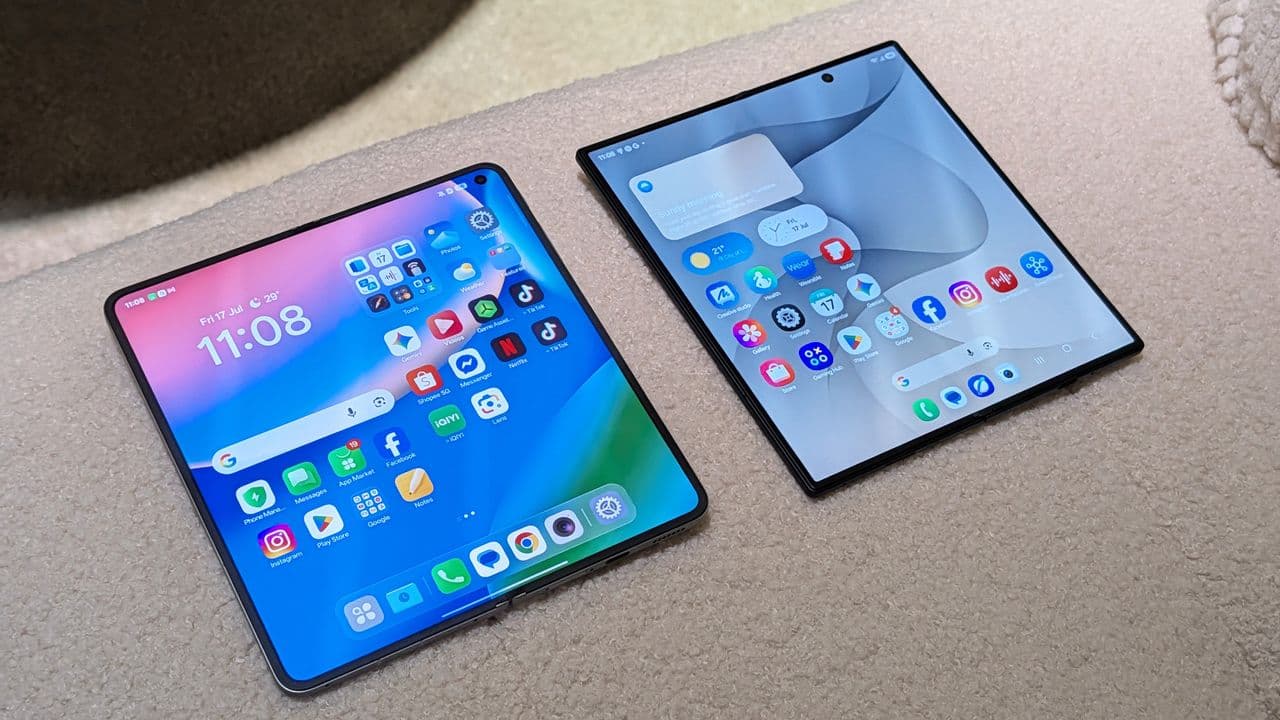
Samsung and Oppo are locked in a tight race for foldable phone supremacy, and the crease in the main display has become the defining battleground. Samsung's Galaxy Z Fold 8 Ultra, equipped with new Flex Titanium display technology, delivers the thinnest and flattest foldable screen the company has ever produced. But the Oppo Find N6, which launched months earlier, takes the lead on one critical metric: the crease is nearly invisible to the touch.
Flex Titanium vs Oppo's Crease Elimination
Samsung's Flex Titanium display on the Galaxy Z Fold 8 Ultra represents the company's most aggressive attempt to minimize the crease. The undulation is so faint from a direct viewing angle that it nearly disappears, and even running a finger across the center reveals only a slight dip. The Galaxy Z Flip 8 also benefits from the same technology, though its smaller screen makes the crease less noticeable by design.
The Oppo Find N6, on the other hand, was engineered with a different priority. Oppo stated at the March 2026 launch that it had removed the crease entirely. While that claim is not absolute at every acute angle, the tactile experience is remarkable. Swiping across the full 8.12-inch display reveals no physical interruption where the screen bends.
Both phones were tested side-by-side at Samsung's preview event, where the Oppo Find N6 consistently impressed reviewers with its smoother finish. The gap is narrow, but it matters for enthusiasts who consider the crease the last remaining annoyance of foldable technology.
Why This Matters
The crease has been a defining weakness of foldable phones since the original Galaxy Fold. Oppo's achievement forces every competitor, including Samsung, to rethink hinge and screen designs. If consumers begin to expect a creaseless display as standard, Samsung will need to accelerate its own innovation beyond Flex Titanium. The Galaxy Z Fold 8 Ultra is a strong step forward, but it no longer sets the benchmark. Oppo, with the Find N6, has raised the bar and pushed the entire foldable market into a new phase of refinement.
What It Means for Buyers
Choosing between these two flagships now comes down to ecosystem preference and the importance of a flat display. Samsung offers tighter integration with Galaxy devices, a robust software update policy, and the S Pen support. Oppo delivers a display that may finally satisfy those who have waited for a foldable that feels like a solid slab. The Flex Titanium technology on the Samsung Galaxy Z Fold 8 Ultra is impressive, but the Oppo Find N6 proves that the creaseless foldable is no longer a distant promise.